
10 Sep Best Walking Pads: A Real Buying Guide for Desk Workouts & More
Best Walking Pads: A Real-World Guide to Buying and Actually Using One
If you’ve spent any time on Instagram or TikTok lately, you’ve probably seen someone’s home office with a slim black (or pink) pad tucked under a standing desk, quietly logging steps while its owner answers emails. Walking pads have gone from a niche gadget to one of the most searched-for pieces of home fitness equipment in the country, and for good reason. They solve a very specific, very modern problem: how do you move your body for a meaningful chunk of the day when your job keeps you glued to a screen?
This guide is built for that problem. It covers what a walking pad actually is, who benefits most from one, what separates a good pad from a flimsy one, how to structure workouts on it, and when a walking pad genuinely isn’t the right tool — in which case a compact treadmill might serve you better. Along the way, you’ll get practical buying guidance instead of a generic spec-sheet comparison, because the “best” walking pad depends heavily on your space, your budget, and how you actually plan to use it.
What a Walking Pad Actually Is (and Isn’t)
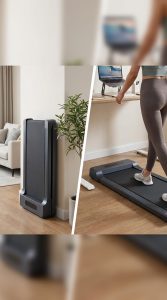
A walking pad is a flat, motorized platform designed for walking, not running. Most models cap out around 3.5 to 4 mph — fast enough for a brisk walk, too slow for jogging. They’re built low to the ground, usually without handrails or an incline function, and many fold flat or stand upright for storage under a bed or in a closet.
That’s the key distinction from a treadmill. A treadmill is built to handle the pounding of running: taller frame, more powerful motor, a longer deck, and usually a console with handrails and incline settings. A walking pad strips all of that away in exchange for a smaller footprint and a lower price. You’re trading versatility for convenience.
This matters because a lot of people buy a walking pad expecting treadmill-level performance and end up disappointed. If your goal is genuinely to run indoors, train for a 5K, or use incline intervals, a walking pad isn’t the right category for you — you want a compact treadmill instead, something we’ll come back to later in this guide.
Who Walking Pads Are Actually Good For
The honest answer is: people who want to move more during a day that’s otherwise sedentary, not people looking to replace structured cardio training.
That covers a lot of ground. Remote and hybrid workers are the most obvious group — pairing a walking pad with a standing desk lets you accumulate steps during calls, emails, and reading without carving out separate gym time. Parents with limited windows for a gym visit use them to sneak in movement while watching kids or catching up on a show. People recovering from injury or returning to exercise after a long break often start here because the low-impact, controlled pace is gentler than outdoor walking on uneven ground.
Walking pads have also become a genuinely useful tool for older adults. The controlled, flat surface removes a lot of the fall risk that comes with walking on sidewalks, and the ability to set a fixed, slow pace makes it easier to build a consistent habit without overexertion. If that’s your use case, pay close attention to the safety section further down — not every walking pad is designed with older users in mind, even if the marketing suggests otherwise.
Who should skip it? If you’re already running regularly outdoors or at a gym, a walking pad won’t replace that training stimulus. And if you live somewhere with genuinely limited space — we’re talking a studio apartment with no realistic spot to store even a slim 6-inch-thick pad — you may be better served by bodyweight routines or a resistance band setup instead.
Offices With Walking Pads: The Desk-and-Pad Combo
walking pad folded and unfolded
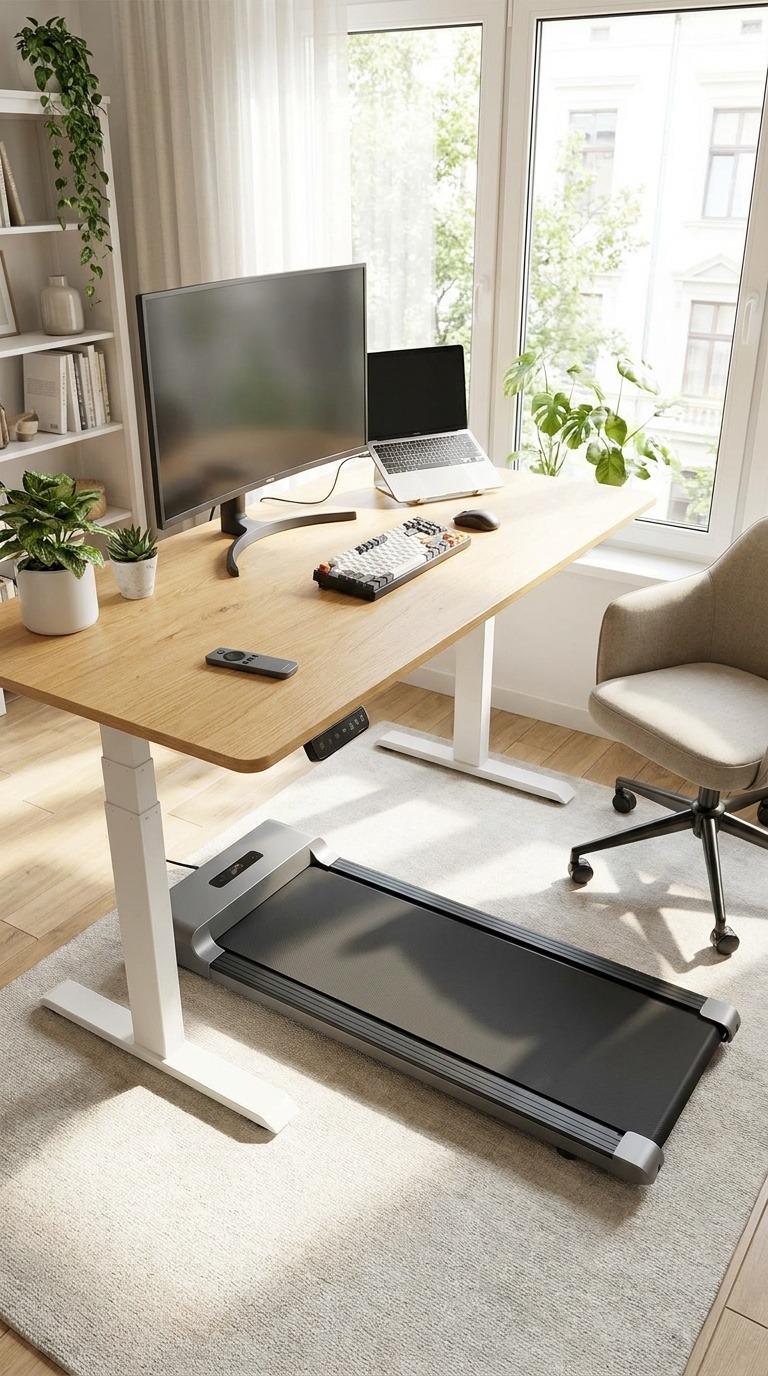
The rise of “offices with walking pads” as a search term tells you something: this isn’t really a fitness trend anymore, it’s a workspace trend. The setup usually looks like this — an adjustable standing desk, a walking pad underneath set to a slow 1 to 2 mph pace, and a laptop positioned high enough that you’re not hunching to see the screen.
A few things make this setup actually work instead of becoming an expensive clothes rack:
- Desk height matters more than pad quality. If your desk sits too low while you’re walking, you’ll hunch forward and strain your neck and shoulders within twenty minutes. Aim for your desk surface to sit roughly at elbow height when standing.
- Keep the pace conversational. Anything faster than about 2 mph makes typing accuracy and video calls noticeably harder. Most people settle into 1.5 to 2 mph as the sweet spot for working while walking.
- Cable management isn’t optional. A walking pad moving under a desk with loose laptop and monitor cords is a tripping hazard waiting to happen. Route cords up through a desk grommet or along a vertical cable sleeve before you start.
If your workspace is genuinely small, this is one of the areas where a walking pad clearly beats a treadmill — the low profile slides under most standing desks in a way a full-size treadmill simply can’t.
What to Actually Look for Before You Buy
holding walking pad remote control
Specs pages can make every walking pad look roughly the same. In practice, a handful of details separate a pad you’ll use for years from one that ends up folded in a closet after three months.
Motor and noise level. A quieter, better-built motor matters more than raw horsepower here, since you’re rarely pushing past 4 mph. If you’ll be walking during work calls, noise level should be a top priority — look for reviews that specifically mention decibel levels or “quiet enough for video calls.”
Weight capacity. Manufacturers list a maximum user weight, and it’s worth checking against your own before you fall in love with a sleek design. Buying with some margin above your current weight is generally the safer call, since it also affects the motor’s long-term durability.
Deck size. A wider, longer deck gives you more room to walk naturally without feeling like you’re tightrope-walking. This becomes especially important for taller users or anyone with a longer stride.
Speed range and increments. Most pads adjust in small increments (0.1 mph steps are common), which lets you dial in a genuinely comfortable pace rather than jumping between speeds that feel too slow or too fast.
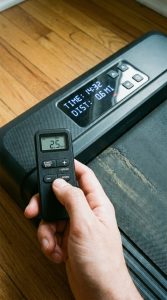
Remote and app control. A physical remote matters more than it sounds like it would — reaching down to adjust speed on a control panel while you’re mid-stride is awkward. Many pads now pair with an app that tracks steps, distance, and calories, which is a nice-to-have rather than essential.
Portability. If you’ll be moving the pad between rooms or storing it after each use, check the actual weight (not just “foldable”) and whether it has built-in wheels.
Best Walking Pads 2026: How the Categories Break Down
Rather than naming a single “best” pad — which changes as models get discontinued and replaced — it’s more useful to understand the categories the current market splits into, so you can shop with the right expectations.
| Category | Typical Price | Best For | Trade-off |
|---|---|---|---|
| Entry-level / budget | $150–$250 | Testing whether the habit sticks | Louder motors, shorter warranties |
| Mid-range | $250–$450 | Daily desk use, most households | Best value-to-quality ratio |
| Premium | $450–$700+ | Heavy daily use, app integration, quieter motors | Diminishing returns past this point |
| Treadmill hybrid | $600+ | Walking plus light incline or jogging | Larger footprint, closer to a compact treadmill |
Most people shopping for a walking pad in 2026 land in the mid-range tier, and that’s not a coincidence — that’s where manufacturers have concentrated the features that actually matter day to day (quieter motors, app tracking, solid build quality) without the premium markup for extras many users never touch.
Cheap Walking Pads: When Budget Is the Right Call, and When It Isn’t
There’s a reasonable case for buying a budget walking pad, and it’s not just about saving money. If you genuinely don’t know whether you’ll stick with a walk-and-work routine, spending $180 to find out is smarter than spending $600 on a guess. A lot of people discover walking pads aren’t for them — the noise bothers a partner working nearby, or the low speed feels too slow to be worth it — and an inexpensive model makes that a low-stakes experiment.
Where budget pads genuinely fall short is motor longevity and noise. Cheaper motors tend to get louder over time as components wear, and warranties on sub-$200 models are often shorter or nonexistent. If you’re planning to use the pad daily for a year or more, that’s worth factoring into the math — a $180 pad that needs replacing after eight months isn’t actually cheaper than a $300 pad that lasts three years.
A reasonable approach: buy budget if you’re testing the habit, buy mid-range if you already know you’ll use it regularly.
Walking Pad Workouts That Actually Move the Needle
A walking pad’s biggest value isn’t a single dramatic workout — it’s the accumulation of movement across a day that would otherwise be almost entirely sedentary. That said, there are a few ways to structure your time on it that get more out of the equipment than just idle walking.
The background-walk approach. Set the pad to 1.5–2 mph and let it run during calls, emails, and reading. This isn’t really a “workout” in the traditional sense, but the daily step accumulation adds up meaningfully over weeks and months — often more than a single 30-minute gym session, simply because of consistency.
Interval walking. For a more deliberate session, alternate 3 minutes at a brisk 3.5–4 mph with 2 minutes at a recovery pace of 2 mph, repeated for 20–30 minutes. This raises your heart rate more than steady background walking and works well as a dedicated cardio session rather than a work-day companion.
Incline substitute — add resistance instead. Since most walking pads don’t offer incline, you can add difficulty with a weighted vest or by holding light dumbbells for short intervals (being mindful of balance). This isn’t necessary for most users, but it’s a reasonable way to progress once basic walking feels too easy.
Post-meal walks. A 10–15 minute walk after eating, even at a slow pace, has a well-documented effect on blood sugar regulation. A walking pad makes this genuinely easy to fit in regardless of weather or time of day.
The mistake most people make isn’t picking the wrong workout — it’s treating the pad as a piece of furniture after the first two weeks. Keeping it plugged in and positioned somewhere visible, rather than folded away in a closet, makes a bigger difference to long-term use than any workout structure.
Walking Pads for Seniors: What Actually Matters for Safety
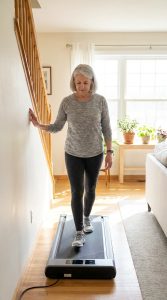
older adult walking slowly indoors
Walking pads can be a genuinely good fit for older adults, but “senior-friendly” isn’t a formal category manufacturers reliably label — you have to evaluate it yourself. A few features are worth prioritizing:
- A true low starting speed. Look for pads that start below 1 mph rather than jumping straight to a 1.5–2 mph minimum, which can feel rushed for someone building up walking tolerance.
- A stable, non-slip deck surface with a slight lip or raised edge, which reduces the chance of a foot sliding off the side mid-stride.
- An easily reachable emergency stop, ideally a large, obvious button rather than a small app toggle that requires a phone in hand.
- Handrail compatibility. Most walking pads don’t include handrails by design, since they’re meant to sit under a desk. If balance is a concern, this is one of the clearer signals that a compact treadmill with handrails — even a small one — may be the safer choice over a rail-free walking pad.
If balance or fall risk is a real concern, it’s worth a conversation with a doctor or physical therapist before starting, particularly around appropriate speed and session length. A walking pad is a tool, not a substitute for that kind of guidance.
Walking Pads Aesthetic: Why Design Has Become Part of the Decision
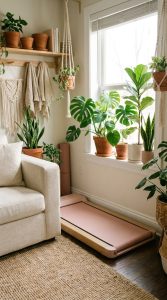
blush pink walking pad positioned
A few years ago, home fitness equipment was almost uniformly black, gray, or industrial-looking. That’s changed. Walking pads now come in cream, sage green, blush pink, and other finishes clearly designed to sit in a living room or home office without looking like gym equipment that wandered in from the garage.
This isn’t purely cosmetic. Equipment that blends into your space — rather than looking like a bulky intrusion — genuinely gets used more consistently, because it doesn’t feel like something to hide away between sessions. Pink walking pads in particular have become popular partly through social media visibility and partly because a softer color palette reads as less clinical than a stark black-and-chrome treadmill.
If aesthetics matter to you, it’s worth checking actual product photos rather than marketing renders, since color accuracy varies between listings. A pad that looks blush pink in a promotional photo can read closer to a dusty mauve or a much brighter pink in person, depending on lighting and the specific finish used.
When a Walking Pad Isn’t Enough: The Case for a Compact Treadmill
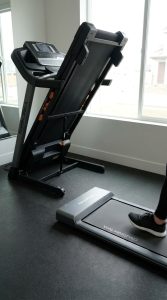
comparing compact folding treadm
Everything above assumes walking is genuinely your goal. But a fair number of people start shopping for a walking pad and realize partway through their research that they actually want more — the ability to jog occasionally, add incline for a harder workout, or use handrails during faster intervals. That’s a completely reasonable thing to want, and it points toward a compact treadmill rather than a true walking pad.
The NordicTrack T Series 6.5 S Treadmill is worth considering here specifically because it splits the difference reasonably well. It has a 2.6 horsepower motor, a speed range of 0 to 10 mph (so it comfortably covers slow walking all the way up to a genuine jog), and 0 to 10% incline adjustment, which no walking pad offers. The deck folds up using an EasyLift assist mechanism, so it’s not as slim as a walking pad but still reclaims floor space when you’re done. It has a 300-pound weight capacity and a 20 x 55-inch running surface, which is noticeably more generous than most walking pad decks.
Who this makes sense for: someone who wants one piece of equipment that covers both a slow desk-walking pace and an actual cardio workout with incline, without buying two separate machines. It’s also a reasonable pick if you want handrails for stability, which matters for some users regardless of age.
Who should skip it: anyone tight on space, since this is a full treadmill footprint rather than a slim under-desk pad — it needs a dedicated spot in a room, not just floor space under a desk. It’s also a bigger investment than an entry-level walking pad, so it only makes sense if you know you’ll use the incline and higher speed range, not just the slow-walk function. And because it’s a full treadmill, it’s meaningfully louder during a run than a walking pad is during a slow walk, so it’s not the right pick if your main goal is walking quietly through a work call.
If your use case is purely “I want to walk slowly at my desk,” stick with a dedicated walking pad — you’re paying for treadmill capability you won’t use. But if incline, running speed, or handrail stability matter to you, this kind of compact treadmill is a genuinely better fit than trying to stretch a walking pad beyond what it’s built for.
Mistakes Worth Avoiding
A few patterns show up repeatedly with new walking pad owners, and most are easy to sidestep once you know to look for them.
Buying based on looks alone and skipping the weight capacity check is probably the most common one — a beautifully designed pad that’s rated below your body weight will wear out its motor faster and isn’t safe to use long-term. Setting the speed too fast for work sessions is another; if you’re constantly missing keystrokes or losing your train of thought on calls, drop the pace rather than pushing through it. And storing the pad somewhere inconvenient after the first week — behind a couch, under a bed you have to move furniture to reach — is the single biggest predictor of a pad going unused. If setup takes more than about thirty seconds, that friction adds up fast.
Frequently Asked Questions
Do walking pads actually help with weight loss? They can contribute to weight loss as part of a broader routine, mainly by increasing daily calorie expenditure through non-exercise movement. A walking pad alone, without attention to diet or additional exercise, is unlikely to produce dramatic results on its own — but the consistency it enables is genuinely valuable.
How loud are walking pads, realistically? Quality mid-range and premium pads are generally quiet enough for video calls at typical desk-walking speeds. Budget models and higher speeds tend to introduce more noticeable motor noise, so if quiet operation is a priority, read reviews that specifically address sound level rather than relying on the spec sheet alone.
Can I run on a walking pad? Most walking pads are not designed for running — their motors, decks, and speed ranges are built for walking paces up to roughly 3.5-4 mph. If running is part of your routine, a compact treadmill is the more appropriate equipment.
Do I need a standing desk to use a walking pad? No, but it makes the “walk while you work” use case far more comfortable. Walking pads can also be used on their own for dedicated walking sessions without any desk involved.
Are walking pads safe for daily use? Generally yes, for most healthy adults, provided the pad is rated for your weight and you’re walking at a comfortable, controlled pace. Anyone with joint issues, balance concerns, or other health conditions should check with a doctor before starting a new routine.
What’s the difference between a walking pad and an under-desk treadmill? These terms are often used interchangeably in product listings. Generally, “walking pad” refers to the slimmer, foldable style without handrails, while “under-desk treadmill” can sometimes include slightly larger models — but there’s no strict industry standard, so it’s worth checking the actual dimensions and speed range rather than relying on the name alone.
How much floor space does a walking pad actually need? Most models measure somewhere in the range of 45 to 60 inches long and 20 to 28 inches wide when in use, with several inches of clearance recommended on either side. Folded, many slide into a space just a few inches thick, making them realistic for apartment storage.