
27 Mar 10 Genius Ways to Build Homemade Gym Equipment — Create Your Own Dumbbells and Free Weights Easily
This DIY gym gear guide is what you need in case you have been missing workouts due to the gym memberships seeming too costly. You do not need to pay hundreds of dollars on dumbbells and free weights, you can make them yourself at home using common materials.
This manual will demonstrate to you how to make your own dumbbells and free weights inexpensively, save substantial amounts of money, and yet receive a tremendous workout. Let’s get into it.
The reason DIY Gym Equipment is smarter than you think.
Dumbbells available in the market may cost between 1 and 3 dollars per pound. One pair of 25-lb dumbbells may cost you $75 or more.
Through self-made gym gear, you can create the same useful weights at a fraction of the price, even less than ten dollars altogether. It is useful, adjustable, and actually efficient.
This is the reason why individuals are moving to DIY free weights:
Saves money – no gym membership, no expensive equipment.
Any space, apartment, garage, backyard, it is not important.
- Weight is fully customizable – construct the poundage required.
- Green – recycle what you already possess.
- No special equipment needed – most constructions only basic materials.
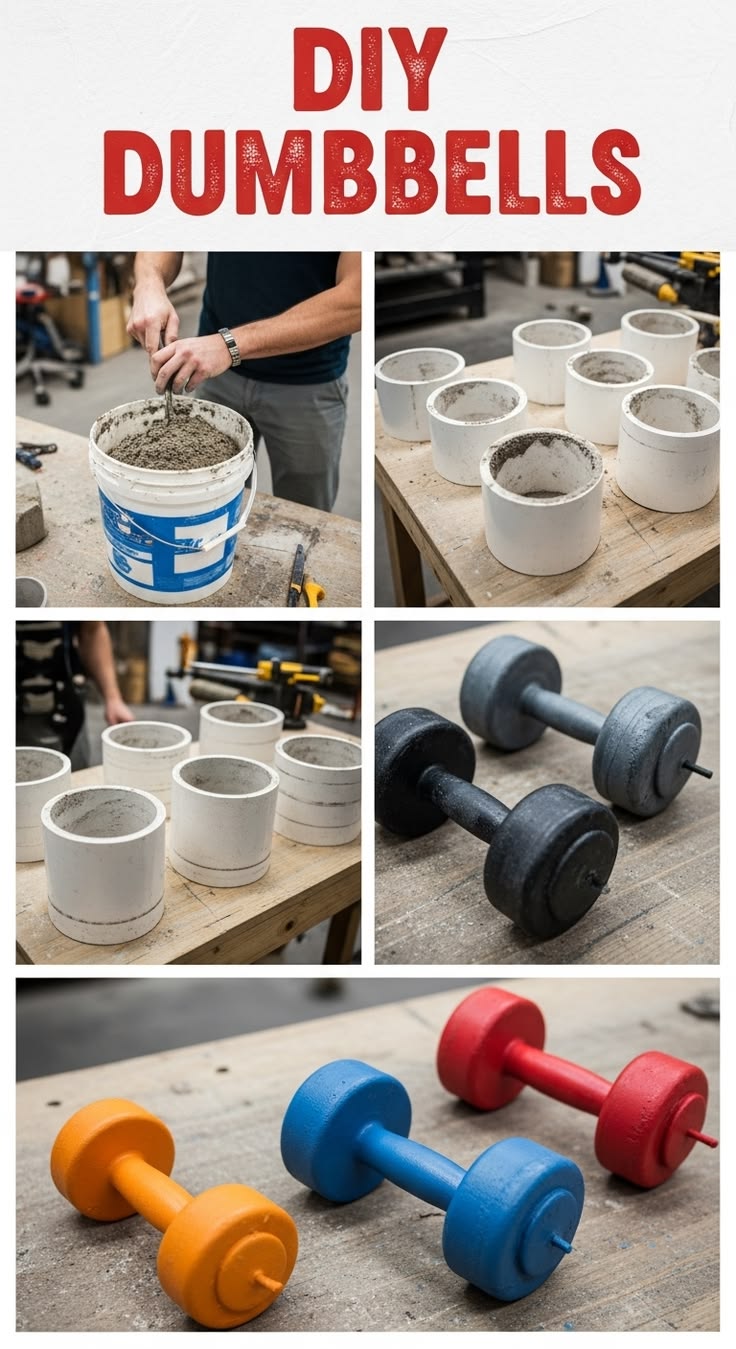
Homemade Dumbbells PVC Pipe Dumbbells – The Classic Homemade Dumbbell Tutorial.
It is among the most famous DIY dumbbell techniques available and rightfully so as it is a great technique.
What you need:
- PVC pipe (1-2 inch diameter)
- End caps
- Sand, concrete or gravel (to fill in).
- PVC cement or powerful adhesive.
- A scale to measure weight
How to make it:
- Cut the PVC pipe to your preferred length of the handle (usually 10-12 inches).
- Seal one end of cap using PVC cement.
- Stuff the pipe with sand or concrete to the desired weight.
- Cap the other end tightly.
- Allow 24 hours curing period.
Hack: Tape the handle with athletic tape or foam grip tape to have a better, more comfortable grip when lifting.
Filled Bottle Weights Concrete DIY -Easiest Free Weight.
This is the ideal amateur home gym equipment venture. You are likely to have all you want at the moment.
What you need:
- Big plastic containers (gallon jugs, 2 liter soda bottles).
- Concrete mix or sand
- Water
How to make it:
- Combine concrete to a thick paste.
- Add slowly in the bottle, tapping to get the air bubbles out.
- Let it set completely (24-48 hours).
- Take it or add duct tape to the handle.
Weight estimate: A gallon jug of concrete weighs roughly 8-10 lbs- ideal weight of the jar one should use when constructing his arm muscles.
Milk Jug Water Weights 0 Free Weights – Adjustable Zero-Cost Water Weights.
And desire some adjustable free weights at a price of literally nothing? Add water, sand or a mixture of the two in milk jugs.
- Water = lighter (8.3 lbs per gallon)
- Sand = lighter (approximately 13 lbs per gallon)
- Wet sand = weighs most (up to 15 lbs per gallon)
This is the quickest self-built gym apparatus in this entire list. No drying process, no equipment, just fill and lift.
The weight is easy to adjust (by adding or taking away material) and makes them the most versatile DIY dumbbells to use in progressive overload training.
Sock + Rice Wrist Weights DIY Wearable Weights.
They are incredible to use in cardio exercises, walking, and low impact training. Seriously underrated.
What you need:
- Long socks
- Rice, sand, or dried beans
- Velcro strips or safety pins
How to make it:
- Add your filler material to the sock to your preferred weight.
- Tie or sew the open end shut.
- Tie Velcro or pin it on your wrist or ankle.
The average sock weight is about 0.5-2 lbs of any filler and sock size – perfect in tightening and toning workouts and rehabilitation exercises.
Backpack Barbell – Make a Free weight Bar at Home.
Missing a barbell? This is a game-changer to home workouts.
Stuff a heavy backpack with books, water bottles or rice bags. You can use it for:
- Overhead presses
- Bent-over rows
- Squats (hold straps in your chest)
- Deadlifts (hold below you using both hands)
A fully packed backpack may easily weigh to 20-40 lbs depending on what you put in there. It is among the most adaptable homemade free weight systems that can be made within less than 5 minutes.
Concrete block weights – DIY Free weights heavy.
This technique of making gym equipment is suitable to those who require it seriously.
What you need:
- Concrete mix
- A box or bucket or container (mold).
- Metal rod or PVC pipe (to serve as the handle)
- Cooking spray (so that it does not stick)
How to make it:
- Spray the mold with cooking oil.
- Add half-full mold of concrete.
- Insert the rod or pipe at the center.
- Pour the rest of the concrete around it.
- Allow to cure 48-72 hours in the mold.
You can size your plates to any size 5 lbs, 10 lbs, 25 lbs, and put them on a bar like normal weight plates.
Bucket Weight Plates – Adjustable and Ease of Use.
The 5-gallon buckets will be among the most flexible items of homemade gym equipment that you will ever use.
Stuff them with sand, gravel or water. It is easy to grab, swing, and carry, almost like a kettlebell alternative, with its bucket handle.
Use them for:
- Farmer’s carries
- Deadlift simulations
- Squat holds
- Bicep curls (yes, really)
A 5 gallon bucket of sand weighs about 50-70 lbs – that is a good workout device of any degree.
Weight Rope and Bag Pull Weights – DIY Resistance Training.
Make your own weight training system using a duffle bag and a rope.
Resistance Fill a duffle bag with sand, gravel or old clothes. Attach a rope to it to pull it to do exercises, sled drags, and core exercises.
It is an exercise device of the popular CrossFit-style of training that is used by professional athletes in modified versions. It develops rudimentary, practical power that cannot be matched with dumbbells.
Wooden Dumbbell Frames – Long Haul Built.
In case you are good at simple woodworking, you can create a set of wooden dumbbells that resemble and feel like a professional set.
Get a scrap of wood and cut a hexagonal or round frame around a dowel rod handle. Stuff up the holes with concrete or solid substance. Paint and sand polish finish.
With some basic repairs, these homemade dumbbells will be able to last years and can be considered an actual investment in your home gym setup.
Repurposed Steel Pipe Barbell – The Ultimate DIY Free weight Build.
To the most dedicated home gym constructors a steel pipe barbell is the holy grail of a homemade gym equipment.
What you need:
- Steel pipe (1 inch galvanized pipe, not less than 4-5 feet long)
- Pipe flanges or floor flanges (weight plates holders)
- It can be loaded by concrete or commercial weights.
How it works:
The flanges are plate stoppers. Insert your homemade concrete plates onto the pipe, clamp them onto it, and you can use it as a homemade barbell to perform bench press, squats, deadlifts, and so on.
This construction is a little harder but it still provides a complete barbell experience at a price significantly lower than the $200+.
Homemade gyms Safety information.
The following are some of the safety guidelines to consider before you begin working out with your home-made free weights:
- ✅ Always test the weight on the floor before lifting overhead
- ✅ Make sure caps, lids, and seals are 100% secure before use
- ✅ Let concrete and adhesives fully cure before putting them under load
- ✅ Use non-slip mats under your feet during lifts
- ✅ Start lighter than you think you need — you can always add more
- ✅ Inspect your homemade equipment before every workout session
Best Materials to Use for DIY Dumbbells and Free Weights
| Material | Weight per Cup | Best Used For |
|---|---|---|
| Sand | ~1.3 lbs | Bottles, bags, sock weights |
| Concrete | ~2 lbs | Molds, PVC pipes, permanent builds |
| Gravel | ~1.5 lbs | Buckets, bags |
| Water | ~0.5 lbs | Adjustable weights, quick builds |
| Rice | ~0.8 lbs | Wrist/ankle weights, light dumbbells |
Summary: Your Home Gym Begins With This Homemade Gym Equipment Tutorial.
To get stronger, you do not need gym membership and costly equipment. Through this DIY fitness gear tutorial, anyone can make their own dumbbells and free weights with only some low-cost materials at the comfort of their home.
Begin with any of the builds that use the following list, and start safely, then add more pieces to your DIY home gym until it is complete. The results are tangible, the exercises are productive, and the rewards of being able to pick something that you created? That part’s priceless.
Should you save this page and add it to your fitness board, then begin creating your own gym gear today.
Frequently always asked (FAQs).
Q: Will homemade dumbbells be used as substitutes of real gym weights?
Yes – most of the daily strength training can be done with homemade gym equipment as well as commercial weights. The trick is to have the weight correct with a kitchen scale.
Q: What are the maximum weights I can do DIY free weights?
Concrete and steel pipe constructions are easy to make weights of 20-100lb range. DIY pieces that are even lighter such as water bottles and sand-filled socks are greatly more effective in the 1-15 lbs.
Q: Do homemade gym equipment prove to be safe?
Yes, so long as you are done with the proper construction and curing directions. Always check your home made weights prior to lifting up high or load requiring.
Q: What is the least cost home made dumbbell to make?
Water weight of milk jar will be free in case you already have jugs at home. Another solution, which is near-zero costs, is the sand-filled bottles.
Q: What is the time required by the concrete to cure when using it in DIY weights?
The majority of mixes of concrete require 24-72 hours to fully dry before they can be applied under heavy load.
Question: Should I be able to take these homemade free weights to do progressive overload?
Yes! Adjustable exercises such as milk jugs and bucket weights can be good, to put up with a low resistance at the very beginning as you become better.