
18 Jan Women’s Home Gym: Small Space Solutions
Home gym ideas for women don’t have to mean sacrificing half your living room or breaking the bank on expensive equipment. You can create a functional, motivating workout space in the tiniest apartment, spare corner, or even a closet.
The truth is, women’s fitness needs are different, and cookie-cutter gym setups just don’t cut it. Whether you’re into strength training, yoga, HIIT, or dance workouts, your space should work as hard as you do.
Why Small Space Home Gyms Are Perfect for Women
Small doesn’t mean less effective. A compact home gym gives you privacy, convenience, and zero commute time to your workout.
You skip the intimidation factor of crowded gyms and work out on your schedule. Plus, you save money on monthly memberships that add up to thousands over time.
The Smart Layout Strategy for Tiny Workout Spaces
Start by measuring your available space. Even a 5×5 foot area can transform into a functional fitness zone with the right planning.
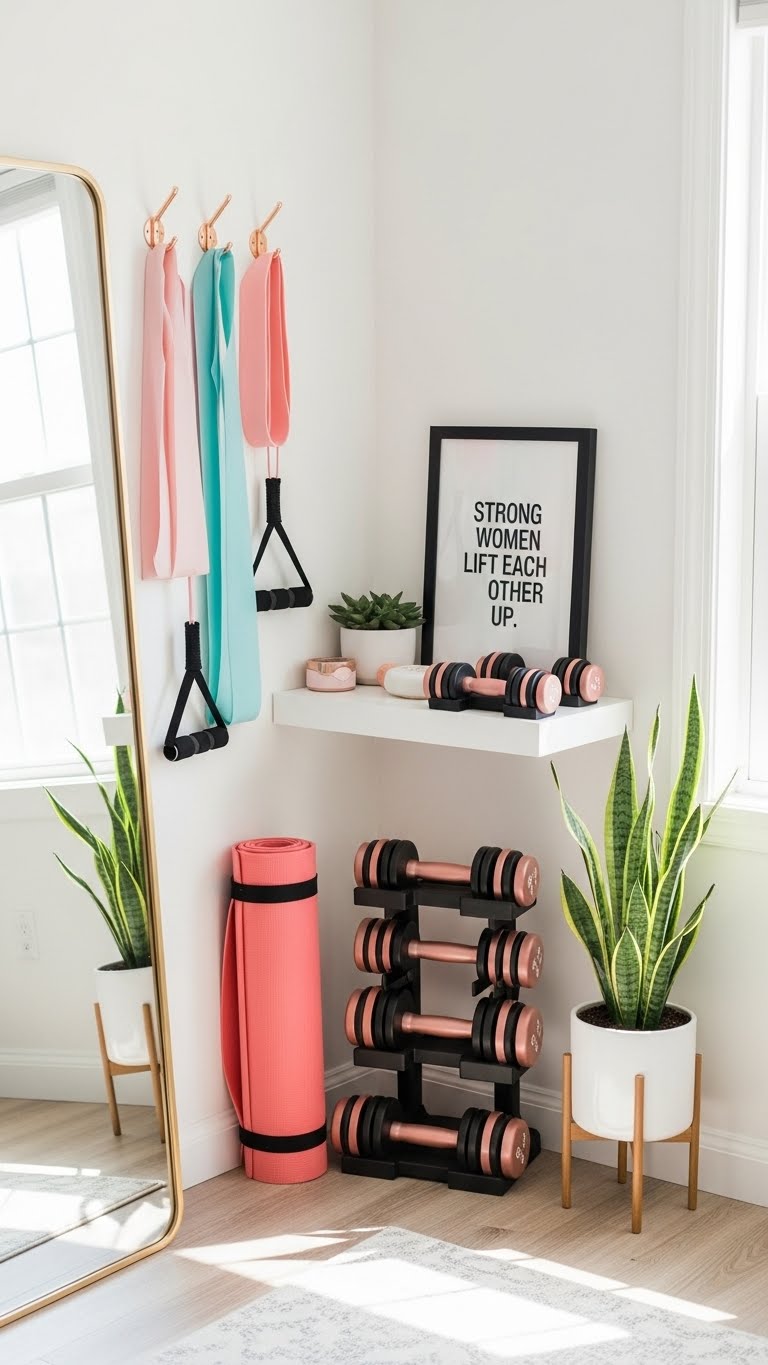
Vertical storage is your best friend. Wall-mounted racks, pegboards, and floating shelves keep equipment off the floor and maximize every square inch.
Multi-Purpose Furniture Solutions
Think beyond traditional gym equipment. An ottoman with hidden storage can hold resistance bands, while a sturdy coffee table doubles as a step platform.
Foldable workout benches collapse flat and slide under beds. Some even convert into stylish seating when guests come over.
Zone Your Space
Create distinct zones even in one small area. Your yoga corner needs just a mat and maybe some props, while your strength zone holds dumbbells and resistance tools.
Use a small rug or floor tape to define boundaries. This mental separation helps you stay focused during different workout styles.
Essential Equipment That Won’t Eat Your Space
You don’t need a full rack of dumbbells taking up precious floor space. Adjustable dumbbells replace an entire weight set and fit in a single drawer.
Resistance bands deliver serious strength training results and literally fit in your purse. Loop bands, mini bands, and long resistance bands each serve different purposes for under $30 total.
The Compact Cardio Options
Skip the massive treadmill. A jump rope gives you intense cardio for $10 and stores in a shoebox.
Slide boards or gliding discs work on carpet or hardwood for low-impact cardio that’s whisper-quiet for apartment living. No downstairs neighbors complaining here.
Smart Storage Solutions for Weights and Accessories
Tension rods inside closets create instant dumbbell storage. Hanging shoe organizers perfectly hold resistance bands, workout gloves, and small accessories.
Rolling carts from office supply stores work great for organizing weights by size. Just wheel it out for workouts and tuck it away when done.
Vertical Training: Using Wall Space Like a Pro
Wall-mounted pull-up bars install in doorways without permanent damage. They support multiple grip positions for back, shoulder, and arm work.
Suspension trainers (like TRX systems) anchor to doors or ceiling hooks and fold to pocket-size when not in use. They deliver full-body resistance training using your own bodyweight.
Resistance Band Anchors
Door anchors for resistance bands cost about $8 and unlock hundreds of exercises. You can simulate cable machines that cost thousands.
Anchor points let you do chest presses, rows, tricep extensions, and leg work all from one tiny piece of equipment.
Mirror Tricks That Expand Your Space
A full-length mirror serves double duty—form checking and making your space feel twice as large. Lean one against the wall for zero installation.
Mirrors also boost motivation. Watching yourself nail that perfect squat or seeing your progress keeps you showing up.
Flooring Options for Apartment-Friendly Workouts
Interlocking foam tiles protect your floors and joints without permanent installation. They’re noise-dampening for high-impact moves.
Yoga mats work fine for low-impact workouts, but consider a foldable exercise mat (4-8 feet long) for more cushioning during floor exercises.
Rug Hacks
A thick area rug can define your workout zone and provide cushioning. Choose washable options since they’ll get sweaty.
Outdoor rugs work surprisingly well because they’re moisture-resistant and easy to clean with a damp cloth.
The Closet Gym Concept
An average closet is 24-30 inches deep—plenty of room for a workout. Remove the clothes rod and add wall-mounted shelves for equipment.
Install a doorway pull-up bar and keep your mat rolled in the corner. You’ve got a private gym that closes up completely when not in use.
Tech Integration for Motivation
A tablet mount on the wall lets you follow workout videos without using valuable floor space. Bluetooth speakers can be mounted up high too.
Smart mirrors (or just a regular mirror with your phone propped up) bring live classes into your tiny space without the $2,000 price tag.
App-Based Workouts
Apps designed for small spaces understand your limitations. They focus on bodyweight exercises and minimal equipment routines.
Many offer audio-only options if video feels too cramped. You follow along by voice while focusing on your form in the mirror.
Color Psychology for Your Mini Gym
Light colors make small spaces feel larger. Soft blues and greens promote calm for yoga and stretching areas.
Energizing pops of orange or red in small doses boost motivation for high-intensity workouts. Think a bright yoga mat or resistance bands.
Budget-Friendly Equipment Swaps
Gallon water jugs replace kettlebells for under $5. Filled milk jugs work for lighter weights and cost nothing.
Towels substitute for sliders on hardwood floors. A sturdy chair handles step-ups and tricep dips.
DIY Sandbags
Fill old backpacks with rice, beans, or actual sand for adjustable weight training. They’re unstable loads that engage more muscle groups.
Seal bags properly and wrap in duct tape for safety. You’ve made a $2 sandbag that rivals $40 commercial versions.
Lighting Makes or Breaks the Vibe
Natural light energizes morning workouts, but not everyone has windows in their workout corner. LED strip lights are affordable and mood-setting.
Warm white creates a calm yoga atmosphere. Cool white mimics daylight for energizing cardio sessions.
Sound Control in Shared Spaces
Wireless earbuds keep your workout music private. Noise-canceling options help you focus even in chaotic households.
For speaker lovers, directional speakers point sound at you without blasting the whole apartment.
Temperature Control Hacks
A small clip-on fan costs $15 and makes sweaty workouts tolerable in cramped spaces. Position it to create cross-ventilation.
In winter, a small space heater warms up your zone quickly. Just keep it away from equipment and never leave it unattended.
Motivation Wall in Minimal Space
A vision board doesn’t need a whole wall. Create a compact version on a corkboard or magnetic board that hangs anywhere.
Progress photos, inspiring quotes, or your fitness tracker stats remind you why you’re showing up.
The 15-Minute Setup Rule
Your gym should take 15 minutes maximum to set up and tear down. If it’s more complicated, you’ll skip workouts.
Keep frequently used items most accessible. Store backup equipment deeper in closets or under beds.
Child-Friendly Workout Spaces
Got kids? Soft foam equipment prevents injuries when little ones inevitably join your workout. Resistance bands and bodyweight moves keep sharp or heavy objects minimal.
Some moms create dual zones—kid play area meets mom workout space. Supervision and exercise happen simultaneously.
Seasonal Equipment Rotation
You don’t need every piece of equipment accessible year-round. Rotate seasonally based on your fitness goals.
Store winter items like heavier weights in summer when you’re doing more outdoor cardio. Swap in yoga props when you’re focused on flexibility.
The Capsule Gym Concept
Like a capsule wardrobe, build a capsule gym with versatile essentials that work together. Start with resistance bands, adjustable weights, and a quality mat.
Add equipment only when you’ve consistently used what you have. This prevents clutter and wasted money.
Dealing with Limited Ceiling Height
Basement gyms often have low ceilings. Skip overhead exercises or modify with resistance bands instead of dumbbells.
Seated and floor exercises become your focus. Good news—they’re often more joint-friendly anyway.
Humidity and Small Space Equipment Care
Apartments can get humid, especially after sweaty workouts. Wipe down equipment after each use to prevent rust and bacteria.
Keep a small fan running for 15 minutes post-workout to air out the space. Store fabric items like yoga mats unrolled when possible.
The Aesthetic Gym Look
Your workout space should inspire you, not depress you. Matching equipment colors create visual calm in small areas.
Plants add oxygen and life to the corner. Choose low-maintenance varieties like snake plants or pothos.
Community Accountability in Solo Spaces
Join online workout communities that understand small space challenges. Share your setup and get ideas from others.
Virtual workout buddies create accountability when you’re exercising alone at home.
Advanced Moves in Tight Quarters
You can still do burpees, mountain climbers, and jumping jacks in small spaces. Modify your stance to keep movements compact.
Low-impact versions of high-intensity moves protect downstairs neighbors while still torching calories.
When to Expand vs. Edit
As you progress, you’ll want new challenges. Before buying bigger equipment, ask: “Will I actually use this three times a week?”
If yes, find creative storage. If no, adjust your routine with what you have or find outdoor alternatives.
Conclusion
Home gym ideas for women prove that small space solutions actually work when you get creative with layout, equipment, and storage. You don’t need a dedicated room or thousands of dollars to build an effective workout space.
Start with the essentials, use vertical storage religiously, and choose multi-purpose equipment that earns its place in your home. Your fitness goals deserve a space that supports them, no matter how many square feet you’re working with.
The best home gym is the one you’ll actually use. Make it accessible, make it yours, and watch how consistency in a small space delivers big results.
FAQs
What’s the minimum space needed for a home gym for women?
You can create a functional workout area in as little as 25-30 square feet (about 5×5 feet). This is enough room for a yoga mat, bodyweight exercises, and storage for compact equipment like resistance bands and adjustable dumbbells.
What equipment is essential for a small women’s home gym?
The core essentials include resistance bands, adjustable dumbbells, a quality yoga mat, and a stability ball. These four items cover strength training, flexibility, and core work while taking up minimal space and costing under $150 total.
How do I soundproof my apartment home gym?
Use interlocking foam floor tiles to absorb impact, choose low-impact exercises during quiet hours, and communicate with neighbors about your workout schedule. Resistance bands and bodyweight exercises are naturally quieter than dropping weights.
Can I build muscle in a small home gym?
Absolutely. Progressive overload works with resistance bands and adjustable weights just as effectively as gym machines. Focus on compound movements, increase resistance gradually, and maintain proper nutrition for muscle growth.
How do I stay motivated working out in a small space?
Create a dedicated workout zone with motivating visuals, good lighting, and upbeat music. Join virtual fitness communities, track your progress visually, and keep your equipment accessible so setup time doesn’t become a barrier to working out.
What’s the best flooring for a small apartment gym?
Interlocking foam tiles are ideal because they’re removable, cushioned, and noise-dampening. For rental apartments, thick yoga mats or foldable exercise mats work well since they require no installation and protect both floors and joints.
How do I organize equipment in a tiny space?
Use vertical storage solutions like wall-mounted pegboards, over-door organizers for bands and accessories, and under-bed storage for mats. Adjustable dumbbells replace entire weight sets, and rolling carts keep everything mobile and tucked away when not in use.