
04 Jan Top 10 Best Rowing Machines for Home Gym 2026: Tested & Ranked
Best Rowing Machines for Home Gym 2026: Expert Reviews & Complete Buying Guide
Best rowing machines for home gym 2026 deliver full-body workouts that torch calories while building strength and endurance without destroying your joints. These versatile cardio machines engage over 85% of your muscles in every stroke, making them one of the smartest investments for any home fitness setup.
The rowing machine market has exploded with options ranging from budget-friendly basics to high-tech smart rowers featuring virtual classes and automatic resistance. Choosing the right one means understanding your goals, space, and budget.
Why Rowing Machines Deserve a Spot in Your Home Gym
Rowing provides something special that other cardio equipment can’t match. It’s the rare machine that builds cardiovascular fitness while simultaneously strengthening your entire body.
Most cardio equipment isolates lower body work—treadmills, bikes, ellipticals. Rowing recruits your legs, core, back, shoulders, and arms in coordinated movement patterns that translate to real-world strength.
The magic happens in the stroke breakdown:
- 60% of power comes from legs (quads, hamstrings, glutes)
- 20% from core engagement (abs, obliques, lower back)
- 20% from upper body pull (lats, traps, biceps, forearms)
The low-impact nature protects joints while delivering high-intensity results. Your knees, hips, and ankles stay safe from the pounding that running inflicts, making rowing perfect for anyone with joint concerns or injury history.
Calorie burn rivals running at 600-800 calories per hour depending on intensity. You’re getting treadmill-level cardio benefits with strength training thrown in for free.
Types of Rowing Machine Resistance
Understanding resistance types helps narrow your search quickly. Each system creates different feels, sounds, and experiences during your workout.
Air Resistance Rowers
Air rowers use a flywheel with fan blades creating resistance through wind. The harder you pull, the more resistance you face—it’s completely self-regulating.
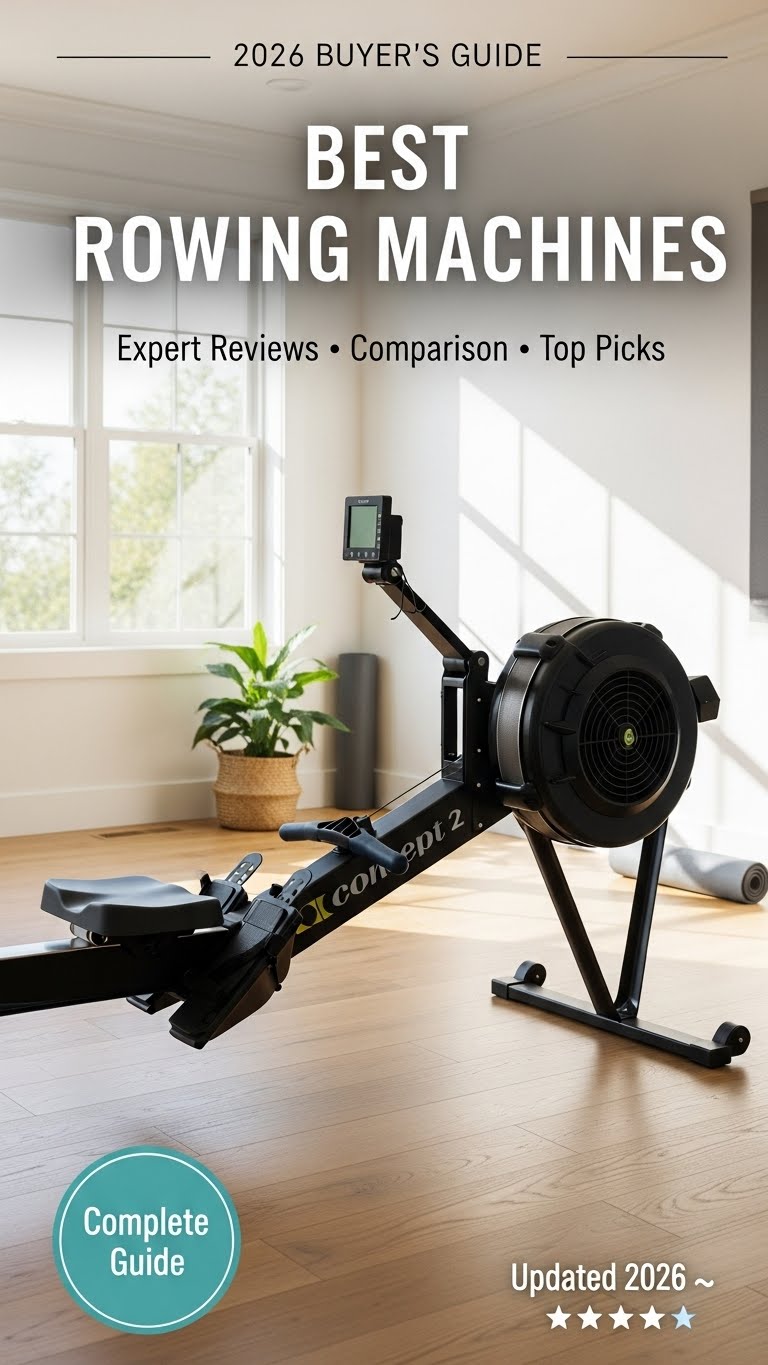
Concept2 RowErg dominates this category as the gold standard used in competitions worldwide. The distinctive whooshing sound accompanies every stroke.
Air resistance advantages:
- Unlimited resistance scaling with your effort
- Mimics on-water rowing feel closely
- Extremely durable with minimal maintenance
- Lower price point than smart rowers
- No subscriptions required
Air resistance drawbacks:
- Noisy operation (the flywheel whoosh is loud)
- Takes up more space due to flywheel size
- Not apartment-friendly if neighbors are close
Athletes training for rowing competitions or CrossFit prefer air resistance. The immediate response to power changes makes interval training incredibly effective.
Magnetic Resistance Rowers
Magnetic systems use magnets near a metal flywheel creating smooth, quiet resistance. Adjustment typically happens via knob or buttons, with some premium models offering automatic resistance changes.
This resistance type feels the smoothest during strokes. There’s no jerky feedback or varying tension—just consistent pull throughout the movement.
Magnetic resistance benefits:
- Whisper-quiet operation perfect for apartments
- Smooth, consistent resistance feel
- Often more compact than air rowers
- Great for watching TV during workouts
Magnetic resistance limitations:
- Fixed resistance levels (usually 8-16 settings)
- Doesn’t automatically scale with effort
- More expensive than basic air rowers
- Magnetic systems can eventually wear out
Budget-conscious buyers and apartment dwellers gravitate toward magnetic rowers. The quiet operation lets you row at 5 AM without waking anyone.
Water Resistance Rowers
Water rowers feature a tank with paddles creating resistance through water. The sloshing sound mimics actual on-water rowing while providing smooth, natural resistance.
WaterRower pioneered this category with stunning wood construction that looks like furniture rather than gym equipment. These machines blur the line between fitness tool and home decor.
Water resistance strengths:
- Authentic rowing feel and sound
- Beautiful aesthetics (often natural wood)
- Self-regulating resistance like air
- Quieter than air, more engaging than magnetic
- Minimal maintenance required
Water resistance considerations:
- Higher price point ($1,000-$2,500)
- Requires occasional water treatment tablets
- Heavier and harder to move
- Limited performance tracking on basic models
People who row outdoors or value aesthetics choose water resistance. The natural wood models look incredible in living rooms or home offices.
Hybrid Resistance Systems
Some newer models combine resistance types for unique benefits. The MERACH 950 features both magnetic and water resistance, letting you switch based on workout goals.
Hybrid systems cost more but provide maximum versatility. You can choose quiet magnetic for early morning sessions or authentic water resistance for engaging workouts.
Top Rowing Machines for Home Gym 2026 Reviewed
These machines represent the best options across different budgets and needs. Each earns its recommendation through proven performance and user satisfaction.
Best Overall: Concept2 RowErg (Model D or E)
The Concept2 remains undefeated as the industry standard for good reason. This air resistance rower delivers commercial-grade durability with competition-level accuracy at reasonable pricing.
Price: $1,000-$1,200 depending on model Resistance: Air Weight capacity: 500 pounds Dimensions: 96″ x 24″ (in use)
Why it dominates:
- Built to last decades with minimal maintenance
- Performance monitor tracks every conceivable metric
- Breaks down into two pieces for storage
- Massive online community and training resources
- Used in CrossFit gyms and Olympic training centers
The Model D sits lower to the ground while the Model E positions the seat higher for easier mounting. Both use identical resistance and monitoring systems.
Perfect for: Serious athletes, CrossFit training, anyone wanting competition-standard equipment that lasts forever.
The only downside? It’s loud. The flywheel creates significant noise that might bother apartment neighbors or family members.
Best Smart Rower: Hydrow Wave
Hydrow revolutionized home rowing with immersive HD content featuring real instructors rowing on actual water. The 16-inch touchscreen brings outdoor rowing experiences into your home with stunning clarity.
Price: $1,895 (plus $44/month membership) Resistance: Electromagnetic Weight capacity: 375 pounds Dimensions: 80″ x 19″ (compact design)
Standout features:
- Live and on-demand classes with world-class instructors
- Gorgeous outdoor footage from rivers and lakes globally
- Whisper-quiet magnetic resistance
- Compact footprint saves space
- Automatic resistance adjustments during classes
The membership unlocks the full experience—without it, you’re paying premium price for basic functionality. Budget accordingly for the ongoing subscription.
Perfect for: People who thrive on instructor-led classes, visual motivation, and community features. The immersive experience justifies the cost if you’ll actually use it consistently.
Best Budget Option: Sunny Health & Fitness SF-RW5515
Sunny Health delivers surprisingly solid performance at entry-level pricing. This magnetic rower provides smooth, quiet operation without the premium price tag or subscription fees.
Price: $400-$500 Resistance: Magnetic (8 levels) Weight capacity: 250 pounds Dimensions: 82″ x 19″
Value proposition:
- No subscriptions or ongoing fees
- Quiet enough for apartment use
- Folds for vertical storage
- Basic LCD monitor tracks time, distance, calories
- Solid construction for the price
Don’t expect premium features or smart connectivity. This rower focuses on fundamental functionality—get on, row, burn calories, done.
Perfect for: Budget-conscious buyers, beginners testing whether they’ll stick with rowing, anyone avoiding monthly subscription fees.
The lower weight capacity means heavier users should look elsewhere. Also, serious athletes will outgrow this quickly.
Best Water Rower: WaterRower Natural
The WaterRower Natural combines authentic rowing feel with absolutely gorgeous craftsmanship. This solid ash wood rower looks so good you’ll want it in your living room, not hidden in the basement.
Price: $1,295 Resistance: Water Weight capacity: 1,000 pounds Dimensions: 82″ x 22″
Why people love it:
- Stunning natural wood construction (ash, cherry, or walnut)
- Soothing water sound creates zen-like experience
- Extremely sturdy—feels like quality furniture
- Self-regulating resistance responds to effort
- Dual rail design adds stability
The S4 performance monitor tracks standard metrics but lacks the advanced features of Concept2 or smart rowers. You’re paying for aesthetics and experience, not technology.
Perfect for: Home gyms where equipment must look good, people who row outdoors and want authentic feel, anyone who appreciates craftsmanship.
Water requires occasional treatment with purification tablets. It’s minimal maintenance but more than air or magnetic systems need.
Best for Small Spaces: NordicTrack RW900
NordicTrack packed serious features into a surprisingly compact package. The 22-inch HD touchscreen delivers iFIT classes while the space-saving design works in tight quarters.
Price: $1,999 (includes one-year iFIT membership) Resistance: Magnetic (26 levels) Weight capacity: 375 pounds
Dimensions: 87″ x 22″ (more compact than most)
Space-saving features:
- Folds vertically for storage
- Quieter than air rowers
- Large screen adjusts for floor exercises too
- Automatic resistance matches instructor commands
The iFIT membership ($39/month after first year) unlocks the rower’s full potential. Without it, you lose automatic resistance control and class library access.
Perfect for: Limited space situations, people who need instructor motivation, anyone wanting variety beyond just rowing workouts.
Best for CrossFit: AssaultRower Elite
Built for brutal conditioning work, the AssaultRower Elite handles whatever punishment you throw at it. This commercial-grade air rower thrives on high-intensity interval torture sessions.
Price: $1,500 Resistance: Air (unlimited) Weight capacity: 500 pounds Dimensions: 93″ x 24″
Why CrossFitters choose it:
- Bombproof construction handles gym abuse
- Responsive air resistance perfect for intervals
- Large performance monitor easy to read during sprints
- Heavy-duty seat and handle designed for durability
- Works for beginners and elite athletes equally
The military-spec powder coat finish resists sweat and wear. This rower looks industrial because it is—designed for commercial gym floors.
Perfect for: High-intensity interval training, CrossFit boxes, athletes who destroy equipment, home gyms where multiple people train hard daily.
Key Features to Consider When Buying
Smart shopping means knowing which features actually matter versus marketing fluff. Focus your budget on these factors that impact your long-term satisfaction.
Performance Monitor Quality
Your performance monitor makes or breaks the rowing experience. Good monitors track stroke rate, pace per 500 meters, total distance, time, and calories with accuracy.
Advanced monitors add:
- Heart rate monitoring via Bluetooth chest strap
- Pre-programmed workouts and intervals
- Memory for multiple users
- USB connectivity for data export
- Backlit displays for dim lighting
The Concept2 PM5 monitor remains the gold standard. It tracks everything, connects to apps, and provides consistent accurate data that competitive rowers trust.
Budget rowers often skimp here with basic LCD displays showing minimal info. If data motivates you, invest in better monitoring.
Weight Capacity Reality Check
Manufacturers list maximum weight capacity, but comfortable use happens well below that number. Add 50-100 pounds margin above your weight for smooth, stable operation.
A 250-pound capacity rower will feel sketchy for a 230-pound user. The seat rail flexes, components strain, and the whole experience feels precarious.
Heavy-duty models supporting 500+ pounds feel solid for everyone. The extra steel and reinforcement create stability that lighter-duty models lack.
Footprint and Storage
Rowing machines are long—expect 7-8 feet when in use. Measure your space twice before buying, accounting for extra clearance behind the seat at full extension.
Storage considerations:
- Separation/breakdown: Concept2 splits into two pieces
- Folding: Many magnetic models fold reducing length by 50%
- Vertical storage: Some models stand on end
- Wheels: Transport wheels make moving easier
Walk through your setup mentally. Can you row without hitting walls? Where does it go after workouts? How heavy is it to move around?
Lighter rowers (under 60 pounds) move easily but feel less stable. Heavier units (80-100+ pounds) stay planted but require help relocating.
Build Quality Indicators
Quality construction separates decade-lasting investments from disposable junk. Look for these durability markers:
Frame construction:
- Steel vs aluminum (steel wins for stability)
- Powder coat finish resists sweat corrosion
- Reinforced stress points
- Weight of the unit (heavier usually = stronger)
Components:
- Metal seat rollers vs plastic
- Sealed bearings in moving parts
- Quality chain or strap (not rope)
- Thick seat padding that won’t compress
Warranty coverage:
- Lifetime frame warranty (shows confidence)
- 3-5+ years on parts
- 1+ year labor coverage
Budget under $500? Expect compromises in build quality. That’s fine for light use but serious rowers need better construction.
Noise Level Considerations
Living situations dictate acceptable noise levels. Air rowers create significant flywheel whoosh, magnetic systems run nearly silent, water resistance falls somewhere between.
Noise comparison:
- Magnetic: 50-60 decibels (conversation level)
- Water: 60-70 decibels (moderate)
- Air: 75-85 decibels (vacuum cleaner level)
Apartment dwellers need magnetic resistance. The noise difference between air and magnetic is dramatic—like comparing a whisper to a shout.
Some people find the whoosh meditative. Others find it annoying, especially during TV watching or when family members are sleeping nearby.
Setting Up Your Rowing Space
Creating a dedicated rowing area improves consistency and protects your floors. A little planning makes workouts more enjoyable and equipment last longer.
Floor Protection Essentials
Rowing machines stay stationary but need floor protection. The seat rolling back and forth can wear finishes over time, and sweat drips damage wood floors.
Floor protection options:
- Rubber mats: 3/4-inch thickness ideal, cut to 3×8 feet
- PVC mats: Cheaper but less durable
- Exercise tiles: Interlocking foam or rubber tiles
- Yoga mats: Work temporarily but too thin long-term
Rubber gym mats from tractor supply stores cost $40-$60 per 4×6 foot mat. Two mats create perfect rowing floor protection that lasts forever.
Place mats under the entire rower, not just the base. The seat rail extends far enough that you need coverage along the full length.
Proper Clearance Requirements
Don’t park your rower against walls without planning clearance. You need space behind for full leg extension and in front for safe mounting/dismounting.
Recommended clearances:
- Behind: 1-2 feet past seat at full extension
- Front: 2-3 feet for safe mounting
- Sides: 1 foot minimum for airflow
- Above: 8 feet for taller users
Measure your reach at full leg extension. Add 6 inches to that measurement—that’s your minimum rear clearance need.
Ceiling height matters less than other cardio equipment. You’re sitting down, not standing or jumping, so standard 8-foot ceilings work fine.
Climate Control Factors
Rowing generates serious heat and sweat. Good ventilation prevents equipment corrosion and makes workouts more comfortable.
Ideal rowing environment:
- Temperature: 60-70°F for comfortable rowing
- Humidity: Under 60% prevents rust and electronic issues
- Airflow: Fan or open windows circulate air
- Lighting: Bright enough to see monitor clearly
Garage gyms in humid climates need dehumidifiers. Rust attacks steel components quickly in damp conditions, especially the seat rail and chain.
Direct sunlight fades monitors and degrades plastic components. If your rower sits near windows, use curtains or move it away from direct sun exposure.
Rowing Technique Basics
Owning a rower means nothing if your form stinks. Proper technique prevents injury while maximizing the workout effectiveness.
The Four Phases of Rowing
Rowing breaks into four distinct phases flowing smoothly together. Master each phase before worrying about power or speed.
1. The Catch (starting position):
- Shins vertical, knees bent
- Arms straight, shoulders relaxed
- Lean slightly forward from hips
- Core engaged, back straight
2. The Drive (power phase):
- Push with legs first (this is crucial)
- Keep arms straight until legs nearly extended
- Lean back to 11 o’clock position
- Pull handle to lower ribs, elbows wide
3. The Finish (end position):
- Legs fully extended
- Handle pulled to lower chest/upper abs
- Torso leaning back slightly
- Elbows past torso
4. The Recovery (return):
- Extend arms first, moving handle forward
- Lean forward from hips once hands clear knees
- Bend knees last, sliding forward
- Controlled, slower than the drive
The sequence matters: Legs, core, arms on the drive. Arms, core, legs on the recovery. Mess this up and you’ll fight the machine instead of flowing smoothly.
Common Rowing Mistakes
Most beginners make the same errors that kill efficiency and risk injury. Fixing these mistakes immediately improves your rowing experience.
Mistake #1: Pulling with arms too early Your legs generate 60% of power. Using arms before legs fully extend wastes your strongest muscles and fatigues your back unnecessarily.
Mistake #2: Hunching your back Rounded shoulders and collapsed core create back pain. Maintain neutral spine throughout the stroke by engaging your core consistently.
Mistake #3: Rushing the recovery The drive should be powerful and quick. The recovery should be controlled and slow—about twice as long as the drive. Rushing forward fights the momentum you created.
Mistake #4: Gripping too tightly Death-gripping the handle tenses your arms and shoulders needlessly. Hold firmly but not tight—imagine holding a small bird you don’t want to escape or crush.
Mistake #5: Stopping at the catch Pausing at the catch (starting position) kills momentum. Flow smoothly from recovery into the drive without stopping or jerking.
Watch form videos from Concept2 or Dark Horse Rowing on YouTube. Five minutes learning proper technique saves months of bad habits and potential injury.
Workout Programming for Results
Owning a rower is step one. Actually using it effectively is step two. These programming strategies keep workouts interesting while delivering measurable progress.
Beginner Rowing Workouts
Start conservatively building aerobic base before tackling high-intensity work. Your cardiovascular system needs time adapting to full-body cardio demands.
Week 1-2 (3x per week):
- 10 minutes steady rowing at comfortable pace
- Focus entirely on form, not speed
- Stroke rate: 18-22 strokes per minute
- Rest days between sessions
Week 3-4 (3-4x per week):
- 15-20 minutes steady rowing
- Introduce 30-second pace increases every 5 minutes
- Stroke rate: 20-24 strokes per minute
- One longer session (25 minutes) weekly
Week 5-6 (4x per week):
- 20-30 minutes varied pace
- Add one interval session: 1 minute hard, 2 minutes easy (repeat 8x)
- Stroke rate: 22-26 during intervals
- One recovery row (easy 20 minutes) weekly
Patience during this phase prevents burnout and injury. Your body needs time developing rowing-specific endurance and technique before pushing intensity.
Intermediate Training Plans
Once comfortable rowing 30+ minutes, structured training accelerates progress. Variety prevents adaptation while targeting different energy systems.
Steady State Endurance (2x per week):
- 40-60 minutes at conversational pace
- Stroke rate: 20-24 strokes per minute
- Heart rate: 65-75% of maximum
- Builds aerobic base and fat burning
Interval Training (2x per week):
- 8x 500 meters hard, 2 minutes easy between
- Or 4x 1000 meters hard, 3 minutes easy between
- Stroke rate: 26-30+ during work intervals
- Improves VO2 max and lactate threshold
Pyramid Workout (1x per week):
- 250m, 500m, 750m, 1000m, 750m, 500m, 250m
- Equal rest between intervals (2-3 minutes)
- Gradually increase pace on descending side
- Mental and physical challenge
Track your split times (pace per 500 meters). Watching these numbers improve over weeks provides tangible progress feedback.
Advanced Rowing Protocols
Serious rowers and CrossFit athletes need programming that challenges conditioning limits. These workouts hurt—that’s the point.
2K Test (monthly benchmark):
- Row 2,000 meters all-out for time
- Standard competitive distance
- Track improvements month-to-month
- Mentally brutal but incredibly effective
Tabata Intervals (2x per week):
- 20 seconds max effort, 10 seconds rest
- Repeat for 8 rounds (4 minutes total)
- Stroke rate: As high as you can maintain
- Devastating conditioning work
30-minute Max Distance:
- See how far you can row in 30 minutes
- Pace management critical
- Teaches mental toughness
- Benchmark quarterly
Rest days matter as much as training days. Three hard rowing sessions plus two easy recovery rows beats five medium-intensity sessions.
Maintaining Your Rowing Machine
Basic maintenance extends your rower’s life from years to decades. Fifteen minutes monthly prevents expensive repairs and keeps performance smooth.
Weekly Quick Maintenance
After every few workouts, spend two minutes on basic care. Sweat causes most rowing machine problems—cleaning prevents 90% of issues.
Weekly checklist:
- Wipe down seat, handle, and rail with damp cloth
- Check for any loose bolts or rattles
- Inspect chain or strap for wear
- Clean monitor screen gently
- Vacuum dust from around flywheel or water tank
Salt from sweat corrodes metal components over time. Wiping surfaces immediately after sweaty sessions prevents this slow destruction.
Monthly Deep Maintenance
Once monthly, give your rower more thorough attention. This deeper care catches problems before they become expensive repairs.
Monthly maintenance tasks:
For air rowers:
- Vacuum flywheel housing removing dust buildup
- Check chain for rust, apply one drop of chain oil
- Tighten all bolts with appropriate wrench
- Inspect shock cord (bungee) for fraying
For magnetic rowers:
- Wipe resistance mechanism with dry cloth
- Check belt for cracks or wear
- Test all resistance levels for smooth adjustment
- Lubricate seat rollers if squeaking
For water rowers:
- Check water level (should be 3/4 full)
- Add purification tablet every 3-6 months
- Wipe down wood with recommended cleaner
- Inspect paddles for damage
Keep a maintenance log. Noting dates helps you remember when you last changed water treatments or oiled the chain.
When to Call for Service
Some issues need professional attention. Attempting repairs on complex mechanisms can void warranties or cause additional damage.
Call for service if:
- Monitor stops working completely
- Resistance becomes inconsistent or fails
- Seat rails crack or bend
- Strange grinding noises appear
- Water tank leaks (water rowers)
- Flywheel wobbles significantly
Most manufacturers offer phone support walking you through troubleshooting. Often the “problem” is simple user error they can fix in five minutes over the phone.
Warranty coverage varies dramatically by brand. Concept2 offers legendary customer service while budget brands might ghost you after purchase.
Conclusion
Best rowing machines for home gym 2026 range from budget-friendly basics to premium smart rowers with immersive content. The right choice depends on your space, budget, and how you’ll actually use the machine.
Concept2 RowErg remains the gold standard for serious athletes and anyone wanting competition-grade equipment lasting decades. The air resistance responds instantly to effort changes while the performance monitor tracks every conceivable metric.
Hydrow and NordicTrack deliver immersive experiences through large screens and quality classes—perfect for people who need instructor motivation and variety. The subscription costs add up but provide real value if you actually use the content regularly.
Budget options from Sunny Health and similar brands get you rowing without breaking the bank. You sacrifice features and long-term durability but save hundreds of dollars that might be better spent on other equipment.
Water rowers from WaterRower combine authentic feel with stunning aesthetics. These machines look so good you’ll want them on display rather than hidden away.
Rowing engages your entire body in low-impact movement that builds strength and endurance simultaneously. The investment in quality rowing equipment pays dividends through years of effective, joint-friendly workouts.
Choose based on how you’ll actually use it, not what sounds coolest. A basic rower used consistently beats a premium smart rower gathering dust. Start rowing today and discover why this full-body cardio tool deserves its reputation as one of the most complete fitness machines available in best rowing machines for home gym 2026.
Frequently Asked Questions
Q: What’s the difference between air, magnetic, and water resistance rowing machines?
Air resistance uses a flywheel creating unlimited resistance that increases with effort—perfect for high-intensity training. Magnetic resistance provides quiet, smooth operation with fixed levels adjusted manually—ideal for apartments. Water resistance mimics on-water rowing with soothing sounds and self-regulating resistance—best for authentic feel and aesthetics. Air suits competitive athletes, magnetic works for quiet environments, and water appeals to rowing purists who value aesthetics.
Q: How much space do I really need for a rowing machine at home?
Plan for at least 9 feet long by 4 feet wide for comfortable use. The machine itself measures 7-8 feet, but you need 1-2 feet behind for full leg extension and 2-3 feet in front for safe mounting. Side clearance of 1 foot minimum allows airflow and emergency dismounts. Ceiling height of 8 feet works fine since you’re seated. Many rowers fold or separate for storage, dramatically reducing space when not in use.
Q: Are rowing machines actually good for weight loss?
Yes—rowing burns 600-800 calories per hour while building muscle that boosts metabolism long-term. The full-body engagement means you’re torching calories while strengthening multiple muscle groups simultaneously. Low-impact nature allows consistent training without injury breaks that derail weight loss. However, nutrition matters more than exercise for fat loss. Use rowing as your cardio foundation while fixing your diet for best results. Consistency beats intensity for sustainable weight loss.
Q: Can beginners use rowing machines safely without injury?
Absolutely—rowing is actually safer than running for beginners since there’s no impact on joints. The key is learning proper form before pushing intensity. Start with 10-15 minute easy sessions focusing entirely on technique. Watch form videos from Concept2 or Dark Horse Rowing on YouTube. Common beginner mistakes include pulling with arms too early, hunching the back, and rushing the recovery phase. Master the basics slowly and rowing becomes incredibly safe cardio.
Q: Do I need to buy a subscription with smart rowing machines?
Smart rowers like Hydrow, NordicTrack, and Ergatta require subscriptions for full functionality—typically $30-$44 monthly. Without subscriptions, you lose access to live classes, automatic resistance control, and extensive workout libraries. Basic models like Concept2 require zero subscriptions and work perfectly forever. Budget accordingly—a $2,000 smart rower costs $2,500+ the first year with membership. If you thrive on instructor-led classes, subscriptions provide value. If you prefer independent training, skip smart features entirely.
Q: How often should I row for fitness results?
Three to four sessions weekly builds excellent cardiovascular fitness and strength. Beginners start with 10-15 minutes per session, gradually building to 30-45 minutes as fitness improves. Mix steady-state endurance rowing with interval training for balanced development. Rest days matter—your body needs recovery between sessions. Quality beats quantity with rowing. Three focused 30-minute sessions outperform seven half-hearted 10-minute rows. Consistency over months matters more than perfection within weeks.
Q: What’s better for home gyms: rowing machines or treadmills?
Rowing machines provide full-body workouts engaging 85% of muscles while treadmills focus on lower body and cardio. Rowers protect joints through low-impact movement while treadmills create significant impact stress. Rowers typically cost less and require similar space. Treadmills feel more natural for most people since everyone knows how to walk or run. Choose rowing if you want strength plus cardio, prefer low-impact exercise, or have joint concerns. Pick treadmills if you love running specifically or train for road races.
Q: How long do quality rowing machines last with regular use?
Commercial-grade rowers like Concept2 last 10-20+ years with basic maintenance. Budget models ($300-$500) typically serve 3-5 years before components wear out or break. Mid-range magnetic rowers ($600-$1,200) generally last 5-10 years. Water rowers need occasional tank maintenance but the wooden frames last decades. The key factor is build quality—steel frames outlast aluminum, sealed bearings beat plastic bushings, and powder-coat finishes resist sweat corrosion. Regular cleaning and maintenance dramatically extends any rower’s lifespan.