
03 Feb Smart Home Gym Equipment Storage Ideas for Small Spaces
Home gym equipment storage can be a real headache when you’re short on space. I get it—your dumbbells are probably rolling around somewhere, and those resistance bands? They’ve formed a tangled mess that would make anyone want to quit before they even start.
Here’s the thing: you don’t need a massive basement or a fancy garage to have a functional home gym. You just need to get a bit creative with how you organize everything.
Why Home Gym Storage Matters More Than You Think
Look, I’m going to be straight with you. A messy gym kills your motivation faster than anything else.
When you can’t find your equipment or you’re tripping over weights just to get to your workout mat, you’re setting yourself up to skip workouts. It’s not about being lazy—it’s human nature to avoid things that feel like a hassle.
Good storage keeps you safe, protects your investment, and honestly makes working out feel less like a chore. There’s something about walking into an organized space that just flips a switch in your brain.
House Gym Ideas Small Spaces: Working With What You’ve Got
Small spaces aren’t the enemy—bad planning is. I’ve seen people create amazing workout setups in spaces smaller than most walk-in closets.
The secret? Think vertical. Your walls are basically free real estate that most people completely ignore.
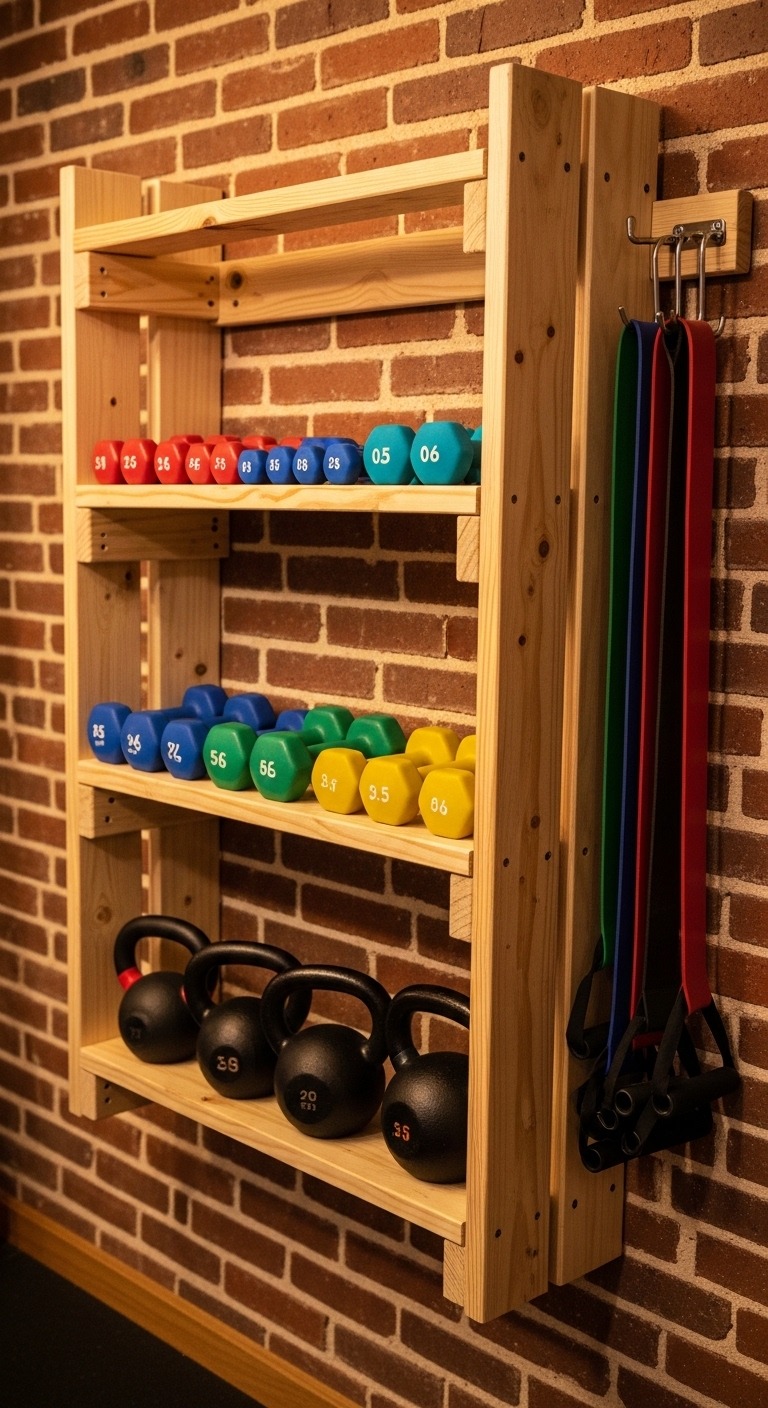
Wall-mounted racks can hold way more than you’d think. Yoga mats, kettlebells, even heavier items—just make sure you’re hitting studs when you mount anything heavy.
Pegboards are another game-changer. Throw some hooks on there and suddenly you’ve got spots for resistance bands, jump ropes, and all those small accessories that usually end up in a junk drawer.
Here’s where adjustable dumbbells really shine. Instead of needing a whole rack of different weights taking up floor space, you’ve got one compact set that does everything.
Mirrors aren’t just for checking your form (though that’s important). They trick your eye into thinking the space is bigger than it actually is. Genius, right?
Home Gym Ideas Small Garage: Your Secret Weapon
Garages are basically the holy grail of home gym spaces. You’ve got height, you’ve got wall space, and nobody cares if you get a little sweaty or drop weights.
Ceiling storage is absolutely clutch here. Mount some racks up top for things you don’t use daily—seasonal stuff, extra equipment, whatever. Keeps your floor completely clear.
French cleat systems are ridiculously versatile. You can move hooks and shelves around whenever you want without drilling new holes all over the place. Your setup can evolve as your workout routine changes.
One thing people forget about garage gyms—temperature matters. If you live somewhere with brutal summers or freezing winters, think about where you’re storing electronics and anything that doesn’t like extreme temps.
DIY Home Gym Garage Solutions on a Budget
You definitely don’t need to drop a fortune on storage. Some of the best DIY home gym garage setups I’ve seen cost maybe a hundred bucks total.
PVC pipe is stupid cheap and works great for organizing:
- Foam rollers
- Yoga mats
- Resistance bands
- Jump ropes
- Boxing wraps
Got an old bookshelf collecting dust? Reinforce those shelves and boom—you’ve got weight storage for a fraction of what commercial racks cost.
Wooden crates from craft stores are like adult LEGO blocks. Stack them, mount them, leave them on the floor—whatever works. Plus they look pretty cool in that industrial-chic kind of way.
Mini Gym At Home Ideas: Making Small Work
Mini gym at home ideas are all about being smart with zones instead of trying to cram everything into one spot.
You can create a legit workout area in a 4×6 space. Seriously. It’s not about the square footage—it’s about the setup.
Think about it like stations. Your cardio spot might just be some open floor with a mat. Your strength area holds your resistance equipment. Keep them separate mentally and physically.
Rolling carts are criminally underrated. Load up your workout essentials, roll it out when you’re ready to sweat, tuck it back in a closet when you’re done. Out of sight, out of mind.
Storage ottomans and benches with hidden compartments? Perfect for stashing resistance bands, ankle weights, and workout accessories. Nobody knows your cute living room furniture is pulling double duty.
Weight Storage Ideas That Actually Work
Let’s talk about keeping heavy stuff organized without destroying your floors or your back. Weight storage ideas need to be both practical and sturdy—no flimsy solutions here.
Horizontal plate storage trees are better than vertical ones in most cases. They hold more weight and don’t take up as much floor space, which is perfect when you’re working with a garage gym.
Angled dumbbell racks make life so much easier. You can see the weight labels without bending over, and grabbing what you need doesn’t wreck your lower back before you even start lifting.
Wall-mounted weight plate holders are clutch for tight spaces. They barely stick out from the wall but keep everything organized and visible.
Bumper plates are tough—they’re literally designed to be dropped. Lean them against walls on simple pegs or hooks. They can handle it.
Gym Cabinet Solutions for a Polished Look
A proper gym cabinet takes your setup from “person who works out sometimes” to “this is a serious gym” instantly.
The cool thing about cabinets is they hide the mess. Toss stuff in there, close the door, and everything looks clean and professional.
Get ones with adjustable shelves if you can. Your equipment collection is going to change over time, and you want storage that can keep up.
Metal beats wood in garages, hands down. It handles humidity better and won’t warp when temperatures swing. Plus it’s tougher if you accidentally bang it with equipment.
Mix heights—upper cabinets for light stuff you don’t mind reaching for, lower ones for heavy items you don’t want to lift overhead. Your back will thank you.
Workout Garage Ideas: Make It a Place You Want to Be
Creating cool workout garage ideas goes beyond just storage. You want this to be a space that pumps you up, not depresses you.
Rubber flooring is worth every penny. It protects your concrete, cushions high-impact stuff, and defines where your gym actually is. Those interlocking tiles are super easy to install yourself.
Don’t skimp on lighting. Dim garages are depressing. Bright LED lights keep your energy up and help you actually see what you’re doing.
Add some personality when you set up your space. A whiteboard for tracking progress, a big mirror, maybe some speakers. Make it yours.
Paint does wonders. A bold accent wall separates your workout zone from where you park your car. It’s a mental thing—helps you switch into workout mode.
Fitness Equipment Storage Systems Worth Investing In
Sometimes it makes sense to spend money on quality fitness equipment storage. Not everything needs to be DIY.
Multi-tier racks that hold dumbbells, plates, and accessories in one spot are incredibly efficient. Everything’s right there—no running around your garage grabbing different things.
Resistance band organizers with separate pockets are a lifesaver. No more spending five minutes untangling bands before you can even start your workout.
Medicine ball racks keep these awkward round things from rolling everywhere. Wall-mounted versions save floor space, but freestanding ones are great if you’re renting.
Foam roller storage gets overlooked, but these bulky things really benefit from having their own designated spot.
Home Gym Storage Ideas for Every Budget
Home gym storage ideas work whether you’ve got fifty bucks or five hundred. Let me break it down by price range.
Budget-Friendly ($0-$100):
- Furniture you already own
- DIY PVC organizers
- Basic hooks and pegboards
- Plastic bins
- Wooden crates
Mid-Range ($100-$500):
- Entry-level commercial racks
- Wall plate holders
- Rolling carts
- Band organizers
- Standard cabinets
Premium ($500+):
- Multi-tier systems
- Custom cabinetry
- Pro-grade racks
- Specialized holders
- Full wall systems
Start where you can afford and upgrade as you go. There’s no shame in building gradually.
Organizing Your Gym While Looking Good Doing It
While we’re talking organization, let’s be real—working out in ratty old clothes isn’t exactly motivating. Getting some decent gym outfits for women that make you feel good can be part of the whole setup.
When your workout clothes are organized and ready to go, it removes another barrier. Less friction means more workouts actually happen.
Smart Storage Hacks You Haven’t Thought Of
Magnetic strips stuck to walls can hold small metal stuff—clips, carabiners, keys. Keeps tiny things from disappearing into the void.
Command hooks are perfect for renters. Hang light resistance bands and accessories without losing your security deposit.
Shoe organizers aren’t just for shoes. Those pockets fit water bottles, hand wraps, workout gloves, resistance bands, even light dumbbells.
Tension rods in closets create instant hanging space for bands, yoga straps, and jump ropes. Zero drilling required.
Maintaining Your Organized Home Gym
Setting up storage is step one. Actually keeping it organized requires building habits that stick.
The “touch it once” rule is simple—when you’re done with equipment, put it away immediately. Takes five seconds and prevents clutter from building up.
Do a quick five-minute tidy every week. Wipe stuff down, put away anything that migrated, check if your system still makes sense.
Label everything. Even if you think you’ll remember, labels help other people in your house and prevent lazy storage choices when you’re tired after a workout.
Space Planning: Before You Buy Storage
Measure everything before spending money. Seriously, map out your space completely and think about how you actually use it.
Take stock of what you use versus what’s collecting dust. Don’t optimize storage for equipment that hasn’t moved in six months—maybe it’s time to sell it.
Think about your workout flow. Stuff you use every workout should be easiest to reach. Specialized equipment can go in harder-to-access spots.
Leave room to grow. Your fitness journey evolves, and you’ll probably buy more equipment. Build in some extra space now so you’re not reorganizing in three months.
Seasonal Rotation and Climate Considerations
Garage gyms deal with weather stuff that indoor gyms don’t. Protect your investment by thinking about temperature and humidity.
Electronics hate extreme temps. Fitness trackers, speakers, smart equipment—bring them inside during summer and winter if your garage isn’t climate controlled.
Resistance bands get brittle when cold and sticky when hot. Store them in airtight containers with those little silica gel packets to control moisture.
The Psychology of an Organized Workout Space
An organized space messes with your head in a good way. Walking into a clean, organized gym flips a mental switch that gets you ready to work.
Clutter is distracting. When everything’s organized, you focus on your workout instead of the mess or feeling overwhelmed before you even start.
Having spots for everything speeds up workouts too. No more wasting time hunting for matching dumbbells or untangling bands when you could be exercising.
Multi-Purpose Furniture for Gym Storage
Workout benches with storage built in are super practical. You get exercise equipment plus hidden storage in one piece.
Storage cubes that double as ottomans can hold yoga blocks, straps, and bands while giving you somewhere to sit between sets or tie your shoes.
Murphy-style fold-down stations are next-level space-saving. The whole thing folds flat against the wall when you’re not using it, and there’s usually storage behind it for all your stuff.
Creating Zones in Your Home Gym
Zone-based organization just makes sense. Split your space into areas based on what you’re doing and everything becomes more intuitive.
Strength zone gets weights, resistance bands, and related stuff. Cardio zone might just be open floor with a mat. Stretching zone has foam rollers, yoga blocks, and flexibility tools.
Visual boundaries between zones help your brain find what you need faster. Different colored bins or actual floor markings work great.
Tech Integration in Modern Gym Storage
Modern home gym storage ideas need to account for all the tech we use now. Tablets, phones, smart equipment—it all needs power and cable management.
Built-in charging docks keep devices powered without cords becoming trip hazards. Set up one spot as your tech hub with a small shelf.
Cable clips keep headphone cords and chargers tidy. Tiny addition that makes a surprisingly big difference.
Making the Most of Awkward Spaces
Corners and weird angles are actually storage gold mines. Corner shelving units maximize these typically wasted spots while keeping everything reachable.
Above doorways can hold lightweight stuff like yoga mats and foam rollers on basic shelf brackets. Most people never think to use this space.
Behind doors is prime real estate for over-the-door organizers. Those mesh systems can hold bands, ropes, gloves, and other gear.
Conclusion
Home gym equipment storage turns chaotic spaces into places where you actually want to work out. Doesn’t matter if you’re working with a bedroom corner or a full garage—the right storage makes fitness way more accessible.
Start with what you’ve got and upgrade over time. The best storage solution is honestly whatever you’ll actually use consistently. Keep it simple, keep it accessible, make it work for how you actually work out.
Your organized home gym is totally doable—now you’ve got the knowledge to make it happen. Time to turn that cluttered mess into your personal fitness spot.
FAQs
What’s the best way to store heavy dumbbells in a small space?
Vertical racks with small footprints work best for tight spaces. Wall-mounted options get everything off the floor completely while keeping weights organized by size. Look for racks with rubber coating to protect your weights and walls from damage.
How can I prevent my garage gym equipment from rusting?
Run a dehumidifier and apply a thin coat of 3-in-1 oil to metal surfaces once a month. Store equipment in sealed cabinets when you can and wipe everything down after sweaty workouts. Rust-resistant coating spray adds extra protection if you live somewhere really humid.
What’s the most space-efficient way to store resistance bands?
Pegboards with individual hooks keep each band separate and visible. Rolling organizers with elastic loops work great too—they hold bands in compact cylindrical storage. Never fold or kink bands long-term—always hang them to keep their elasticity.
How do I organize a home gym on a tight budget?
Repurpose stuff you already have—shoe organizers, wooden crates, PVC pipes all work great for storage. Command hooks and tension rods create temporary solutions without permanent installation. Focus on using walls and doors instead of buying expensive floor units.
Should I prioritize aesthetics or functionality in gym storage?
Functionality first, always. But here’s the thing—modern storage gives you both. Choose systems that keep your most-used equipment easy to reach while looking clean. Good design usually follows good function naturally.
How often should I reorganize my home gym storage?
Check your system every 3-6 months or whenever you add new equipment. Your workouts change over time, and your storage should change with them. A quick quarterly review keeps everything logical and makes sure nothing’s getting neglected.
What storage solutions work best for rental properties?
Stick with freestanding units, command hooks, tension rods, and furniture with built-in storage. Avoid permanent wall mounting or anything requiring drilling. Over-door organizers and rolling carts give you maximum flexibility without messing up walls.