
01 Feb Home Gym Lighting Guide: Best Options for Workouts
Best Lighting for Home Gym: The Ultimate Guide to Brighten Your Workout Space
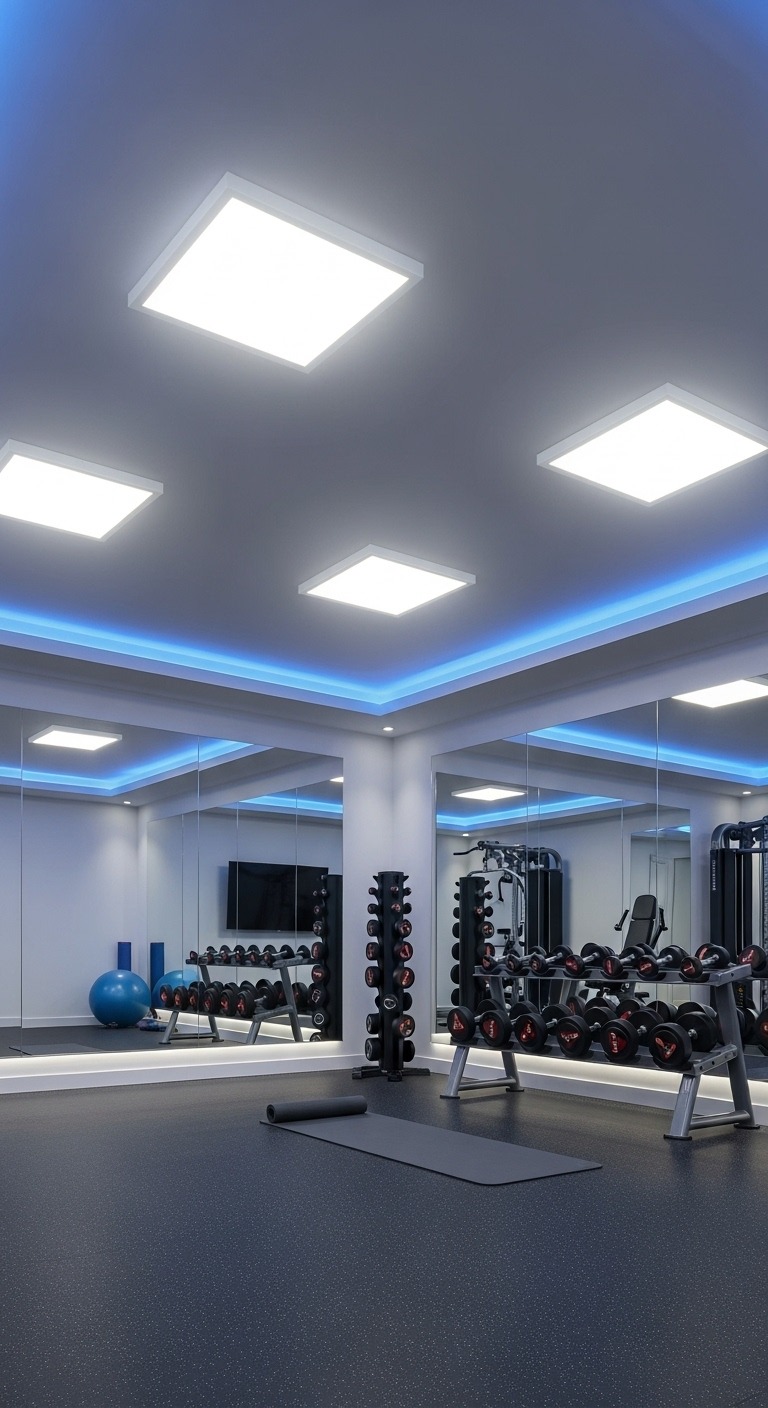
Getting the best lighting for home gym setups can totally change how your workouts feel. Whether you’re hitting weights at dawn or squeezing in yoga after dinner, the right lights make everything better – from safety to staying pumped up.
Here’s the thing – working out in a dim basement or under those awful fluorescent tubes that flicker? It sucks. The lights you pick set the whole vibe of your gym and honestly affect whether you actually want to go in there.
Why Your Home Gym Lighting Actually Matters
Lighting isn’t just so you can see stuff. It goes way beyond that.
Bad lighting causes injuries, strains your eyes, and kills your vibe before you even start. Try checking your squat form in a mirror when half your body’s covered in shadows. Not happening.
The lights in your gym mess with your energy, your mood, even how much weight you think you can lift. Bright, cooler lights wake you up and get you moving. Science backs this up.
And if you’re filming form checks or posting workout clips, you need lighting that doesn’t make everything look terrible. Your home gym setup is an investment – light it right.
Understanding Different Types of Gym Lighting
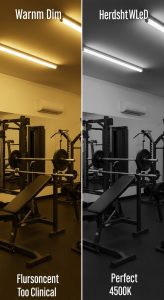
lighting comparison or types
Natural Light: The Gold Standard
Nothing beats actual sunlight if you’ve got it. It’s free, makes you feel good, and shows colors exactly how they are – super important for checking if you’re doing exercises right.
Got windows in your workout space? You’re lucky. But sunlight’s not perfect – it changes all day long and disappears at night when you might need to train.
LED Lights: The Modern Champion
LEDs are what most people use now, and there’s good reason. They barely use any power, last practically forever, and don’t turn your gym into a sauna.
You can get LED panels, strips, regular bulbs – whatever works for your space. Yeah, they cost more upfront, but you’ll save on your electric bill for years.
Fluorescent Lighting: Old School But Effective
Fluorescent tubes give you lots of bright light for cheap. They work fine if you’re on a tight budget.
But they look kind of ugly and sterile. Plus some of them flicker or make that annoying buzzing sound. Not exactly what gets you hyped to deadlift over at your squat rack.
Smart Lighting: The Tech-Savvy Solution
Smart bulbs let you control everything from your phone. Want bright blue-white light for sprints and softer tones for stretching? Done. Change it with a tap.
Hook them up to Alexa or Google and you can yell “turn on gym lights” on your way downstairs. Some even auto-adjust based on what time you usually work out.
Color Temperature: Getting the Vibe Right
Color temperature is measured in Kelvin (K) – basically whether light looks warm and orange or cool and blue.
For working out, stick with 4000K-5000K in your main area. This cool white to daylight range wakes you up without being harsh.
Here’s what different temps do:
- 2700K-3000K (Warm White): Too chill for hard workouts, save it for yoga rooms
- 3500K-4000K (Neutral White): Works okay for general stuff
- 4000K-5000K (Cool White): Perfect for lifting and cardio, keeps you sharp
- 5000K-6500K (Daylight): Great for detail work, can feel clinical
You might want different temps in different spots. Cool white over your weight bench and warmer lights where you stretch.
Brightness Levels: How Many Lumens Do You Need?
Lumens measure brightness, and gyms need more than you think. Dim lights might work in your bedroom, but they’re dangerous when you’re moving heavy stuff around.
What you need:
- 50-75 lumens per square foot for most gym lighting
- 75-100 lumens per square foot where you need to see perfectly (lifting areas, mirrors)
- 30-50 lumens per square foot for cardio zones with TV screens
Got a 200 square foot gym? You need roughly 10,000-15,000 total lumens. That’s multiple lights working together, not one sad bulb in the ceiling.
One overhead light creates shadows everywhere. Use several lights spread around instead.
Best Lighting Fixtures for Different Gym Zones
Overhead Lighting: The Foundation
LED panels or those recessed lights you see in offices make good base lighting. Space them evenly so you don’t get dark corners.
Those shop lights from hardware stores? They’re perfect for gyms. Cheap, super bright, and they handle vibration from jumping or dropping weights.
Skip ceiling fans with wimpy built-in lights – they don’t give enough brightness. Get a real fan and separate lights.
Task Lighting for Specific Areas
Your cardio equipment needs different lighting than where you lift. Task lighting targets specific spots where you need extra visibility.
Put directional lights or track lighting over:
- Weight benches and power racks
- Mirrors where you check form
- Where you store equipment
- Floor space for stretching
Adjustable ones are great because you can redirect them when you move stuff around.
Accent and Motivation Lighting
LED strips aren’t just decoration – they actually pump you up. Stick them behind mirrors, under platforms, or along the ceiling edges.
Color-changing ones let you match your mood. Blue for intense cardio, green for yoga, red when you’re going heavy.
Some people sync them to music or use them as workout timers – bright during work intervals, dim during rest.
Placement Strategies That Actually Work
Ceiling Height Considerations
Low ceilings under 8 feet need flat fixtures so you don’t smack your head doing overhead presses or jumping rope.
Normal ceiling height (8-9 feet) works with most lights. Just make sure nothing hangs down where you’ll hit it doing pull-ups.
Really high ceilings (10+ feet) need stronger lights or more of them. Light gets weaker fast when it has to travel farther.
Mirror Wall Illumination
Mirrors help you see what you’re doing, but bad lighting makes them useless. Put lights on both sides of mirrors, not just above.
This kills shadows:
- Main ceiling lights for overall brightness
- Side lights to fill in body shadows
- Maybe a backlight to make you stand out
Don’t put lights where they bounce straight into your eyes. Getting blinded mid-squat is not fun.
Equipment Zones
Think about where you’ll actually be during workouts. Your face and body should be lit up when you’re using equipment, not random ceiling space.
For bench press, lights should show your chest and arms clearly. For squats, you need good mirror visibility and to see the bar path. Cardio zones need less intense lighting since you’re usually watching a screen anyway.
Sketch your gym layout and mark where you spend the most time. Put lights there.
Energy Efficiency and Cost Savings
LEDs cost more upfront but wreck your electricity bill in a good way. Old-school incandescent or halogen bulbs in a home gym might eat 500-800 watts every workout.
Switch to LEDs and that drops to 100-200 watts for the same brightness. Do the math over a year of daily sessions – you’ll save real money.
Plus LEDs last 25,000-50,000 hours compared to 1,000-2,000 hours for regular bulbs. Way less replacing stuff constantly.
Look for ENERGY STAR stickers for guaranteed efficiency. Some electric companies even give you money back for switching to LEDs.
Safety Features You Shouldn’t Skip
Moisture Resistance
Sweat and humidity wreck regular lights. If you do hard cardio or live somewhere humid, get fixtures rated for damp or wet locations.
IP (Ingress Protection) ratings tell you what they handle:
- IP44: Handles splashing, good for most gyms
- IP65: Can take water spraying on it, probably overkill but great for basement gyms
Moisture-proof lights don’t rust out or short circuit. Extra important if your gym doesn’t have great ventilation.
Impact Resistance
Dropped weights, flying resistance bands, or wild jump rope can smash exposed bulbs. Get fixtures with protective covers or recessed designs.
Polycarbonate covers basically never break. Must-have over lifting platforms or anywhere stuff might go flying.
Emergency Lighting
Losing power mid-workout sucks and can be dangerous. Battery backup lights or a UPS system keeps some lights on if the power cuts out.
At least keep a flashlight handy. Being stuck on a running treadmill in pitch black is terrifying.
Smart Lighting Integration
Smart lighting changes everything. Set up routines that match your schedule without touching switches.
Morning workouts can gradually get brighter like sunrise. Evening sessions start at full blast. Voice control means changing lights without stopping your set.
Good options:
- Philips Hue: Expensive but really good, tons of colors, solid app
- LIFX: No hub needed, bright, good colors
- Wyze Bulbs: Cheap, work fine, basic features
- Govee LED Strips: Budget accent lighting, syncs to music
Hook smart lights to interval timers for visual workout cues. Your lights become part of training, not just background.
Budget-Friendly Lighting Solutions
You don’t need to drop thousands. Smart shopping and doing it yourself gets you pro results cheap.
Money-saving moves:
- Buy workshop lights instead of “gym” lights: Same thing, way cheaper
- Get multipacks: LED bulbs cost less per bulb in bulk
- Install yourself: Most lights are easy with basic tools
- Start simple: Nail the main overhead lights first, add fancy stuff later
Basic but solid setup:
- 4-6 LED shop lights for ceiling ($100-200)
- Budget LED strips for accents ($30-50)
- Smart bulbs in existing fixtures ($40-80)
Total: $170-330 for gym lighting that rivals commercial gyms.
Want to look good working out? These stylish gym outfits for women look amazing under any lighting.
Advanced Lighting Techniques
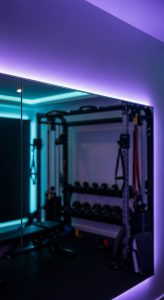
accent and motivation lighting
Layered Lighting Design
Pros use multiple light types for depth. Mix ambient, task, and accent lighting for a complete system.
Ambient is your general ceiling lights. Task targets specific areas – directional lights over equipment. Accent creates mood – LED strips and decorative stuff.
Each layer has a job and you control them separately. Dim the decorative lights for focus work, crank them up for high-energy sessions.
Circadian Rhythm Optimization
Your body clock runs on light, affecting energy and performance. Bright, blue-toned light in the morning helps you wake up naturally.
Training late with super bright cool light might mess up your sleep. Evening workouts work better with warmer tones (3000K-3500K) or smart bulbs that auto-shift temperature.
Some serious athletes use fancy circadian lighting systems that copy natural daylight. Overkill for most people but can dial in training times perfectly.
Video-Ready Lighting
Recording workouts for Instagram or checking form? Three-point lighting makes footage look pro without harsh shadows.
Set it up:
- Key light: Main light at 45° to your side, a bit above eye level
- Fill light: Softer light on the opposite side, fills shadows
- Back light: Behind you, separates you from the background
Position these around where you film and adjust until you look natural on camera. Your home gym equipment will look Instagram-ready.
Need workout clothes that pop on camera? Check women’s gym outfit combinations that work with any lighting.
Common Lighting Mistakes to Avoid
Single Overhead Light Syndrome
One ceiling light creates awful shadows. Your body blocks light from above, making mirrors basically useless for form checks.
Multiple lights spread across the ceiling fix this instantly. Even cheap shop lights placed right beat one expensive fancy fixture.
Wrong Color Temperature
Putting warm cozy 2700K bulbs in a gym kills energy and makes everything look muddy. Cool white to daylight temps wake you up and create the right atmosphere.
Save warm lighting for your living room. Gyms should energize, not make you sleepy.
Ignoring Glare Issues
Lights aimed at mirrors or shiny surfaces blind you. Angle fixtures slightly or use diffusers to stop glare.
Flat finish walls and equipment help too. If you’re constantly squinting or moving to avoid bright spots, your placement’s wrong.
Inadequate Brightness
Trying to save money with wimpy fixtures leaves you straining to see. Proper brightness prevents accidents and makes workouts better.
You can dim lights that are too bright. You can’t brighten lights that are too weak. Go slightly brighter than you think you need.
Forgetting Dimmer Controls
Workout intensity changes, your lighting should too. Dimmer switches or smart controls let you adjust for different stuff.
Warm-up stretches don’t need the same brightness as max deadlifts. Flexibility beats fixed brightness.
Maintenance and Longevity Tips
Keep lights clean for max brightness. Dust and cobwebs block crazy amounts of light – up to 30% over time.
Wipe covers monthly with a damp cloth. For recessed lights, vacuum the housing when you clean your gym. Clean lights work better and look better.
LED lifespan depends on conditions. Heat kills them – make sure air can flow around fixtures. Enclosed lights trap heat and die faster.
Check connections sometimes for loose wiring or corrosion, especially in humid gyms. Tighten flickering bulbs and replace dead ones quickly.
Keep spare bulbs around. Nothing kills workout motivation like a burned-out light with no replacement.
Creating the Perfect Lighting Plan
Measure Your Space
Get accurate square footage and ceiling height. These numbers determine how many lights you need and where they go.
Draw your gym showing equipment, mirrors, windows, and outlets. This visual prevents expensive mistakes.
Determine Your Needs
Think about how you train:
- Heavy lifting: Bright, focused lighting, 75-100 lumens per square foot
- Cardio: Moderate lighting, 50-75 lumens per square foot
- Yoga/stretching: Softer, warmer with dimming
- Mixed training: Layered system with zone control
Be real about your style. A powerlifting gym needs different lights than a Pilates studio.
Choose Your Fixtures
Match fixture types to what each zone needs. Main areas get bright overhead panels or shop lights. Accent zones get adjustable or decorative options.
Make a shopping list with quantities, specs, and budget. Compare prices online first.
Installation Strategy
Hire an electrician for complex wiring or if you’re uncomfortable with electrical. Simple fixture swaps are usually DIY-friendly.
Install main ceiling lights first, test coverage, then add task and accent lighting. This staged approach prevents buying too much or placing stuff wrong.
Label circuits and switches. Future you will appreciate it.
Upgrading Existing Gym Lighting
Already have a gym with meh lighting? Upgrading doesn’t mean ripping everything out.
Easy improvements:
- Swap bulbs first: Replace old incandescent or CFL bulbs with LEDs at proper color temp
- Add more fixtures: Install cheap shop lights or LED strips where needed
- Install dimmers: Control existing fixtures better without replacing
- Redirect existing lights: Adjust angles or add reflectors for better coverage
Small changes make big differences. Getting best lighting for home gym quality might cost way less than you think.
Need functional gym equipment to match your new lighting? The right gear completes it.
Seasonal and Time-of-Day Considerations
Natural light shifts dramatically through the year. Summer mornings might barely need artificial lights, winter sessions need everything on.
Program smart lights to auto-compensate. Sensors detect ambient light and adjust.
Time matters too. Early birds benefit from gradually brightening lights that help you wake up. Night trainers might want consistent brightness no matter what’s happening outside.
Blackout curtains or shades give you control over sunlight. Train in your preferred conditions year-round.
The Psychology of Gym Lighting
Lighting messes with mood, motivation, and how hard workouts feel. Bright, cool environments increase alertness and can make sessions feel easier.
Research shows people lift heavier and push harder in well-lit spaces versus dim ones. Your brain connects bright light with daytime and less melatonin.
Colors matter:
- Blue/white: Energizing, keeps you focused and intense
- Red: Makes heart rate feel higher, aggressive vibe
- Green: Calm but alert, good for endurance
- Warm white: Relaxing, better for cooldowns
Use lights strategically for your goals. Intense days get bright, cool light. Recovery sessions use warmer, softer tones.
Want confidence during tough workouts? These motivational gym outfits pair perfectly with great lighting.
Commercial vs. Home Gym Lighting
Commercial gyms use harsh fluorescent because it’s cheap and bright. Home gyms let you build something way better.
You control:
- Exact color temp for your taste
- Brightness that suits your eyes
- Looks that match your space
- No compromises for budget
Take advantage. Design lighting commercial facilities can’t touch.
Environmental Impact
LED lighting cuts your carbon footprint a ton. Less power used means fewer emissions from power plants.
Longer bulb life means less waste. One LED replacing 25 incandescent bulbs keeps serious junk out of landfills.
Many LED companies offer recycling programs now. When bulbs eventually die (years later), toss them responsibly.
Going green with lights fits the health-focused mindset that got you into fitness anyway.
Future-Proofing Your Lighting
Tech keeps getting better. Pick systems that handle upgrades without total replacement.
Standard fixtures accept newer bulbs as they come out. Smart lighting gets new features through software updates.
Avoid weird proprietary systems with limited options. Stick with popular brands that’ll stick around.
Installing extra electrical capacity now prevents rewiring later when you add equipment or lights. Planning ahead is easier and cheaper.
Professional Consultation vs. DIY
Most home gym lighting is totally doable yourself. Simple installation needs basic tools and following directions.
When to hire pros:
- Running new electrical circuits
- Installing in finished ceilings without attic access
- Complex smart lighting setups
- Local codes requiring licensed electricians
- You’re uncomfortable with electrical
Get quotes from multiple contractors. Explain your vision and budget upfront.
For straightforward upgrades, YouTube and product instructions work fine. Start simple, gain confidence, tackle harder projects later.
Lighting for Specialized Training
Olympic Lifting Platforms
Overhead movements need planning. Make sure lights won’t get hit during snatches or jerks.
Bright lighting above platforms helps visualize bar path. Side lighting cuts shadows for video analysis.
Martial Arts and Boxing Areas
Heavy bag work means constant movement. Position lights to kill swing shadows that mess with your combos.
Multiple angles stop your shadow from blocking the target. Bright, even coverage helps proper technique.
Yoga and Flexibility Zones
Softer, warmer lighting creates calm for stretching and mobility.
Dimmable fixtures let you adjust. Many yogis want gentler lighting that relaxes instead of energizing.
Combining Natural and Artificial Light
Windows are great but unpredictable. Add artificial lights for consistent conditions.
Position equipment to use daylight without glare problems. Morning sun through east windows naturally energizes early workouts.
Sheer curtains diffuse harsh direct sun. Blackout options control when natural light becomes a problem.
Artificial lighting should match natural daylight color temp (5000K-6500K) so they blend seamlessly when both are on.
Final Lighting Checklist
Before committing, verify:
- Enough total lumens for your square footage
- Right color temp for training (4000K-5000K ideal)
- Even coverage with minimal shadows
- No glare in mirrors or on screens
- Dimmable or adjustable for flexibility
- Safe installation meeting codes
- Energy-efficient to minimize costs
- Moisture and impact resistance where needed
Check these and you’ll have lighting that supports killer workouts for years. Your home gym deserves the best lighting for home gym training.
Need outfit ideas for your lit-up gym? Browse these trendy women’s activewear options that look incredible under proper lighting.
Conclusion
Setting up the best lighting for home gym spaces transforms how you train. Proper lights improve safety, boost performance, and create the motivating vibe you need to crush workouts.
Start with bright, cool-toned LEDs giving 50-75 lumens per square foot as your base. Add task lighting for specific zones and accent lighting for atmosphere. Pick energy-efficient options with moisture and impact resistance.
Whether you’re on a tight budget or building premium, smart choices create pro results. Measure, plan your layout, and install fixtures supporting your training style.
Your gym investment deserves lighting that matches. With these strategies, you’ll build a space that energizes morning sessions, supports evening training, and makes every rep count.
Now go light up those gains.
Frequently Asked Questions
What is the best color temperature for home gym lighting?
The sweet spot is 4000K-5000K (cool white to daylight) for most gyms. This range wakes you up, helps focus, and looks like natural daylight without being harsh. Warmer temps (2700K-3000K) work better for yoga or stretching zones, while cooler supports intense lifting and cardio.
How many lumens do I need for a home gym?
Shoot for 50-75 lumens per square foot for general lighting. A 200 square foot gym needs roughly 10,000-15,000 total lumens. Spots needing precision like lifting platforms or mirrors benefit from 75-100 lumens per square foot, while cardio zones work fine with 30-50 lumens per square foot.
Are LED lights better than fluorescent for home gyms?
Yeah, LEDs beat fluorescent hands down. They use way less power, last 25,000-50,000 hours (versus 1,000-2,000 for fluorescent), don’t heat up your space, and show colors better. LEDs also skip the flickering and buzzing fluorescents do. While LEDs cost more initially, long-term savings and performance make them the obvious choice.
Should I use natural light or artificial light in my home gym?
Natural light rocks when you have it but add artificial for consistency. Windows give you mood-boosting daylight and save energy, but sunlight changes all day and through seasons. Mix natural light with adjustable artificial fixtures to keep conditions good during all workout times, especially early mornings and evenings.
Can I install home gym lighting myself?
Most gym lighting is DIY-able if you’re comfortable with basic electrical. Simple stuff like swapping bulbs, hanging plug-in shop lights, or sticking up LED strips needs minimal skills. But hire a licensed electrician for running new circuits, complex wiring, or anything requiring ceiling modifications. Always follow local codes and kill power before touching fixtures.
How do I prevent shadows when working out in front of mirrors?
Use three-point lighting to kill shadows at mirrors. Put overhead lights for general brightness, plus lights on both sides of the mirror to fill body shadows. Don’t put lights straight in front where they’ll bounce into your eyes. Multiple sources from different angles create even lighting showing your form clearly.
What’s the best lighting for a basement home gym?
Basement gyms need bright artificial lighting since sunlight’s limited. Use 75-100 lumens per square foot with cool white LEDs (4000K-5000K) to make up for no windows. Pick moisture-resistant fixtures rated IP44 or higher for potential humidity. Multiple overhead fixtures create even coverage fighting that cave feeling basements have.
Do smart bulbs work well for home gym lighting?
Smart bulbs are awesome for gyms because they adjust brightness and color temp. Program different settings for various workouts, schedule auto changes by time of day, and control via voice or phone. Popular picks include Philips Hue, LIFX, and budget Wyze bulbs. They add flexibility without complicated installation.