
10 Feb Home Gym Equipment Guide: 15 Must-Have Picks
Best Gym Equipment for Home: Complete Guide to Building Your Perfect Workout Space
Gym equipment for home has become essential for anyone serious about fitness without the monthly gym membership. You’re about to discover exactly what you need to create a killer workout space.
Building a home gym doesn’t mean sacrificing your entire living room or emptying your bank account. The right equipment transforms any corner into a functional fitness studio.
Let me walk you through everything you need to know about selecting, organizing, and maximizing your home workout setup.
Why Home Gym Equipment Makes Sense in 2025
The fitness landscape has completely shifted over the past few years. More people are choosing home workouts over traditional gym memberships for good reasons.
You save money in the long run—no monthly fees, no commute, no waiting for equipment. Your workout happens on your schedule, not the gym’s operating hours.
Privacy matters too. You can grunt, sweat, and try new exercises without feeling self-conscious.
Home gym equipment gives you consistency that’s hard to beat. No excuses about traffic or weather keeping you from your workout.
15 Must-Have Pieces of Gym Equipment for Home
1. Adjustable Dumbbells: The Ultimate Space Saver
Adjustable dumbbells are the foundation of any smart home gym setup. They replace an entire rack of weights while fitting in a single corner.
Modern adjustable sets range from 5 to 52.5 pounds per dumbbell. That’s enough resistance for beginners through advanced lifters.
You’ll use these for everything—chest presses, shoulder raises, bicep curls, lunges, and more. The versatility justifies the investment every single time.
Look for quick-adjust mechanisms that let you change weight in seconds. Your workout flow stays smooth without awkward pauses.
Check out premium options at Gym Equipage that combine durability with smart design.

2. Resistance Bands: Compact Home Gym Essential
Resistance bands pack serious training potential into something that fits in a drawer. These stretchy tools work your muscles through variable tension that free weights can’t match.
A quality band set includes five resistance levels from light to heavy. You’re covered for warm-ups, rehab work, and intense strength training.
Bands excel at targeting smaller stabilizer muscles that dumbbells miss. Your shoulders, rotator cuffs, and glutes will thank you.
They’re perfect for compact home gym setups because they literally take up zero permanent space. Hang them on a hook and forget about them.
3. Adjustable Weight Bench: Your Workout Foundation
An adjustable weight bench opens up hundreds of exercise variations. Flat, incline, and decline positions target muscles from every angle.
The difference between a cheap bench and quality one shows up fast. Wobbling during heavy lifts isn’t just annoying—it’s dangerous.
Look for benches rated for at least 600 pounds. Sturdy construction matters more than bells and whistles.
Home gym setup ideas always include a bench because it’s that fundamental. Chest presses, rows, step-ups, and core work all improve with proper bench support.
4. Pull-Up Bar: Bodyweight Training Hero
A doorframe pull-up bar costs about $30 and builds your entire upper body. No complex installation, no permanent mounting required.
Pull-ups, chin-ups, and hanging leg raises create that V-shaped torso everyone wants. Progressive overload happens naturally as you get stronger.
Can’t do a full pull-up yet? Use resistance bands for assistance or start with negative reps.
This simple gym tool proves you don’t need fancy machines for serious results. Consistency beats complexity every time.
Explore various pull-up bar options at Gym Equipage designed for different doorway sizes.

5. Kettlebells: Dynamic Strength Training
Kettlebells bring unique training benefits that dumbbells can’t replicate. The offset weight distribution forces your stabilizer muscles to work overtime.
Start with one or two weights—16kg for men, 8kg for women works for most beginners. Add heavier bells as your strength increases.
Swings, Turkish get-ups, goblet squats, and snatches build explosive power and endurance. Your heart rate spikes while muscles grow.
The gym equipment aesthetic of cast iron kettlebells adds serious fitness credibility to your space. Function meets form perfectly here.
6. Yoga Mat: Foundation for Floor Work
A quality yoga mat does way more than yoga. It’s essential for core work, stretching, bodyweight exercises, and cool-downs.
Cheap mats slide around and compress into nothing within months. Invest $50-80 in a premium 6mm mat that actually cushions your joints.
Look for non-toxic materials with good grip when wet. Your sweaty hands shouldn’t slip during planks.
This simple home gym essential protects your floors while protecting your body. Every home gym needs at least one.
7. Foam Roller: Recovery Game Changer
Foam rollers aren’t optional anymore—they’re essential for anyone training regularly. Self-myofascial release prevents injury and speeds recovery.
A medium-density roller works for most people. Too soft does nothing; too hard bruises beginners.
Roll out tight quads, hamstrings, IT bands, and back muscles after workouts. Five minutes of rolling beats hours of stiffness later.
Your home workout equipment arsenal isn’t complete without proper recovery tools. Train hard, recover harder.
8. Jump Rope: Cardio Without the Treadmill
A speed rope delivers incredible cardio in minimal space. Ten minutes of jumping matches thirty minutes of jogging for calorie burn.
Adjustable ropes fit any height from 5′ to 6’5″. The bearing system makes or breaks the experience—invest in quality here.
Jumping improves coordination, footwork, and cardiovascular endurance. Boxers don’t skip rope for nothing.
This compact home gym solution costs $15-30 and works anywhere with 8-foot ceilings. No excuses for skipping cardio anymore.
Browse cardio equipment including premium jump ropes at Gym Equipage.

9. Suspension Trainer: Portable Gym in a Bag
Suspension trainers like TRX systems anchor to doors, trees, or beams. Your bodyweight becomes the resistance through hundreds of exercises.
The instability factor engages your core in every single movement. Regular push-ups become significantly harder on suspension straps.
Adjust difficulty by changing your body angle—genius in its simplicity. Beginners and athletes use the same equipment with different positions.
Pack it in a bag for workouts anywhere. Home gym machines can’t compete with this level of portability.
10. Medicine Ball: Functional Fitness Tool
A medicine ball between 10-20 pounds adds explosive power training to your routine. Slam it, throw it, catch it—dynamic movements that barbells can’t provide.
Wall balls, Russian twists, overhead slams, and partner throws build real-world strength. Your core gets hammered from every angle.
The textured grip prevents slipping during sweaty workouts. Durability matters—cheap balls split open after weeks of slamming.
This gym tool bridges the gap between strength training and athletic performance. Functional fitness at its finest.
11. Stability Ball: Core and Balance Training
A stability ball challenges your balance while strengthening deep core muscles. Size matters—your knees should hit 90 degrees when sitting.
Use it as a bench alternative for added instability during presses. Your stabilizers fire harder to maintain control.
Ab rollouts, hamstring curls, and back extensions take on new difficulty. Even sitting on it while working engages your core.
DIY workout equipment doesn’t get simpler than an inflatable ball. The training benefits surprise most people.
12. Barbell and Weight Plates: Serious Strength Building
A 7-foot Olympic barbell with weight plates represents the next level in home training. Nothing builds pure strength like compound barbell lifts.
Start with 300 pounds of plates total—enough for progressive overload across all major lifts. Add more as you get stronger.
Squats, deadlifts, bench presses, and rows form the backbone of effective strength programs. Results come faster with barbell training.
Power racks provide safety for lifting alone. Home gym machine alternatives cost more while offering less versatility.
Find complete barbell sets at Gym Equipage with everything you need to start lifting heavy.

13. Rowing Machine: Full-Body Cardio King
A rowing machine works 86% of your muscles in every stroke. Upper body, core, and legs all contribute to the movement.
Concept2 dominates the market for good reason—bulletproof construction and smooth resistance. The investment hurts upfront but lasts decades.
Low-impact cardio means your joints stay healthy while your conditioning improves. Rowers build endurance without the pounding of running.
Foldable models save floor space when not in use. Gym setup ideas for small spaces often feature quality rowers.
14. Plyo Box: Jump Training Essential
A plyo box develops explosive power through jump training. Heights from 20-30 inches work for most training programs.
Box jumps, step-ups, elevated push-ups, and Bulgarian split squats all utilize this simple platform. Your legs and glutes transform.
Foam-topped boxes prevent shin scrapes during missed jumps. Wood boxes look better but show no mercy to beginners.
Build your own following homemade gym principles for under $50. Three pieces of plywood and some screws get the job done.
15. Battle Ropes: Conditioning Powerhouse
Battle ropes finish workouts with metabolic conditioning that torches calories. Waves, slams, and circles exhaust you in minutes.
A 1.5-inch diameter, 50-foot rope works for most home setups. You need an anchor point—trees, posts, or wall mounts all work.
The cardio and strength combination builds work capacity fast. Your grip, shoulders, and core burn simultaneously.
Gym plan designs for serious athletes always include conditioning tools. Battle ropes deliver results that treadmills can’t touch.
Creating Your Gym Plan: Step-by-Step Setup Strategy
Planning before purchasing saves money and regret. Your available space, budget, and fitness goals determine equipment priority.
Assess Your Space
Measure your workout area accurately. Compact home gym setups need different equipment than full garage conversions.
Consider ceiling height for overhead presses and pull-ups. Nine-foot ceilings open up options that eight-foot ceilings limit.
Natural light and ventilation matter more than you think. Stuffy basements kill workout motivation fast.
Set a Realistic Budget
Quality gym equipment for home requires investment, but you don’t need everything immediately. Start with essentials and add monthly.
The $500 starter budget covers dumbbells, bands, mat, and pull-up bar. That’s enough for comprehensive training right there.
The $2,000 intermediate setup adds a bench, barbell set, and cardio machine. You’re competing with commercial gyms now.
The $5,000+ advanced home gym includes power racks, multiple machines, and premium everything. Sky’s the limit here.
Prioritize Based on Goals
Strength training prioritizes weights—dumbbells, barbell, bench, and rack form your foundation. Cardio equipment comes second.
Fat loss needs a balance—resistance training burns calories during and after workouts, while cardio adds volume. Get both.
Athletic performance demands explosive movements—plyo boxes, battle ropes, and medicine balls supplement traditional lifting.
General fitness allows flexibility—choose equipment you’ll actually use instead of what looks impressive. Consistency beats optimization.
Find equipment for every goal at Gym Equipage with expert guidance included.
Simple Home Gym Setup Ideas by Space
Apartment Corner Gym (25-50 sq ft)
Minimal footprint, maximum results. Adjustable dumbbells, resistance bands, yoga mat, and doorframe pull-up bar fit anywhere.
Wall-mounted storage keeps equipment organized without eating floor space. Fold-up benches disappear after workouts.
Focus on bodyweight movements supplemented with dumbbells and bands. You’ll be shocked what this simple setup delivers.
Spare Bedroom Gym (100-150 sq ft)
Dedicated space changes everything. Add a bench, barbell set, and one cardio machine to the apartment essentials.
Rubber flooring protects your floors and reduces noise. Neighbors appreciate the consideration.
Mirrors expand the visual space while helping form checks. Full-length mirrors cost $50 and improve every workout.
Garage Gym (200+ sq ft)
This is where home gyms get serious. Power rack, full plate sets, multiple machines, and dedicated cardio zones become possible.
Climate control matters—insulation for winter, fans for summer keep training consistent. Extreme temperatures kill motivation.
Organize by workout zone—strength area, cardio zone, stretching space. The layout prevents equipment chaos.
DIY Workout Equipment: Budget-Friendly Alternatives
Homemade Slam Ball ($15)
Old basketball + sand + duct tape = functional slam ball. Cut a small hole, fill with sand to desired weight, seal thoroughly.
These won’t bounce like commercial versions, but they’ll handle slams and wall balls. Replace every 6-12 months.
PVC Pipe Parallettes ($20)
Ten feet of PVC pipe creates parallettes for dips and L-sits. Cut to size, connect with elbow joints, done.
They’re not pretty, but they work. DIY workout equipment builds character along with muscle.
Sandbag from Duffel Bag ($30)
Heavy-duty duffel + contractor bags + sand = versatile sandbag. The shifting weight challenges stability uniquely.
Carries, cleans, squats, and throws all work with sandbags. Functional strength builds fast.
Concrete-Filled Plates ($40)
Five-gallon buckets + concrete + PVC pipe = weight plates. Not precise, but effective for loaded carries and lifts.
The homemade gym aesthetic might not win design awards, but results don’t care about Instagram.
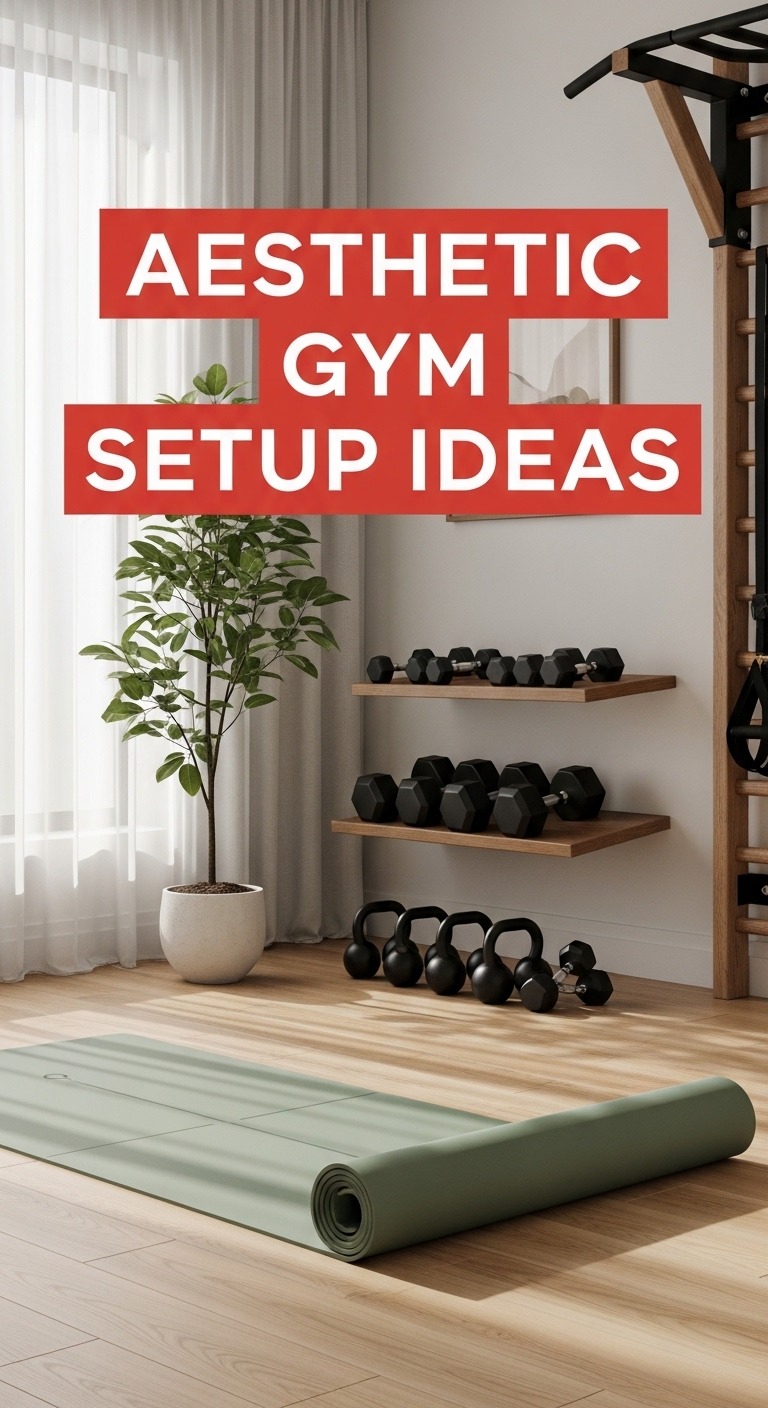
Gym Equipment Aesthetic: Making It Look Good
Functionality first, but aesthetics matter. You’ll use equipment more when your space looks intentional.
Color coordination creates visual calm. Black equipment with wood accents delivers that gym equipment aesthetic everyone loves.
Smart storage solutions prevent clutter chaos. Wall-mounted racks, labeled bins, and pegboards organize small items.
Plants add life to sterile workout spaces. Low-maintenance varieties survive the gym environment.
Good lighting transforms everything. Bright LEDs energize morning workouts; dimmable options suit evening sessions.
Maintaining Your Home Gym Equipment
Regular maintenance extends equipment life and prevents mid-workout failures. Five minutes of care saves hundreds in replacements.
Wipe down equipment after sweaty sessions. Salt corrosion ruins metal faster than you’d think.
Lubricate moving parts monthly on machines and adjustable weights. Smooth operation prevents premature wear.
Inspect cables, bands, and straps for fraying. Replace before they snap during use.
Tighten bolts quarterly on benches and racks. Vibration loosens hardware over time.
Common Home Gym Setup Mistakes to Avoid
Buying everything at once leads to unused equipment collecting dust. Build gradually as needs become clear.
Ignoring measurements results in equipment that doesn’t fit. Measure twice, buy once applies to gym gear too.
Choosing cheap over quality costs more long-term. That $50 bench collapses under real weight every time.
Neglecting flooring damages both floors and equipment. Rubber tiles or mats prevent expensive repairs.
Skipping organization creates chaos that kills motivation. A messy gym feels overwhelming instead of inviting.
The Mental Benefits of Home Gym Equipment
Convenience removes excuses that plague gym memberships. Your equipment waits whenever you’re ready.
Privacy builds confidence for beginners self-conscious about form. Learn without judgment, progress without pressure.
Control over environment means perfect temperature, music selection, and cleanliness standards. Your space, your rules.
Long-term savings add up impressively. That $2,000 home gym pays for itself in 12-18 months versus membership fees.
Family fitness becomes easier when equipment sits in your home. Kids see exercise as normal instead of special.
Conclusion
Gym equipment for home transforms your fitness journey from dependent on external gyms to self-sufficient training. The initial investment pays dividends in convenience, consistency, and results.
Start with essentials based on your space and goals. Quality beats quantity every single time.
Build gradually as your training advances and budget allows. The perfect home gym evolves with your fitness journey.
Remember that gym equipment for home works only when you actually use it. The best equipment is whatever keeps you training consistently.
Your home gym awaits—now go build it.
Frequently Asked Questions
Q: How much does basic gym equipment for home cost?
A: A functional starter setup runs $300-500 including adjustable dumbbells, resistance bands, yoga mat, and pull-up bar. You can train effectively with this foundation while adding equipment gradually.
Q: What gym equipment should beginners buy first?
A: Start with adjustable dumbbells and resistance bands. These two items enable hundreds of exercises covering all major muscle groups without requiring significant space or budget.
Q: Is a home gym worth the investment?
A: Absolutely. A $2,000 home gym pays for itself in 12-18 months compared to average gym memberships. Plus you gain convenience, privacy, and permanent access without monthly fees.
Q: How much space do I need for a home gym?
A: A compact home gym works in just 25-50 square feet. A spare bedroom (100-150 sq ft) allows for more equipment variety, while garage gyms (200+ sq ft) support commercial-grade setups.
Q: Can I build an effective home gym on a tight budget?
A: Yes. Start with bodyweight exercises and minimal equipment like resistance bands and a pull-up bar. Add DIY options like homemade slam balls and sandbags. Quality used equipment also saves significantly.
Q: What’s the best flooring for home gym equipment?
A: Rubber flooring tiles or mats work best. They protect your floors, reduce noise, provide cushioning, and handle dropped weights. Expect to spend $1-3 per square foot for quality options.
Q: How do I maintain my home workout equipment?
A: Wipe down equipment after use, lubricate moving parts monthly, inspect bands and cables for wear, and tighten bolts quarterly. Five minutes of regular maintenance prevents expensive replacements.
Q: What gym equipment works best for small apartments?
A: Adjustable dumbbells, resistance bands, suspension trainers, and doorframe pull-up bars maximize training variety in minimal space. All store easily when not in use, perfect for compact home gym setups.