
02 Feb Best Rubber Flooring for Home Gym: 13 Top Picks
13 Best Rubber Flooring for Home Gym That Protects Floors and Equipment
The best rubber flooring for home gym transforms concrete garages, basement floors, and spare rooms into professional training facilities while protecting subfloors from heavy weights, equipment damage, and excessive noise. Quality rubber flooring costs $1 to $8 per square foot depending on thickness, material quality, and installation method—a modest investment preventing thousands in floor repairs and noise complaints.
Modern rubber gym flooring has evolved dramatically beyond basic utility mats. Today’s options include interlocking tiles for DIY installation, rolled rubber for seamless appearance, eco-friendly recycled materials, virgin rubber for odor-free performance, and specialized options for everything from Olympic lifting platforms to basement moisture control.
Why Rubber Flooring Matters for Home Gyms
Dropping weights directly on concrete, hardwood, or tile floors causes immediate damage—cracks in concrete, dents in wood, shattered tiles. Rubber flooring absorbs impact forces that would otherwise destroy your floors while protecting equipment from bounce-back damage that occurs when weights hit unforgiving surfaces.
Noise reduction proves equally critical for home gyms in apartments, condos, or houses with neighbors nearby. Thick rubber flooring dampens sound transmission by 40-60 decibels, transforming ear-splitting deadlift drops into manageable thuds that won’t trigger complaint calls or damage household relationships.
Key Rubber Flooring Features to Evaluate
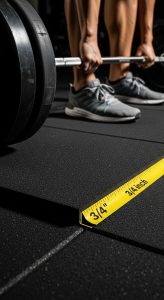
Thickness Options Rubber flooring ranges from 1/4-inch for light cardio areas to 1-inch for serious Olympic lifting platforms. Most home gyms need 3/4-inch thickness balancing protection, cost, and performance across various training styles.
Thicker flooring provides better shock absorption and noise reduction but costs more per square foot. Thinner options save money in low-impact zones like stretching areas or treadmill platforms.
Material Types Virgin rubber uses new materials creating consistent quality, minimal odor, and premium performance at higher prices ($4-8 per square foot). Recycled rubber repurposes old tires delivering adequate performance at budget prices ($1-3 per square foot) with initial rubber smell requiring airing out.
Both materials perform well for home gym applications—choose based on budget priorities and odor sensitivity rather than performance concerns.
Installation Methods Interlocking tiles snap together without adhesive, making DIY installation simple and allowing easy replacement of damaged sections. Rolled rubber creates seamless professional appearance but requires cutting, sometimes gluing, and more installation skill.
Loose-laid mats simply rest on floors without attachment—easiest installation but can shift during aggressive training. Your choice depends on DIY confidence, aesthetic preferences, and whether you rent (requiring removable flooring) versus own your space.
best rubber flooring for home gym
1. Horse Stall Mats – Best Budget Option
Standard 4×6 foot horse stall mats from farm supply stores represent the best rubber flooring for home gym builders on tight budgets at just $40-60 per mat ($1.50-2.50 per square foot). These 3/4-inch thick mats deliver commercial-grade performance identical to premium gym flooring at fraction of the cost.
Tractor Supply, Rural King, and similar farm stores stock these mats designed for horse stalls—environments demanding extreme durability under constant heavy impact and moisture exposure. What handles thousand-pound horses easily protects home gym floors from any training intensity.
Why Horse Stall Mats Dominate Budget Builds
Commercial-Grade Construction These mats use dense recycled rubber designed for agricultural applications far more demanding than home gyms. The durability exceeds what home training requires—most mats outlast the gyms they’re installed in.
The standard 3/4-inch thickness provides adequate shock absorption for deadlifts, Olympic lifts, and equipment drops without requiring additional underlayment in most situations.
Unbeatable Value At $1.50-2.50 per square foot installed (zero installation cost—just lay them down), horse stall mats cost 50-75% less than specialty gym flooring while performing identically. A 200-square-foot garage gym costs $300-500 total versus $1,200-2,000 for premium alternatives.
Simple Installation Each 100-pound mat simply lies on your floor—no cutting, gluing, or tools required for basic installations. Seams between mats interlock naturally through weight, creating stable floors without adhesive.
Considerations
Initial Odor New mats smell strongly of rubber for 1-4 weeks depending on ventilation and weather. Air them outside or in well-ventilated garages before installing, or install immediately accepting temporary odor that dissipates naturally.
Weight and Handling Each 4×6 foot mat weighs 100+ pounds, making solo installation challenging. Recruit help moving mats or expect slower installation working alone with furniture dollies or similar aids.
Limited Size Options Standard 4×6 foot dimensions mean cutting mats for custom fits around obstacles or room dimensions. Heavy-duty utility knives handle cutting but require effort through 3/4-inch dense rubber.
Specifications
- Size: 4′ x 6′ (24 square feet per mat)
- Thickness: 3/4 inch standard
- Material: Recycled rubber
- Cost: $40-60 per mat ($1.50-2.50/sq ft)
- Installation: Loose-lay (no adhesive needed)
- Availability: Tractor Supply, Rural King, farm stores
Explore comprehensive home gym flooring guides for complete setup planning.
2. Rubber Flooring Inc. – Best Overall Quality
Rubber Flooring Inc. manufactures premium gym flooring ranging $3-8 per square foot in multiple thicknesses, formats, and quality levels. Their product line includes everything from budget recycled tiles to premium virgin rubber rolls, giving home gym builders complete control over quality-versus-cost tradeoffs.
The company specializes in fitness flooring specifically—not general-purpose rubber products adapted for gyms. This focus produces superior products optimized for weightlifting impact, equipment protection, and training environment aesthetics.
Premium Product Range
Virgin Rubber Rolls Top-tier option for odor-sensitive installations or premium home gyms prioritizing appearance. Virgin rubber provides consistent black color, minimal smell, and smooth texture at $5-8 per square foot.
Rolled format creates seamless installations without visible tile seams—ideal for high-end basement gyms or visible home gym spaces where aesthetics matter significantly.
Recycled Rubber Tiles Budget-friendly interlocking tiles at $2-4 per square foot deliver solid performance with DIY-friendly installation. The 2×2 foot tiles install easily, allow section replacement if damaged, and cost 40-60% less than virgin rubber options.
Specialty Thickness Options Rubber Flooring Inc. offers 1/4″, 3/8″, 1/2″, 3/4″, and 1″ thicknesses enabling precise matching to training needs. Olympic lifters choose 1-inch platforms; CrossFit-style training uses 3/4-inch; cardio areas work with 3/8-inch—customization maximizes value.
Installation Services
The company provides professional installation services in many markets—valuable for large projects, rolled rubber requiring seaming, or homeowners wanting guaranteed results. Professional installation costs $1-3 per square foot additional but ensures perfect results.
Specifications
- Formats: Rolled rubber, interlocking tiles, custom cut
- Thickness: 1/4″ to 1″ options
- Material: Virgin or recycled rubber
- Cost: $2-8 per square foot depending on options
- Warranty: Varies by product line
Check our complete home gym equipment reviews for coordinated flooring and equipment choices.
3. GreatMats Gym Flooring – Best Selection
GreatMats offers the industry’s largest selection with 50+ gym flooring products spanning every price point, thickness, material type, and installation method. This extensive catalog enables finding perfect matches for any home gym requirement, space constraint, or budget level.
The variety proves valuable when dealing with unusual spaces, specific training needs, or aesthetic preferences mainstream products don’t address. GreatMats likely stocks exactly what you need regardless of how specific your requirements become.
Standout Product Categories
Tatami and MMA Mats Specialized flooring for martial arts, grappling, or bodyweight training. These foam-backed options provide cushioning for falling, rolling, and ground work while maintaining firm enough surfaces for standing exercises.
Portable Gym Tiles Interlocking tiles designed for temporary installations or renters needing removable flooring. Install for training sessions, remove for parking or other uses, reinstall as needed without permanent commitment.
Sound-Dampening Underlayment Specialized products for apartment or condo gyms requiring maximum noise reduction. Layer under standard rubber flooring multiplying sound-dampening properties beyond what rubber alone provides.
Price and Quality Tiers
GreatMats products range from $1 per square foot budget options to $12+ per square foot premium specialty products. The extensive range means finding solutions at your exact budget rather than settling for “close enough” from limited selections.
Specifications
- Products: 50+ gym flooring options
- Thickness: 1/4″ to 2″ available
- Materials: Rubber, foam, vinyl, hybrid
- Cost: $1-12+ per square foot
- Specialty: Custom solutions, unusual needs
4. American Floor Mats – Best Interlocking Tiles
American Floor Mats specializes in interlocking rubber tiles optimized for DIY home gym installations. Their products emphasize easy installation, damage section replacement, and color customization through mixing tile colors in patterns or borders.
The focus on interlocking systems makes American Floor Mats ideal for homeowners wanting professional results without professional installation costs or skills. Puzzle-piece edges create stable floors despite zero adhesive use.
Interlocking Advantages
Tool-Free Installation Tiles snap together by hand without cutting tools, adhesives, or specialized equipment. Most homeowners complete 200-square-foot installations in 2-4 hours working alone—truly weekend DIY projects.
Section Replacement Damaged tiles pop out and replace individually without disturbing surrounding floor. This modularity proves valuable long-term when isolated damage occurs from equipment drops or wear patterns.
Color Customization Mix black, gray, blue, red, or green tiles creating custom patterns, borders, or training zone demarcations. Visual interest transforms basic gym floors into designed spaces rather than purely functional surfaces.
Product Range
Standard Gym Tiles (3/4″) Most popular option at $3-4 per square foot. Dense recycled rubber in 2×2 foot tiles with proven durability across thousands of home gym installations.
Premium Virgin Rubber Tiles Upgraded version at $5-6 per square foot using virgin rubber for minimal odor and consistent appearance. Same easy installation with premium materials.
Economy Tiles (1/2″) Budget option at $2-3 per square foot. Adequate for general training but insufficient thickness for serious Olympic lifting or heavy deadlifts without additional platform layers.
Specifications
- Format: Interlocking tiles exclusively
- Sizes: 2×2 foot standard
- Thickness: 1/2″, 3/4″, 1″ options
- Cost: $2-6 per square foot
- Colors: Black, gray, blue, red, green
Visit garage gym setup guides for space planning strategies.
5. Regupol Gym Flooring – Premium European Quality
Regupol manufactures ultra-premium gym flooring in Germany using advanced manufacturing processes and strict quality controls. Their products cost $6-15 per square foot but deliver performance, durability, and refinement justifying premium pricing for high-end home gyms prioritizing absolute best quality.
European manufacturing standards, environmental certifications, and engineering precision create flooring performing at levels above mainstream products. Serious home gym builders refusing all compromises choose Regupol accepting higher costs for superior results.
Premium Features
Precise Thickness Consistency Advanced manufacturing ensures exact thickness across entire floor rather than variations common in budget products. This precision creates perfectly level surfaces critical for Olympic lifting platforms and equipment stability.
Superior Density Higher rubber density provides better shock absorption, longer lifespan, and improved noise reduction compared to standard density products. The difference becomes apparent during heavy training sessions.
Environmental Certifications Regupol products meet strict European environmental and safety standards including low VOC emissions and sustainable manufacturing processes. Health-conscious buyers prioritize these certifications.
Installation Considerations
Regupol recommends professional installation for optimal results, particularly with rolled rubber formats requiring precise cutting and seaming. Budget additional installation costs when planning Regupol projects.
Specifications
- Origin: Made in Germany
- Formats: Rolled rubber, tiles, custom systems
- Thickness: 1/4″ to 1.5″ precision options
- Cost: $6-15 per square foot
- Certifications: European environmental standards
best rubber flooring for home gym
6. Foam Factory Gym Mats – Best Foam Options
The Foam Factory offers foam-based gym flooring as alternatives to rubber for specific applications. Foam excels in areas requiring cushioning over shock absorption—yoga studios, stretching zones, bodyweight training areas, or spaces where comfort matters more than equipment protection.
Foam costs $1-4 per square foot depending on thickness and density—generally cheaper than rubber while providing superior cushioning for floor-contact exercises. The tradeoff is reduced durability under heavy equipment or aggressive training.
Foam Applications in Home Gyms
Dedicated Stretching Areas Create comfortable zones for mobility work, yoga, or post-workout stretching using thick foam tiles. The cushioning encourages spending adequate time on recovery work that hard rubber surfaces discourage.
Cardio Equipment Platforms Treadmills, stationary bikes, and ellipticals benefit from foam’s vibration dampening properties. Equipment runs quieter on foam than rubber while the cushioning reduces noise transmission through floors.
Martial Arts and Grappling Zones Tatami-style foam mats provide safe surfaces for takedowns, throws, and ground work. The cushioning protects joints during impact while maintaining firm enough surfaces for technique work.
Foam Limitations
Foam compresses permanently under sustained heavy loads—power racks, loaded barbells, or heavy equipment create indentations over time. Use foam only in areas without permanent equipment or heavy weight exposure.
Durability trails rubber significantly. Foam tears, compresses, and degrades faster than rubber under identical conditions. Plan foam replacement every 3-5 years versus 10-20 years for quality rubber.
Specifications
- Material: Cross-linked polyethylene foam
- Thickness: 1/2″ to 2″ options
- Density: Multiple firmness levels
- Cost: $1-4 per square foot
- Best use: Bodyweight training, cardio areas, stretching
7. Century Martial Arts Mats – Best Puzzle Mats
Century manufactures affordable interlocking puzzle mats originally designed for martial arts but adapted widely for home gym use. At $1-2 per square foot, these 1-inch thick foam-backed mats provide budget-friendly flooring for bodyweight training, cardio areas, or temporary gym installations.
The extreme affordability makes Century mats popular for beginners building first home gyms or renters needing removable flooring options. Performance limitations become acceptable when costs run 75% below rubber alternatives.
Budget-Friendly Benefits
Minimal Investment Cover 200 square feet for $200-400 total—entry-level pricing enabling home gym creation without financial barriers. Upgrade to rubber later as budget permits while training immediately on adequate surfaces.
Instant Installation Foam puzzle mats weigh ounces rather than pounds, snapping together in minutes. Solo installation completes quickly without heavy lifting, tools, or assistance.
Portable and Removable Pop mats apart and stack for storage or relocation. Renters appreciate removable flooring leaving no trace while homeowners value reconfiguration flexibility for changing space needs.
Performance Tradeoffs
The 1-inch foam construction provides cushioning for floor contact but compresses under equipment weight creating unstable surfaces. Avoid placing heavy equipment on Century mats—designate them for bodyweight zones only.
Durability suits occasional training but degrades under intensive daily use. Budget replacing mats every 2-3 years with regular training versus 10+ years for quality rubber.
Specifications
- Material: EVA foam
- Thickness: 1 inch standard
- Size: 2×2 foot tiles
- Cost: $1-2 per square foot
- Best use: Beginners, bodyweight training, temporary setups
Discover budget home gym equipment matching affordable flooring investments.
8. RubberFlooringInc Eco-Sport Tiles – Best Eco-Friendly
Eco-Sport tiles from RubberFlooringInc use 100% post-consumer recycled rubber meeting environmental standards while maintaining performance. At $2.50-3.50 per square foot, these tiles balance eco-consciousness with budget-friendliness and adequate gym flooring performance.
Environmentally-minded home gym builders appreciate verified recycled content and domestic manufacturing reducing carbon footprints. The green credentials don’t compromise training capabilities—these tiles perform like standard recycled rubber products.
Environmental Features
100% Recycled Content Every tile uses post-consumer recycled rubber from tires and industrial sources. This diverts waste from landfills while creating functional gym flooring—circular economy in action.
Domestic Manufacturing US-based production reduces shipping emissions versus imported products. Supporting domestic manufacturing carries environmental and economic benefits beyond recycled materials alone.
Low VOC Emissions Eco-Sport tiles meet stringent emission standards for indoor air quality. Health-conscious buyers prioritize low-VOC products for home environments where air quality matters significantly.
Performance Characteristics
The recycled rubber performs identically to non-eco-branded recycled products—adequate shock absorption, good durability, and standard noise reduction. The eco-certification adds value without performance penalties.
Expect typical recycled rubber characteristics including initial odor (airs out in 1-3 weeks), slight color variations between tiles, and dense, durable construction suitable for heavy training.
Specifications
- Material: 100% post-consumer recycled rubber
- Thickness: 3/4 inch standard
- Size: 2×2 foot interlocking tiles
- Cost: $2.50-3.50 per square foot
- Certifications: Recycled content verified
9. Rubber-Cal Elephant Bark – Best Texture
Rubber-Cal’s Elephant Bark flooring features heavily textured surfaces providing superior traction during training. The deep grooves and patterns prevent slipping even when wet from sweat, improving safety during intense workouts where foot placement matters critically.
At $4-6 per square foot, Elephant Bark costs more than smooth rubber but the texture benefits justify premiums for training styles demanding secure footing—Olympic lifting, plyometrics, or high-intensity interval training.
Texture Advantages
Enhanced Grip The aggressive surface texture grips shoe soles securely preventing slips during explosive movements, direction changes, or heavy lifts. Lifters maintain stable platforms even during maximal efforts where slight slips cause missed lifts or injuries.
Sweat Management Textured surfaces channel moisture into grooves rather than creating slick surface films. Training hard without mopping between sets becomes viable with proper texture handling sweat effectively.
Aesthetic Interest The elephant bark pattern creates visual interest distinguishing gym floors from basic smooth rubber. Home gym owners appreciating design details value the upgraded appearance.
Texture Considerations
Deep textures trap dust, chalk, and debris more than smooth surfaces—expect more frequent cleaning maintaining appearance. Vacuum or sweep weekly preventing buildup in grooves.
Bare skin contact feels rougher on heavily textured surfaces. Wear appropriate clothing during floor exercises to avoid discomfort during planks, sit-ups, or stretching.
Specifications
- Material: Virgin or recycled rubber
- Thickness: 1/4″ to 3/4″ options
- Format: Rolled rubber or tiles
- Cost: $4-6 per square foot
- Texture: Deep groove elephant bark pattern
10. Gorilla Mats – Best for Deadlifts
Gorilla Mats manufactures 1-inch thick rubber tiles specifically optimized for heavy deadlifts and Olympic lifting. The extra thickness provides shock absorption preventing floor damage even when dropping hundreds of pounds from overhead or lockout positions.
At $5-7 per square foot, Gorilla Mats cost significantly more than standard 3/4-inch options but the added protection justifies premiums for serious strength athletes training with heavy loads regularly.
Heavy Lifting Features
1-Inch Thickness The extra 1/4-inch thickness beyond standard mats multiplies shock absorption dramatically—particularly important for Olympic lifts where bars drop from overhead. Floor damage risk drops to near-zero with proper 1-inch coverage.
Dense Construction Ultra-dense rubber composition prevents compression and bounce during impact. Weights land solidly without excessive rebound that damages equipment or creates control issues during training.
Modular Platform Building Combine Gorilla Mats with wood platforms creating custom Olympic lifting platforms. The 1-inch base layer pairs perfectly with hardwood or plywood lifting surfaces.
Investment Considerations
The premium pricing suits serious strength athletes training heavy regularly but exceeds needs for general fitness or moderate training intensities. Match thickness to actual training demands avoiding overbuying unnecessary protection.
Specifications
- Thickness: 1 inch (extra thick)
- Size: 2×2 foot interlocking tiles
- Material: Dense recycled rubber
- Cost: $5-7 per square foot
- Best use: Olympic lifting, heavy deadlifts, serious strength training
11. Norsk Foam Floor Mats – Best for Light Use
Norsk manufactures inexpensive foam mats ($0.50-1.50 per square foot) for home gym areas receiving light use—stretching zones, yoga spaces, or casual bodyweight training. The extreme affordability enables covering large areas without significant investment.
Performance limitations restrict Norsk mats to light applications, but the low cost makes them valuable for designated zones within larger home gyms using rubber in heavy-use areas.
Light-Use Applications
Yoga and Stretching Studios Create comfortable cushioned areas encouraging recovery work, flexibility training, and mobility exercises. The soft foam feels pleasant during floor contact unlike hard rubber surfaces.
Kids’ Exercise Areas Safe, cushioned surfaces for children’s activity spaces or family workout zones where impact protection matters more than durability under heavy equipment.
Temporary Solutions Cover floors quickly and cheaply for short-term needs or trial periods before committing to permanent rubber installations. Test home gym layouts using inexpensive foam before investing in quality flooring.
Limitations
Foam compresses under even moderate equipment weight creating unstable surfaces. Never place barbells, power racks, or heavy dumbbells on foam mats—designate foam areas for bodyweight training exclusively.
Expect replacement every 1-2 years with regular use. The low initial cost makes periodic replacement acceptable for light-use applications.
Specifications
- Material: EVA foam
- Thickness: 1/2″ to 1″ options
- Cost: $0.50-1.50 per square foot
- Best use: Light bodyweight training, stretching, yoga
Explore strength training equipment completing your flooring foundation.
12. ProsourceFit Puzzle Mats – Best for Cardio Zones
ProsourceFit puzzle mats cost $1-2 per square foot providing cushioned surfaces ideal under cardio equipment—treadmills, stationary bikes, ellipticals, or rowing machines. The foam construction dampens vibration and noise while protecting floors from equipment weight and movement.
Designating cardio zones with dedicated foam flooring makes economic sense—avoiding unnecessary rubber costs in areas not requiring rubber’s superior properties for weight training.
Cardio Equipment Benefits
Vibration Dampening Foam absorbs equipment vibrations preventing transmission through floors to rooms below. Treadmills running on foam disturb neighbors far less than identical machines on hard surfaces.
Equipment Protection The cushioning reduces stress on cardio machine frames and components. Treadmill motors and belt systems last longer with vibration-dampening foam foundations.
Noise Reduction Foam muffles mechanical sounds from equipment operation—belt friction, flywheel rotation, and component interactions. Quieter cardio encourages longer training sessions without noise fatigue.
Installation Simplicity
Lightweight foam tiles install in minutes under individual equipment pieces. Cut tiles to exact equipment dimensions creating custom platforms matching machine footprints precisely.
Specifications
- Material: EVA foam interlocking tiles
- Thickness: 1/2 inch standard
- Cost: $1-2 per square foot
- Colors: Black, gray, multiple options
- Best use: Under cardio equipment
13. Custom Rubber Flooring Solutions
Custom fabricated rubber flooring addresses unique spaces, unusual requirements, or specific aesthetic visions standard products don’t accommodate. Manufacturers like Greatmats and Rubber Flooring Inc create custom solutions including specific dimensions, colors, thickness combinations, or specialized features.
Custom flooring costs 20-50% premiums over standard products but enables perfect matches for challenging spaces or discerning buyers refusing compromises.
Custom Options
Exact Room Dimensions Order rolled rubber cut precisely to room measurements eliminating seams entirely. The seamless appearance justifies premium costs for high-end installations where aesthetics matter significantly.
Color Matching Custom color formulations match specific design schemes, corporate branding, or personal preferences. Home gym owners integrate flooring into overall design rather than accepting standard black rubber.
Thickness Combinations Create lifting platforms combining multiple thickness layers optimized for specific training. Custom fabrication enables precise engineering impossible with standard products alone.
Logo Inlays Embed custom logos, designs, or patterns into flooring creating personalized gym branding. This premium touch suits serious home gym owners viewing spaces as long-term investments.
Specifications
- Customization: Sizes, colors, thickness, features
- Lead time: 2-6 weeks typically
- Cost: 20-50% premium over standard products
- Minimum orders: Vary by manufacturer
Choosing the Best Rubber Flooring for Your Home Gym
Your ideal flooring depends on training style, space type, budget constraints, and installation preferences. Powerlifters and Olympic lifters need 3/4-inch to 1-inch thickness; general fitness training works with 1/2-inch; cardio areas function with 1/4-inch.
Space considerations matter equally—garages handle any flooring type while basements need moisture-resistant options and apartments require maximum noise reduction through thick rubber plus underlayment.
Decision Framework
For Budget Builds ($300-600 for 200 sq ft): Choose horse stall mats ($1.50-2.50/sq ft) or recycled rubber tiles ($2-3/sq ft). These deliver adequate performance without financial stress.
For Mid-Range Quality ($600-1,200 for 200 sq ft): Invest in quality interlocking tiles ($3-4/sq ft) or rolled rubber ($4-6/sq ft) from American Floor Mats or Rubber Flooring Inc balancing quality and cost.
For Premium No-Compromise ($1,200-2,400+ for 200 sq ft): Get virgin rubber rolls ($5-8/sq ft), Regupol premium products ($6-15/sq ft), or custom solutions with exact specifications. These deliver maximum performance and longevity.
For Specific Needs:
- Heavy lifting: Gorilla Mats 1-inch tiles
- Eco-conscious: RubberFlooringInc Eco-Sport
- Traction critical: Rubber-Cal Elephant Bark
- Noise reduction: Thick rubber plus underlayment
Installation Tips for Best Results
Proper installation maximizes flooring performance and longevity regardless of product choice. Clean and level subfloors before installation—sweep concrete thoroughly, fix major cracks, and address moisture issues in basements.
Allow rubber products to acclimate to installation environment temperatures for 24-48 hours before installing. Temperature changes cause expansion or contraction—acclimation prevents gaps or buckling post-installation.
Installation Steps
1. Prepare Subfloor
- Sweep and vacuum thoroughly
- Repair cracks or damage
- Level significant irregularities
- Address moisture in basements (vapor barriers if needed)
2. Plan Layout
- Measure room carefully
- Plan tile patterns or roll cuts
- Account for borders and edges
- Minimize cuts in visible areas
3. Install Flooring
- Start in corners working outward
- Ensure tight seams between pieces
- Cut precisely around obstacles
- Use recommended adhesives (if required)
4. Finishing Touches
- Install border strips or transitions
- Allow adhesive curing time (if used)
- Clean surface before equipment placement
- Air out rubber smell with ventilation
Conclusion
The best rubber flooring for home gym balances performance needs, budget realities, installation preferences, and space requirements creating safe, durable training surfaces protecting floors and equipment for years or decades. From budget-friendly horse stall mats at $1.50 per square foot to premium Regupol at $15, modern options accommodate every situation without forcing compromises on essential features.
Your ideal flooring choice depends on training intensity, space type, and quality priorities. Serious lifters benefit from thick, dense rubber absorbing heavy drops; general fitness enthusiasts thrive with standard 3/4-inch options; budget-conscious builders start with horse stall mats upgrading later.
Rubber gym flooring represents smart long-term investments protecting far more valuable assets—your home’s structural floors, expensive training equipment, and relationships with neighbors tolerating your training. Choose appropriate thickness and quality for your specific needs, install properly, and enjoy decades of protected, comfortable training on surfaces built specifically for the punishment home gyms deliver.
Frequently Asked Questions
What is the best rubber flooring for home gym use?
Horse stall mats from farm supply stores represent the best rubber flooring for home gym builders balancing quality and budget at $1.50-2.50 per square foot. For premium installations, Rubber Flooring Inc virgin rubber ($5-8/sq ft) delivers odor-free performance and professional appearance. Training intensity determines thickness needs—3/4-inch for general use, 1-inch for serious Olympic lifting and heavy deadlifts.
How thick should home gym rubber flooring be?
Most home gyms need 3/4-inch rubber flooring balancing protection, cost, and performance. Olympic lifters dropping weights from overhead require 1-inch thickness preventing floor damage. General strength training and moderate weights work adequately with 1/2-inch flooring. Cardio equipment areas and stretching zones function with 1/4-inch options. Match thickness to actual training intensity rather than overbuying unnecessary protection.
Can you put rubber gym flooring over concrete?
Yes, rubber flooring installs directly over concrete in most situations. Clean and level concrete first, repairing significant cracks or irregularities. Basements may need vapor barriers preventing moisture transmission before rubber installation. Interlocking tiles and rolled rubber both work over concrete with proper preparation. Adhesive becomes optional for most home gym installations—rubber weight creates adequate stability.
How do you get rid of rubber gym mat smell?
New rubber mats smell strongly for 1-4 weeks depending on ventilation and temperature. Air mats outside in sunlight for several days before installation—UV exposure and fresh air reduce odor significantly. Alternatively, install immediately in well-ventilated spaces accepting temporary smell that dissipates naturally. Baking soda sprinkled on mats absorbs some odor. Virgin rubber products cost more but eliminate odor concerns entirely.
Is recycled or virgin rubber better for gyms?
Recycled rubber costs 50-70% less than virgin rubber while delivering adequate performance for most home gyms. Virgin rubber provides consistent color, minimal odor, and slightly better shock absorption justifying premiums for high-end installations. Performance differences prove minimal in practice—budget and odor sensitivity drive the choice more than functionality. Both materials last 10-20+ years with proper care.
How much does rubber gym flooring cost installed?
Budget $1.50-3 per square foot for horse stall mats or basic recycled tiles (DIY installation). Quality interlocking tiles cost $3-5 per square foot installed by homeowners. Premium rolled virgin rubber runs $5-8 per square foot plus optional professional installation ($1-3/sq ft additional). A typical 200-square-foot home gym costs $300-1,600 depending on product choice and installation method.
Can you install rubber gym flooring yourself?
Yes, most rubber gym flooring installs easily as DIY projects. Interlocking tiles snap together without tools or adhesive—average homeowners complete installations in 2-4 hours. Rolled rubber requires measuring, cutting with utility knives, and sometimes adhesive application but remains manageable with basic DIY skills. Horse stall mats simply lay on floors with minimal effort beyond moving 100-pound mats into position.
What maintenance does rubber gym flooring need?
Sweep or vacuum rubber flooring weekly removing dust, chalk, and debris. Mop monthly with mild soap and water maintaining appearance and hygiene. Avoid harsh chemicals damaging rubber. Inspect seams periodically ensuring interl