
12 Jul Split Squat 101: The Ultimate Free Weights Workout for Women’s Leg and Glute Gains
Why the Split Squat Deserves a Spot in Your Leg Day
Let’s be honest — most of us have skipped leg day at some point because the “big” lifts felt intimidating or our knees just weren’t having it. That’s exactly why the split squat is worth your attention. It’s not flashy, it doesn’t need a rack or a spotter, and yet it’s one of the most effective moves you can add to a free weights workout for women who actually want to see and feel results in their legs and glutes.
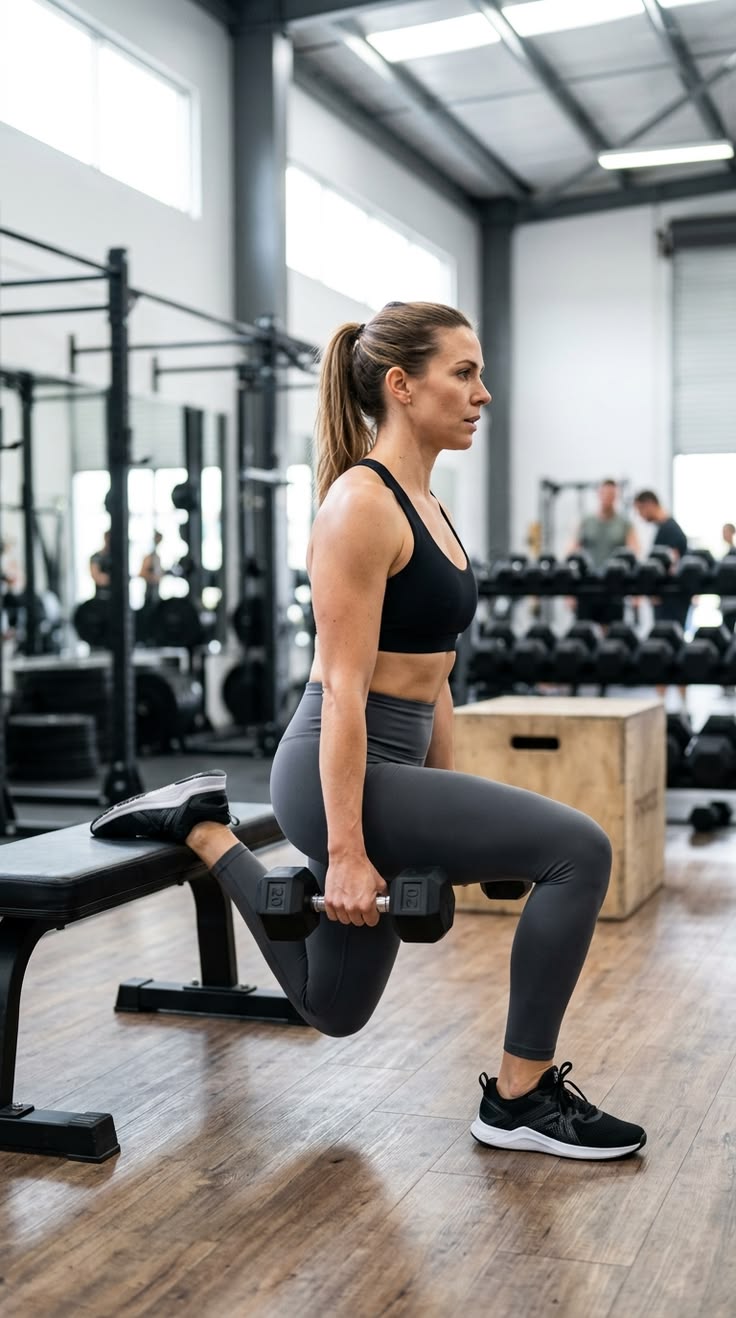
Here’s the short version: a split squat is basically a stationary lunge. One foot stays planted in front, the other rests behind you, and you drop straight down and back up. Because you’re working one leg at a time instead of two, your body has to work harder to stabilize itself, which means more glute activation, better balance, and fewer sneaky imbalances between your left and right side. It’s a favorite among trainers for a reason.
The best part? You don’t need much to get started. A couple of dumbbells, some floor space, and a little patience with your form is all it takes. If you’re slowly putting together a setup at home, even a basic pair of adjustable dumbbells or free weights will get you through this move just fine.
woman doing split squat dumbbells
How to Do a Split Squat Without Wrecking Your Knees
Here’s where most people go wrong with this exercise — they rush it, or they let their front knee do things it really shouldn’t. Slow down and get the mechanics right first, then worry about adding weight. Here’s how it should look:
- Set your stance. Step one foot forward, one foot back, roughly hip-width apart from side to side (not directly in a line — that throws off your balance). Front foot flat, back heel lifted.
- Drop straight down. Bend both knees so your back knee lowers toward the floor. Your front shin should stay close to vertical — if your knee’s shooting way out past your toes, shorten your stance a bit.
- Stay tall through your chest. A little forward lean is normal, but don’t let your back round or your shoulders cave in.
- Push through your front heel to stand back up, and give your glute a good squeeze at the top like you’re trying to hold a pencil there.
- Finish your set, then swap legs. Somewhere around 8–12 reps a side, 3 sets, is a solid place to start.
A couple of things that trip people up more than anything else:
- Your front knee tracking way inward or outward — keep it pointed roughly the same direction as your toes.
- Rushing the descent. Slow and controlled builds far more muscle than fast and sloppy.
- Forgetting your core. Brace it like you’re expecting a light tap to the stomach.
Once bodyweight feels easy, grab a dumbbell in each hand, or hold one at chest height for a bit more of a challenge. If you end up loving single-leg work (a lot of people do once they try it), a solid kettlebell set is a great next investment for your home setup.
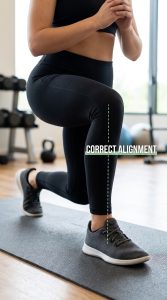
knee alignment during split squat
A Few Variations Worth Trying Once You’ve Got the Basics Down
Once the standard split squat starts feeling too easy, don’t just add more weight right away — try switching things up first. Your muscles respond better to new challenges than to just piling on plates. Here are a few variations that are worth working into your routine:
- Bulgarian Split Squat — Prop your back foot up on a bench or step. It sounds like a small tweak, but it deepens the range of motion and really turns up the heat on your front glute and quad. This one pairs nicely with resistance-based training too, especially if you’ve got access to a functional pulley setup.
- Deficit Split Squat — Stand on a low platform so you can drop even lower. More range, more work for your glutes and hamstrings.
- Goblet Split Squat — Hold one dumbbell or kettlebell right at your chest. Shifts more of the focus to your quads and forces your core to stay engaged the whole time.
- Split Squat Jump — For when you’ve built up a decent strength base. Add an explosive jump between reps to work on power, not just size.
- Isometric Hold — Drop into the bottom position and just… stay there. 20 to 30 seconds is brutal in the best way, and it’s fantastic for building endurance and mental grit.
Mix a couple of these into your leg days each week alongside other lower-body staples like Romanian deadlifts or hip thrusts. And if you’re doing this kind of single-leg work at home, the surface under your feet actually matters more than people think — a good mat or set of gym flooring can save your knees and give you way more confidence on the harder variations.
If you want to take things further and start connecting these movements to real-world strength and coordination, this kettlebell functional training guide is worth a read too.
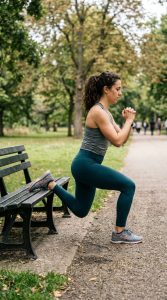
woman performing bulgarian split
Ready to Give Your Legs and Glutes Some Real Attention?
Here’s the thing about the split squat — it’s not glamorous, and it won’t show up in many highlight reels, but it works. Consistency and decent form will take you a lot further than chasing the next trendy exercise. As you get stronger and want more of a challenge, a heavier set of dumbbells or some bumper plates for barbell work will keep the progress coming, no gym membership required.
If you’re building out your own little training corner at home, it’s worth putting some thought into the space itself, not just the equipment. A room that actually feels good to walk into makes it a lot easier to stay consistent. We put together a few ideas on designing your home gym space if you want some inspiration there. Otherwise, grab your dumbbells, find a bit of floor space, and give the split squat a real shot in your next workout. Your legs (and glutes) will notice the difference.
woman completing strength workou