
25 Jan 7 Best Ceiling Fans for Home Gyms (Buyer’s Guide)
Best Ceiling Fan for Home Gym: The Ultimate Guide to Staying Cool During Workouts
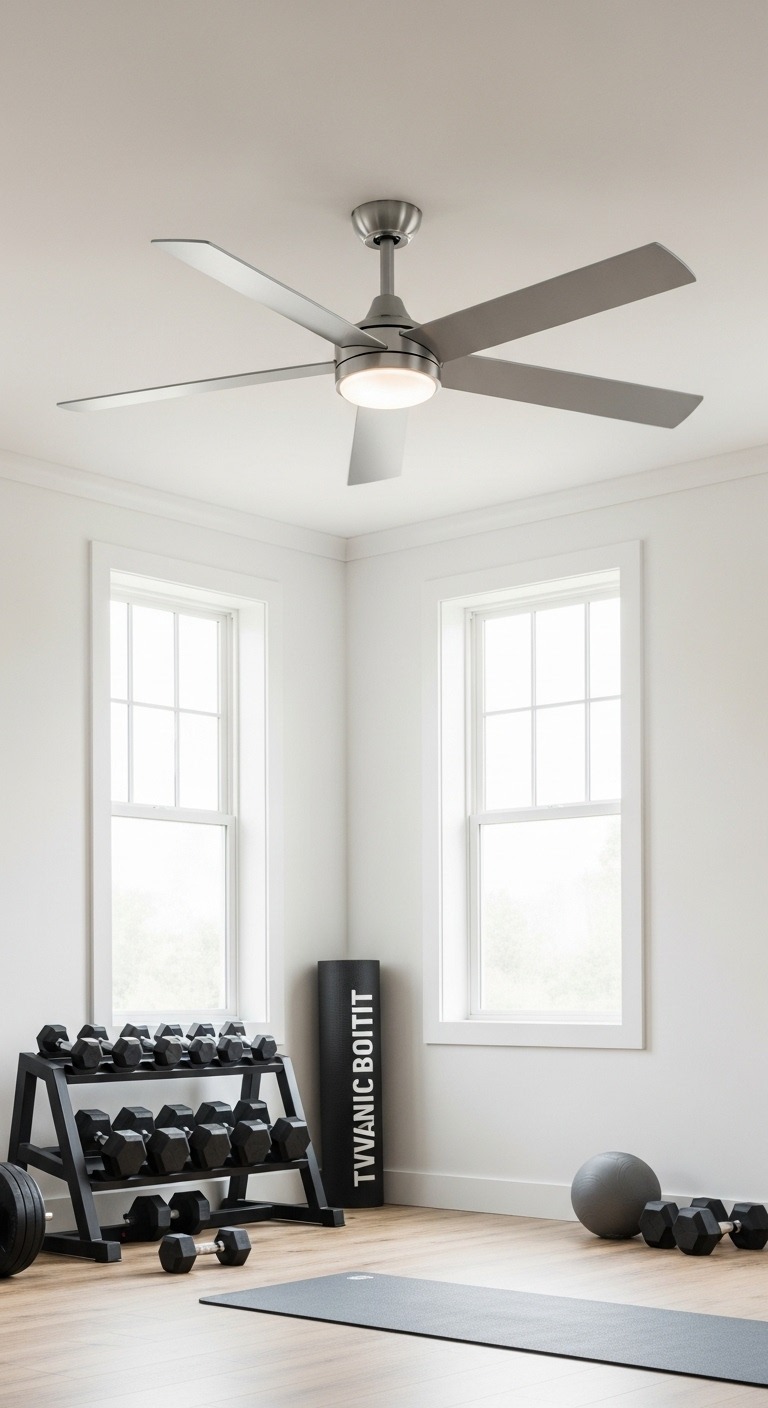
Finding the best ceiling fan for home gym spaces can transform your workout experience from sweaty and uncomfortable to refreshing and energizing. Nothing kills motivation faster than stepping into a stuffy, hot gym space where the air feels thick and stagnant.
A quality ceiling fan doesn’t just move air around. It creates proper ventilation, regulates temperature, and keeps you focused on crushing your fitness goals instead of wiping sweat from your eyes every thirty seconds.
Why Your Home Gym Desperately Needs a Ceiling Fan
Your body generates serious heat during exercise. When you’re pushing through that final set of squats or powering through burpees, your core temperature skyrockets fast.
Without proper air circulation, that heat has nowhere to go. You end up in a sauna-like environment that drains your energy and cuts workouts short.
Ceiling fans solve this problem by creating continuous airflow that helps sweat evaporate from your skin. This natural cooling process keeps your body temperature regulated so you can train harder and longer.
Unlike portable fans that take up valuable floor space, ceiling fans work from above. They don’t interfere with your home gym equipment or create obstacles during dynamic movements.
Key Features to Look for in Gym Ceiling Fans
Blade Span and Room Coverage
The size of your ceiling fan matters tremendously. A fan that’s too small won’t circulate enough air, while an oversized fan might overwhelm a compact space.
For most home gyms between 150-300 square feet, look for blade spans between 44-52 inches. Larger workout spaces over 400 square feet need fans with 60-inch blades or dual fan setups.
Motor Power and Airflow (CFM)
CFM stands for cubic feet per minute—the measurement of how much air your fan moves. Higher CFM ratings mean stronger airflow and better cooling performance.
Quality gym ceiling fans should deliver at least 5,000 CFM for adequate air circulation. Premium models push 7,000-9,000 CFM, creating that gym-quality breeze you feel at commercial fitness centers.
Durability and Build Quality
Your gym fan takes abuse from constant use, humidity from sweat, and vibrations from equipment. Cheap fans with plastic components won’t survive long in this environment.
Look for fans with metal construction, sealed bearings, and corrosion-resistant finishes. Industrial-grade motors designed for commercial use will outlast residential models by years.
Noise Levels
Nothing disrupts a workout like a loud, rattling fan competing with your music. The best ceiling fans for home gyms operate whisper-quiet even at maximum speed.
Check for fans rated below 50 decibels at high speed. DC motor fans typically run quieter than AC motor models while using less electricity.
Remote Control and Smart Features
Adjusting your fan mid-workout shouldn’t require stopping to pull a chain. Remote controls let you change speeds without breaking your rhythm.
Smart ceiling fans connect to your phone or voice assistants. You can program them to turn on automatically when you enter your gym or schedule them around your workout times.
Top 7 Best Ceiling Fans for Home Gyms in 2026
1. Hunter Industrial Original – The Workhorse
This powerhouse delivers 6,800 CFM of airflow with a rugged all-metal construction that laughs at daily punishment. The 52-inch blade span covers medium to large gym spaces with ease.
The whisper-quiet motor produces just 48 decibels at maximum speed. You’ll feel the breeze without hearing constant humming during rest periods.
Key Features:
- Commercial-grade motor with lifetime warranty
- Reversible blades for year-round use
- Damp-rated for humid environments
- Available in multiple finish options
2. Big Ass Haiku L – Premium Performance
If budget isn’t a concern, the Haiku L represents ceiling fan perfection. This smart fan uses aerospace-grade aluminum construction and SenseMe technology that automatically adjusts based on room temperature.
The ultra-efficient DC motor moves massive amounts of air while consuming less power than a standard light bulb. Integration with all major smart home systems makes control effortless.
Key Features:
- 8,200+ CFM airflow capacity
- Smartphone app with workout mode
- Ultra-quiet operation (35 decibels)
- Energy Star certified
3. Westinghouse Techno II – Budget Champion
This 52-inch fan proves you don’t need to spend a fortune for solid performance. The reversible blades push 5,400 CFM of air, enough for most standard home gym setups.
The included remote control offers six-speed settings. While not as refined as premium options, this fan delivers reliable cooling at a price that won’t destroy your home gym budget.
Key Features:
- Affordable price point under $200
- Reversible motor for heating season
- Oil-rubbed bronze or brushed nickel finishes
- ETL listed for safety
4. Fanimation Torrento – High Velocity Beast
When you need maximum airflow, the Torrento doesn’t mess around. This industrial-style fan moves a staggering 9,100 CFM through your space with aggressive blade design.
The exposed motor housing gives it that commercial gym aesthetic. Six speeds let you dial in the perfect breeze intensity for any workout type.
Key Features:
- Highest CFM rating in its class
- Dual-mount system for angled or flat ceilings
- Heavy-duty construction rated for 24/7 operation
- Ten-year motor warranty
5. Modern Forms Wynd – Sleek and Smart
This bladeless smart fan brings contemporary design to functional cooling. The integrated LED light eliminates the need for separate gym lighting while the DC motor purrs along at barely audible levels.
WiFi connectivity works with Alexa, Google Assistant, and Apple HomeKit. Create custom scenes that activate your fan when your workout timer starts.
Key Features:
- Unique bladeless design
- Adaptive learning algorithms
- Dimmable 3000K LED lighting
- Energy consumption under 30 watts
6. Emerson CF985 – The Traditional Powerhouse
This classic five-blade design combines proven reliability with modern performance standards. The 60-inch blade span makes it ideal for larger home gyms or multi-purpose basement spaces.
The Emerson motor runs cool and quiet while pushing 6,500 CFM. Wall control included, with remote control available as an upgrade.
Key Features:
- Extra-large coverage area
- TrueSelect speed control technology
- Moisture-resistant finish
- Limited lifetime motor warranty
7. Harbor Breeze Mazon – Best Value Pick
For smaller home gyms under 200 square feet, this 44-inch fan hits the sweet spot. It delivers 4,800 CFM of airflow without overwhelming compact spaces.
The brushed nickel finish complements most home gym designs. Installation takes under an hour with basic tools and included instructions.
Key Features:
- Perfect sizing for small gyms
- Three-speed pull chain control
- Reversible blades (white/light oak)
- Budget-friendly under $100
Installation Tips for Maximum Cooling Efficiency
Ceiling Height Considerations
Standard ceiling fans need at least seven feet of clearance from the floor to the bottom of the blades. Lower mounting creates safety hazards and reduces airflow efficiency.
For gyms with low ceilings under eight feet, choose hugger or low-profile models. These mount flush against the ceiling while maintaining proper clearance.
Optimal Blade Height from Floor
The ideal mounting height is 8-9 feet from floor to blades. This position maximizes air circulation while keeping blades safely out of reach during overhead exercises.
If your gym has cathedral or vaulted ceilings, use a downrod extension. Mounting fans too high reduces their cooling effectiveness dramatically.
Direction Settings Matter
During summer months, run your fan counter-clockwise when looking up at it. This creates downdraft that pushes cool air toward the floor where you’re working out.
In winter, reverse to clockwise rotation. This pulls cool air up and pushes warm ceiling air down along the walls, helping your heating system work more efficiently.
Multiple Fan Placement
Large home gyms benefit from strategic placement of multiple fans. Space them evenly to avoid dead zones with stagnant air.
For rectangular rooms, position fans in a line down the center. Square rooms work best with fans in opposite corners creating cross-ventilation patterns.
Maintenance Secrets for Long-Lasting Performance
Regular Cleaning Schedule
Dust and debris accumulate on fan blades faster than you’d think. This buildup reduces efficiency and can throw blades off balance, creating annoying wobbles.
Clean your ceiling fan monthly using a microfiber duster or damp cloth. For fans above cardio equipment, consider weekly cleaning to prevent sweat residue buildup.
Balance and Tightening
Loose screws cause vibrations that increase noise and wear on components. Every six months, check and tighten all mounting hardware, blade brackets, and canopy screws.
If your fan develops a wobble, use a balancing kit. These inexpensive kits attach small weights to blades until the fan runs smooth again.
Motor Lubrication
Most modern ceiling fans feature sealed motors that never need lubrication. Older models or industrial fans may require occasional oiling per manufacturer specifications.
Never over-lubricate. A single drop of proper motor oil at recommended intervals prevents squeaking without attracting dust.
Energy Efficiency and Operating Costs
DC vs AC Motors Explained
DC (direct current) motors cost more upfront but use 70% less electricity than traditional AC motors. For daily gym use, this translates to significant savings over the fan’s lifetime.
DC motors also run cooler and quieter. They offer more speed settings with finer control over airflow intensity.
Seasonal Reverse Function Benefits
The reverse feature isn’t just a gimmick. During cold months, reversed fans redistribute warm air without creating the cooling breeze that makes you uncomfortable.
This helps your heating system maintain consistent temperatures. You’ll use less energy heating your home gym during winter workouts.
Smart Controls Reduce Waste
Smart ceiling fans with occupancy sensors turn off automatically when you leave your gym. No more wasting electricity because you forgot to flip the switch after your workout.
Programmable schedules ensure your gym reaches comfortable temperatures before you start exercising. The fan can power down during hours you never use the space.
Ceiling Fan Safety in Your Workout Space
Proper Clearance Requirements
Building codes mandate minimum clearances for safety. Blades must stay at least 18 inches from walls and seven feet from the floor.
Measure carefully before installation. Fans too close to walls create turbulence that reduces efficiency and increases noise.
Secure Mounting is Critical
Ceiling fans create significant stress on mounting points, especially at high speeds. Never install a ceiling fan using standard light fixture boxes.
Use fan-rated electrical boxes specifically designed to support the weight and vibration. These boxes attach directly to ceiling joists or use expanding braces between joists.
Consider Blade Guards
If you perform exercises with overhead movements or have particularly tall ceilings requiring longer downrods, consider blade guards. These protective cages prevent accidental contact during exercises.
While rare, injuries from ceiling fan blades do happen. Guards provide peace of mind without significantly impacting airflow.
Complementing Your Ceiling Fan Setup
Pairing with Air Purifiers
Ceiling fans circulate air but don’t filter it. Combining your fan with an air purifier removes dust, allergens, and odors from your workout space.
Position purifiers away from direct fan airflow. The fan helps distribute cleaned air throughout the room more effectively.
Window Placement Strategy
Open windows create cross-ventilation that supercharges your ceiling fan’s effectiveness. Position your fan to pull fresh air from windows and exhaust stale air out opposite openings.
During extreme temperatures, keep windows closed and let your fan work with your HVAC system instead.
Integration with Gym Layout
Plan your gym equipment placement with fan airflow in mind. Position cardio machines directly under or near fans for maximum cooling during high-intensity work.
Avoid placing tall equipment that blocks airflow patterns. Leave clearance around fan perimeters so air can circulate freely.
Common Mistakes to Avoid When Choosing Gym Fans
Sizing Too Small
The number one mistake is buying an undersized fan to save money. A 42-inch fan in a 400-square-foot gym won’t cut it, no matter how high the CFM rating.
Match blade span to room dimensions. Going slightly oversized beats under sizing every time.
Ignoring Ceiling Type
Standard mounting hardware won’t work on sloped, vaulted, or cathedral ceilings. Make sure your chosen fan includes appropriate mounting options for your ceiling type.
Angled mounting kits keep blades level even on sloped surfaces. This maintains proper airflow and prevents dangerous wobbling.
Choosing Style Over Function
That ultra-modern artistic fan might look incredible, but does it move enough air? Prioritize performance specifications over aesthetics for gym applications.
You can find fans that deliver both style and substance. Just don’t sacrifice CFM and motor quality for appearance alone.
Final Thoughts on Selecting Your Perfect Gym Fan
Choosing the best ceiling fan for home gym environments boils down to matching specifications with your specific needs. Consider room size, ceiling height, and how intensely you train when making your decision.
Quality fans represent an investment in your fitness success. The right fan keeps you comfortable, motivated, and training at peak performance regardless of outside temperatures.
Don’t settle for inadequate cooling that cuts your workouts short or makes your gym space unbearable. A properly selected ceiling fan transforms your home gym into a space you actually want to use daily.
Frequently Asked Questions
What size ceiling fan do I need for a 12×12 home gym?
For a 144-square-foot space, choose a fan with a 44-48 inch blade span. This size provides optimal coverage without overwhelming the space. Look for models rated at 5,000+ CFM for adequate airflow during intense workouts.
Can I install a ceiling fan in a garage gym?
Absolutely, but choose a damp-rated or wet-rated fan if your garage isn’t climate-controlled. Standard indoor fans corrode quickly in humid garage environments. Industrial-style fans work exceptionally well in garage gym settings.
How much does it cost to run a ceiling fan during workouts?
DC motor ceiling fans cost approximately $0.50-$2.00 per month running 2-3 hours daily. AC motor fans cost slightly more at $1.50-$4.00 monthly. This makes ceiling fans far more economical than air conditioning for workout cooling.
Should I get a fan with lights for my home gym?
Combination units save money and installation time if you need both lighting and cooling. However, dedicated lighting typically provides better illumination for exercise. Consider your gym’s existing light situation before choosing a combo unit.
What’s better for a home gym: one large fan or multiple small fans?
One properly sized fan works better for rooms under 400 square feet. Larger spaces benefit from multiple fans strategically placed to eliminate dead zones and create comprehensive air circulation throughout the entire workout area.
How loud should I expect my gym ceiling fan to be?
Quality gym fans operate at 45-55 decibels at maximum speed, comparable to normal conversation volume. Anything louder indicates poor bearing quality or installation issues. Premium DC motor fans run as quiet as 35 decibels.