

18 Jan 17 Modern Garage Gym Design Ideas 2026
17 Modern Garage Gym Design Ideas 2026 That Transform Your Training Space
Modern garage gym design ideas 2026 have evolved far beyond throwing some weights in your garage and calling it a day. Today’s garage gym transformations rival high-end boutique studios in both aesthetics and functionality, proving you don’t need commercial gym memberships when you’ve got vision and a two-car garage.
The garage gym revolution has hit its stride, with homeowners investing serious thought into climate control, lighting design, equipment aesthetics, and spatial flow. These aren’t just workout spaces anymore—they’re carefully curated environments designed to inspire consistent training while adding genuine value to your property.
What Makes Garage Gym Design “Modern” in 2026?
Modern garage gym design prioritizes three core elements that separate today’s setups from yesterday’s basic home gyms. Aesthetic cohesion matters as much as equipment functionality—everything from flooring to lighting coordinates intentionally rather than randomly.
Technology integration has become standard rather than optional. Smart climate control, app-controlled lighting, and connected fitness equipment create responsive environments that adjust to your preferences automatically.
Key Modern Design Characteristics
Intentional Color Schemes Gone are the days of mismatched equipment in random colors. Modern designs stick to coordinated palettes—all black with wood accents, monochrome white, or industrial gray with pops of color.
This visual consistency transforms spaces from garages into legitimate training facilities. Your eyes register organized, cohesive spaces as more professional and worth respecting with consistent use.
Commercial-Quality Equipment Modern garage gyms invest in actual commercial-grade equipment from brands like Rogue, REP Fitness, or Sorinex. The durability and performance justify higher costs through decades of reliable service.
Consumer-grade equipment fails and frustrates. Commercial gear performs flawlessly for years, making it the smarter long-term investment.
Multi-Functional Spaces The best 2026 garage gyms serve multiple purposes efficiently. They might combine training space with parking, home offices, or workshop areas through clever design and convertible equipment.
Single-purpose spaces feel wasteful when smart planning creates dual or triple functionality without compromising any use case.
1. The Climate-Controlled Year-Round Trainer
Climate control separates garages you’ll actually use from those you’ll avoid during temperature extremes. Installing mini-split HVAC systems costs $2,000-4,000 but transforms seasonal garages into year-round training facilities that rival indoor gyms for comfort.
Proper insulation in walls, ceiling, and garage door prevents climate control from fighting losing battles. Sealed doors and weatherstripping complete the envelope keeping conditioned air where it belongs.
Why Climate Control Matters
Training consistency plummets when environments feel miserable. Nobody maintains workout routines in 95-degree heat or 35-degree cold, regardless of how motivated they claim to be.
Comfortable temperatures remove one of the biggest barriers to consistent training—the mental resistance to entering uncomfortable spaces. When your garage feels perfect year-round, excuses evaporate.
Investment Breakdown
- Mini-split HVAC system: $2,000-4,000 installed
- Insulation (walls, ceiling, door): $800-2,000
- Weatherstripping and sealing: $100-300
- Total: $3,000-6,500
This investment pays for itself within 2-3 years of avoided gym memberships while delivering permanent value.
2. The Black and Wood Aesthetic Statement
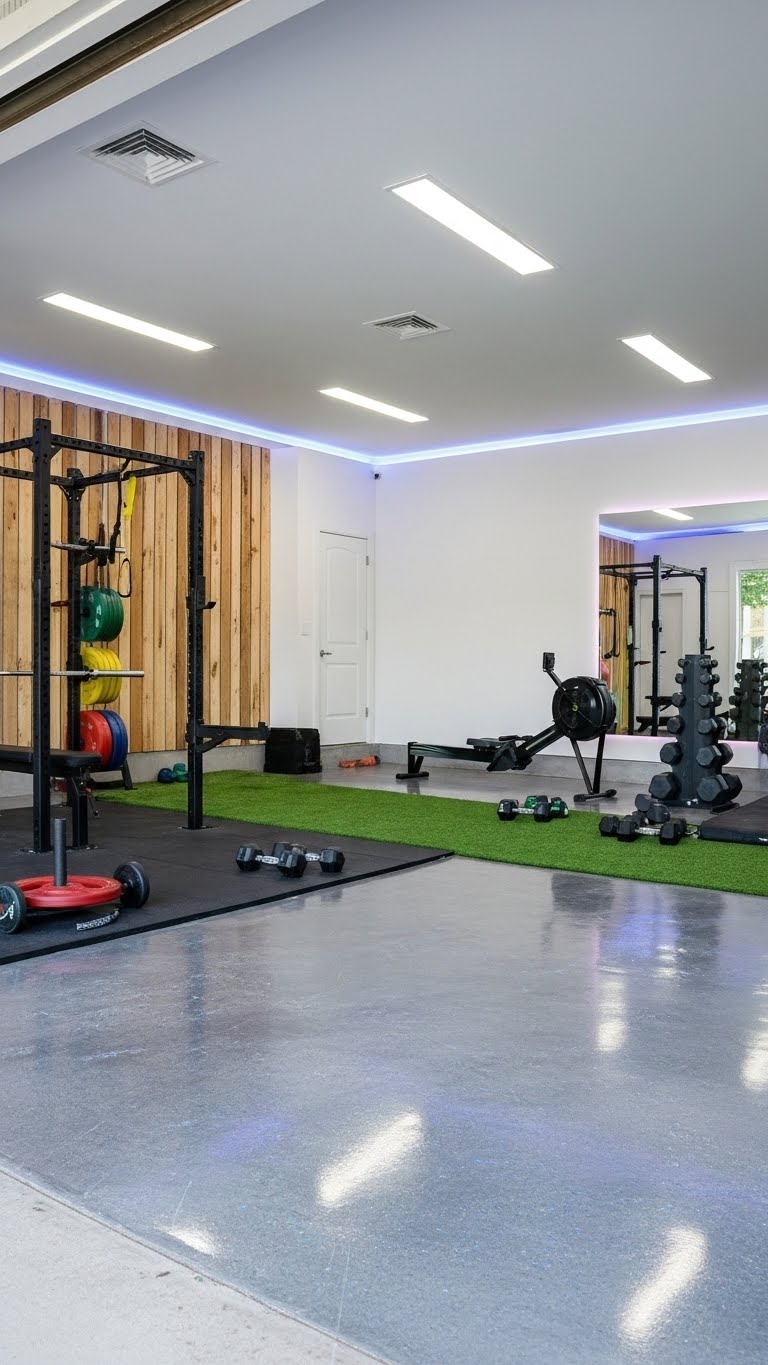
The black equipment and wood accent wall combination has become 2026’s signature garage gym look. Matte black powder-coated racks against warm wood slat walls create stunning contrast that photographs beautifully while feeling genuinely inspiring to train in.
This aesthetic works because it balances industrial toughness with organic warmth. The black equipment looks serious and professional while wood elements prevent spaces from feeling cold or sterile.
Creating This Look
Start with matte black equipment—powder coating costs extra but the uniform finish justifies premium pricing. Rogue, REP, and other manufacturers offer black finishes across entire product lines.
Add vertical wood slat accent walls behind your main equipment as focal points. These cost $200-800 depending on materials and installation method, creating massive visual impact for relatively modest investment.
Color Coordination Tips
- Stick to one wood tone throughout (don’t mix honey oak with dark walnut)
- Use matte black consistently (avoid mixing glossy and matte finishes)
- Add minimal color accents through bumper plates or small details
- Keep ceiling and three walls neutral (white or light gray)
This restraint creates sophisticated spaces rather than chaotic ones.
3. The Vertical Storage Maximizer
Modern garage gym design ideas 2026 embrace vertical storage as essential rather than optional. Wall-mounted plate storage, barbell holders, dumbbell racks, and accessory organization free floor space while creating clean, professional aesthetics.
Every piece of equipment living on walls rather than floors doubles your functional training area. The visual cleanliness also reduces mental clutter that subtly drains motivation.
Vertical Storage Solutions
Plate Storage Trees (Wall-Mounted) Mount vertical plate holders directly to wall studs. These hold 300-500 pounds safely while occupying zero floor space.
Position them near your power rack for easy loading during training. Organized plates look professional and eliminate time wasted hunting for correct weights.
Barbell Wall Mounts Horizontal wall brackets hold multiple barbells organized and accessible. Specialty bars (trap bar, safety squat bar, deadlift bar) deserve proper storage preventing damage.
These mounts cost $50-150 and protect barbells worth hundreds or thousands of dollars.
Dumbbell Pegboard Systems Vertical peg systems display dumbbells attractively while saving massive floor space compared to horizontal racks. They work especially well in narrow garages where floor footprint matters critically.
4. The LED Lighting Transformation
Lighting might be the single highest-impact, lowest-cost upgrade for garage gyms. Professional LED shop lights cost $100-400 total but completely transform how spaces look and feel during training.
Modern garage gyms layer lighting types—bright overhead panels for functional visibility, RGB LED strips for ambiance, and accent lighting highlighting key equipment or architectural features.
Lighting Layer Strategy
Primary Lighting (Overhead LEDs) Install 4-8 LED shop lights depending on garage size. Look for 4,000-5,000 lumens per fixture and 4,000-5,000K color temperature for energizing brightness.
Proper overhead lighting prevents injuries from poor visibility and creates professional gym atmosphere.
Accent Lighting (RGB LED Strips) Add color-changing LED strips along ceiling edges, behind mirrors, or under equipment platforms. These create customizable ambiance shifting from energizing morning colors to calming evening tones.
Control through smartphone apps or voice commands for effortless adjustment.
Task Lighting (Adjustable Spotlights) Position adjustable spotlights highlighting specific training areas or creating dramatic shadows for photography. These optional additions enhance spaces without being essential.
5. The Epoxy Floor Color Statement
Epoxy flooring has evolved beyond basic gray into custom colors and finishes making bold design statements. Dark blue metallic epoxy, forest green with flakes, or custom color-matched floors transform boring concrete into stunning design features.
Professional epoxy installation costs $3-8 per square foot depending on complexity. The investment protects concrete, simplifies cleaning, and creates showpiece floors lasting decades.
Epoxy Options and Costs
Solid Color Epoxy ($3-5/sq ft) Single color coverage providing uniform appearance. Available in virtually unlimited colors matching your design vision.
This option delivers clean, professional looks at entry-level pricing.
Metallic Epoxy ($6-8/sq ft) Swirling metallic finishes creating depth and visual interest. These look stunning in photos and create unique floors impossible to replicate exactly.
The three-dimensional appearance adds luxury feeling to garage gyms.
Color Flake Systems ($4-6/sq ft) Colored vinyl flakes broadcast into base coat then sealed. Available in size variations and color combinations creating textured, slip-resistant surfaces.
These hide dirt and imperfections better than solid colors.
6. The Industrial Warehouse Aesthetic
Some modern garage gyms embrace raw industrial aesthetics celebrating the space’s garage origins. Exposed ceiling joists painted black, concrete left intentionally bare, metal fixtures throughout, and Edison bulb lighting create authentic warehouse gym vibes.
This design approach actually costs less than finished alternatives since you’re enhancing existing elements rather than covering them. Strategic paint and thoughtful equipment curation deliver the look affordably.
Industrial Design Elements
- Exposed black-painted ceiling structure
- Raw or minimally finished concrete walls
- Metal conduit and fixtures (don’t hide electrical)
- Industrial fans and ventilation
- Steel equipment and accessories
- Concrete floors sealed but not covered
- Chain-link storage sections
- Vintage industrial signage
This aesthetic appeals to people who love authentic, unpretentious training environments over polished showpieces.
7. The Mirror Wall Dimension Creator
Full-wall mirrors serve dual purposes—form checking during lifts and visual space doubling. A 12-foot mirror wall installation costs $800-2,000 but makes garages feel twice their actual size while providing essential training feedback.
Cheap mirrors warp reflections defeating their purpose. Professional installation using quality glass ensures distortion-free images supporting proper technique development.
Mirror Installation Considerations
Placement Strategy Install mirrors on the longest wall opposite your main equipment. This positioning allows you to see yourself during squats, deadlifts, and pressing movements without cramping working space.
Avoid placing mirrors where you’d be staring at yourself during every exercise—that gets narcissistic and distracting.
Professional vs DIY Professional mirror installation ensures proper mounting, safety, and quality. Mirrors are heavy and fragile—amateur installation risks injury and expensive replacements.
Budget $100-150 per linear foot installed for quality frameless gym mirrors.
Maintenance Requirements Clean mirrors weekly with glass cleaner preventing chalk, sweat, and dust buildup. Streaky mirrors look terrible and reduce their functional value.
8. The Smart Technology Integration
Modern garage gym design ideas 2026 incorporate smart technology creating responsive, connected training environments. Automated climate control, app-controlled lighting, voice-activated sound systems, and connected fitness equipment eliminate friction from daily training.
The technology layer costs extra but removes small barriers that accumulate into skipped workouts. When everything responds to voice commands or automatic schedules, getting started requires zero effort.
Smart Gym Technology
Smart Thermostats Program temperature schedules matching your training times. The garage automatically heats or cools before you arrive, greeting you with perfect conditions.
Brands like Nest or Ecobee work perfectly for garage gyms.
Smart Lighting Systems Control brightness, color, and zones through apps or voice. Create scenes for different workout types—bright for heavy lifting, calmer for yoga and stretching.
Philips Hue or LIFX systems integrate easily with existing garage lighting.
Connected Sound Systems Bluetooth speakers or smart audio systems eliminate phone dependency. Voice commands control music, volume, and playlists without interrupting training flow.
Sonos, Amazon Echo, or dedicated gym speakers work well.
9. The Boutique Studio Replica
High-end boutique gyms charge $150-300 monthly because their environments genuinely inspire training. Modern garage gyms replicate boutique studio aesthetics through designer equipment finishes, professional lighting, curated color palettes, and attention to every detail creating spaces rivaling commercial facilities.
This approach costs more upfront but creates environments you’ll use consistently for decades. The long-term value far exceeds membership fees you’d otherwise pay.
Boutique Design Elements
- Coordinated equipment in premium finishes (rose gold, chrome, custom colors)
- Professional studio lighting with dimmers
- High-quality mirrors with perfect installation
- Designer storage and organization systems
- Curated artwork and motivational elements
- Live plants adding warmth and air quality
- Premium flooring with custom colors or patterns
- Sound systems with commercial quality
These details transform garages into destination training spaces rather than obligation zones.
10. The Recovery Zone Addition
Progressive garage gyms dedicate intentional space to recovery and mobility work. A corner with thick stretching mats, foam roller station, massage gun storage, and potentially cold plunge or sauna acknowledges that training and recovery deserve equal attention.
Allocating 20-25% of space to recovery supports sustainable long-term training better than cramming only strength equipment everywhere.
Recovery Equipment Options
Essential Recovery Tools ($200-500)
- Quality stretching mat (thick, non-slip)
- Foam roller collection (different densities)
- Massage balls and lacrosse balls
- Resistance bands for mobility
- Yoga blocks and straps
Premium Recovery Additions ($1,000-5,000+)
- Portable infrared sauna
- Cold plunge tub
- Normatec compression system
- Hyperice or Theragun devices
- Red light therapy panels
Recovery equipment prevents injuries and supports consistency—it’s investment, not luxury.
11. The Multi-Functional Space Design
The smartest modern garage gym design ideas 2026 create dual or triple-purpose spaces serving multiple household needs efficiently. Gyms that accommodate parking through foldable equipment, combine with home offices through zoning, or integrate workshop areas through organization maximize property value.
Single-purpose spaces feel wasteful. Multi-functionality respects both space and budget constraints most homeowners face.
Multi-Functional Design Strategies
Gym + Parking Wall-mounted folding racks deploy in 60 seconds for training but fold completely flat for parking. Vertical storage keeps equipment organized when not in use.
Choose mobile equipment (adjustable benches on wheels, portable dumbbells) that moves quickly.
Gym + Office Zone spaces clearly with area rugs or flooring changes. Position standing desk workstations separate from equipment but within same room.
The combination works brilliantly for remote workers wanting training access during breaks.
Gym + Workshop Dedicate walls to different functions. Tool pegboards on one wall, gym equipment storage on opposite wall. Share floor space through clear organization.
12. The Soundproofing Solution
Noise concerns kill training freedom. Soundproofing through acoustic panels, thick rubber flooring, door weatherstripping, and strategic equipment placement lets you train anytime without disturbing neighbors or household members.
The investment costs $500-2,000 but buys peace of mind worth far more. Drop weights at 5am without guilt or anxiety about complaints.
Soundproofing Approaches
Flooring Layer Thick rubber gym flooring (3/4-inch minimum) absorbs impact dramatically. Layer multiple materials for even better dampening—vapor barrier, plywood subfloor, then rubber tiles.
Wall Treatment Acoustic foam panels on walls absorb sound preventing echo and external transmission. Focus on shared walls with neighbors or living spaces.
These panels cost $100-400 depending on coverage area needed.
Door Sealing Weatherstrip garage doors completely. Add door sweeps preventing sound leakage at bottom gaps. Consider installing interior door for additional sound barrier.
13. The Custom Cabinetry Organization
Built-in custom cabinetry elevates garage gyms from workout spaces to sophisticated training studios. Furniture-quality cabinets housing supplements, accessories, cleaning supplies, and training logs create organized environments preventing clutter accumulation.
Custom cabinetry costs more than basic shelving but transforms aesthetic quality dramatically. These look like high-end home additions rather than garage storage.
Cabinetry Design Options
Upper Cabinets (Glass Front) Display supplements, shaker bottles, and small accessories behind glass doors. This keeps items dust-free while remaining visible and organized.
Lower Cabinets (Solid Doors) Hide less attractive items—cleaning supplies, extra towels, maintenance tools. Everything has designated homes preventing pile accumulation.
Pull-Out Drawers Organize resistance bands, jump ropes, wraps, and small accessories in drawers. Drawer organization prevents the tangled mess that makes finding items frustrating.
Open Shelving Sections Display kettlebells, medicine balls, or decorative elements on open shelves between closed cabinets. This breaks up solid cabinet runs visually.
14. The Before-After Transformation Documentation
Documenting your garage transformation from cluttered storage to inspiring gym creates motivating visual journeys. Before photos showing messy garages make after reveals more impactful, proving that any space holds potential with vision and commitment.
These transformations inspire others starting their garage gym journeys while providing personal satisfaction seeing how far you’ve come.
Transformation Photography Tips
Take comprehensive before photos from multiple angles showing the full scope of starting conditions. Don’t clean up—capture authentic “before” reality.
Document the entire renovation process through progress photos. These become valuable references if you tackle future projects.
Hire professional photographers for final after photos if you’re serious about sharing online. Quality photography makes mediocre gyms look great and great gyms look spectacular.
15. The Turf Strip Training Addition
Synthetic turf strips have become standard features in modern garage gyms. A 15-20 foot turf runway enables sled pushes, agility drills, lunges, and dynamic movements impossible on standard flooring.
Turf installation costs $300-800 depending on length and quality. The training variety justifies investment for anyone serious about functional fitness or athletic performance.
Turf Strip Implementation
Sizing Considerations Minimum 10 feet for basic functionality, 15-20 feet for proper sled pushes and sprint work. Width typically 4-6 feet provides adequate working space.
Installation Options Roll turf comes pre-backed and installs quickly with double-sided tape or adhesive. Cut to exact length needed for your garage layout.
Maintenance Requirements Vacuum or blow debris weekly. Turf requires minimal maintenance compared to natural grass while looking great year-round.
16. The Single-Car Garage Efficiency
Small garages demand ruthless equipment curation and creative spatial planning. Single-car garage gyms (typically 12×20 feet) can still accommodate comprehensive training through wall-mounted equipment, vertical storage, and multi-purpose pieces.
The constraint forces better decisions. You can’t accumulate unnecessary equipment, so every piece must justify its footprint through versatility.
Small Garage Design Principles
Wall-Mounted Everything Folding racks, wall-mounted pull-up bars, pegboard storage—get everything possible off the floor. This single principle transforms small garage functionality.
Multi-Purpose Equipment Priority Choose adjustable dumbbells over fixed sets, functional trainers over single-purpose machines, adjustable benches over specialty benches.
Minimal Cardio Footprint Rowers and bikes fold or stand vertically. Skip treadmills consuming massive floor space. Consider outdoor running if cardio matters to you.
17. The Double-Car Garage Dream Build
Double-car garages (400+ square feet) enable comprehensive commercial-quality home gyms rivaling professional facilities. Separate zones for strength, cardio, recovery, and storage create organized training environments supporting any fitness goal.
This space level allows specialty equipment like leg presses, hack squats, or cable crossover systems that smaller gyms can’t accommodate.
Dream Garage Layout Strategy
Zone 1: Strength (150-200 sq ft) Power rack, Olympic platform, full barbell collection, specialty bars, plate storage, and bench
Zone 2: Accessories (100-150 sq ft) Dumbbell rack, cable machine or functional trainer, adjustable benches, accessory storage
Zone 3: Cardio (75-100 sq ft) Rower, bike, or SkiErg positioned near ventilation for heat management
Zone 4: Recovery (75-100 sq ft) Stretching area, mobility tools, potentially cold plunge or sauna
This zoning creates flow and organization that commercial gyms utilize effectively.
Conclusion
Modern garage gym design ideas 2026 prove that thoughtful planning, quality equipment, and intentional aesthetics create training spaces rivaling commercial facilities while adding significant property value. Whether you’re working with a single-car garage or expansive double-car space, the principles remain consistent—prioritize climate control, invest in quality equipment and finishes, organize vertically, and create cohesive aesthetics that inspire consistent training.
The initial investment in proper garage gym design pays dividends through decades of use, eliminated membership fees, and genuine property value increases. More importantly, beautiful, functional spaces remove mental barriers to training consistency, supporting long-term health and fitness goals far better than basic equipment collections in uncomfortable garages.
Start with your biggest pain point—uncomfortable temperatures, poor lighting, or cluttered disorganization—and address that first. Build your dream garage gym incrementally rather than waiting for perfect conditions that may never arrive.
Frequently Asked Questions
How much does a modern garage gym cost in 2026?
Complete modern garage gym transformations cost $5,000-25,000 depending on space size, equipment quality, and finishes. Basic setups with climate control, flooring, lighting, and quality equipment start around $5,000-8,000. Premium builds with specialty machines, custom cabinetry, and high-end finishes reach $15,000-25,000 or more. Incremental building over time spreads costs manageable.
Is climate control necessary for garage gyms?
Climate control isn’t technically necessary but dramatically improves year-round usability and training consistency. Uncontrolled garages become unbearably hot or cold for months annually, killing workout routines. Mini-split HVAC systems cost $2,000-4,000 installed but transform seasonal garages into comfortable year-round facilities. The investment pays off through eliminated membership fees and consistent training.
What’s the best flooring for modern garage gyms?
Rubber gym flooring (3/4-inch thickness minimum) provides best all-around performance—impact absorption, noise reduction, durability, and aesthetics. Horse stall mats from farm supply stores cost less than specialty gym flooring. Epoxy coating underneath protects concrete and looks stunning. Budget $2-4 per square foot for rubber flooring or $3-8 for epoxy depending on finish complexity.
How do I soundproof my garage gym?
Soundproof through layered approaches: thick rubber flooring (3/4-1 inch), acoustic foam panels on shared walls, weatherstripping on all doors, and avoiding dropping weights when possible. These measures reduce noise 60-80% without expensive construction. Complete soundproofing requires wall insulation, double drywall, and acoustic doors—more extensive and costly projects justified only in extreme situations.
Can I park my car and have a gym in the same garage?
Yes, through wall-mounted folding racks, vertical storage, and mobile equipment. Fold the rack flat against walls when parking, store dumbbells vertically, and move portable pieces quickly. Single-car garages work better for this dual-purpose than attempting to maintain permanent parking in double-car gyms. The key is committing to setup/takedown routines or accepting reduced parking space.
What equipment should I buy first for a modern garage gym?
Start with a quality power rack or squat stand ($500-2,000), Olympic barbell and bumper plates ($300-600), and adjustable bench ($200-400). This foundation supports comprehensive strength training while you add specialty pieces gradually. Invest in commercial-quality core equipment rather than buying cheaper versions you’ll replace. Add dumbbells, kettlebells, and cardio equipment as budget allows.
How do I maintain proper garage gym temperature year-round?
Install mini-split HVAC systems providing both heating and cooling efficiently. Insulate walls, ceiling, and garage door thoroughly. Seal all air leaks with weatherstripping. Budget $3,000-6,000 for complete climate control including insulation and HVAC. Alternatively, use space heaters in winter and portable AC units in summer for less upfront cost but higher ongoing energy expenses.
Do garage gyms increase home value?
Well-designed garage gyms can increase home value, especially in fitness-focused markets. Professional finishes, maintained garage functionality, and removable equipment appeal to broader buyer pools. Extremely specialized setups may limit appeal. Focus on quality finishes (epoxy floors, climate control, lighting) that benefit any garage use rather than only gym applications. Expect $0.50-0.75 return per dollar invested in quality improvements.