
11 Jan 15 Functional Fitness Training Moves That Really Work.
Functional Fitness Training: 15 Real World Strength Game Changing Tips.
Functional fitness training is reprogramming our minds on how to exercise by looking into the moves that are important in real life. Rather than merely beating your muscles on machines, this style will get your body ready to do the things you have to do every day, such as taking the groceries home, playing with the kids or running up the stairs without feeling gaseous.
The best part? It’s practical. It is not merely a bulging bicep that you are going to get on the mirror but the actual strength, balance, and movement that goes directly to enhancing the quality of life.
Functional Fitness: What the Hell is It?
Conventional gym exercises tend to pursue the appearance or separate musculature. Functional training puts it on its head- we are talking big, multi-joint moves that involve a number of groups at the same time like the body actually moves.
Individuals are beginning to be more concerned about what they can literally do, and not how they appear, and therefore this strategy took off. Get fitter, get stronger, avoid injuries – everything else takes care of itself.
Learn the basic movement patterns.
There are six basic moves that constitute every good functional program: squat, hinge, push, pull, carry and rotate. It is the foundation of how we walk, lift, reach and twist on a daily basis.
Get right the first time and it saves you the trouble of having to be hurt again and lays a strong foundation on which to build. Train on body-weight exercises first, then add weight and your future you will be glad.
The Squat Pattern
Squats are not only a gym activity, they are the way to get up, sit down, and collect the items on the floor without hurting yourself. Add a goblet squat using a kettlebell to ensure the appropriate depth and ensure that your torso is straight.
Ensure that your weight is placed at your heels and the position of your knees is parallel to your toes. This exercise strengthens your quadrice, butt, and abdomen and rotates your hips.
The Hinge Movement
Safe lifting and prevention of back pain is hip hinging. Imagine deadlifts, kettlebell swings and good mornings–they nail the hinge.
You need to swing at the hips and not the lower back. Think of trying to push your hips back as though you are pushing a car door behind you with a neutral spine all along.
Get used to Bodyweight Training.
The best weight you will ever have is your body, and begin your functional strength training with body-weight exercises. Push-ups, pull-ups, lunges, and planks do not require any expenses but provide substantial outcomes.
These drills are involved to know how to feel and manage your body prior to loading it. And they are ideal during a journey or any location where the gym has not been available.
Progressive Overload in the absence of weights.
You can increase body-weight exercises by varying leverage, speed or stability. To increase intensity, use single-leg variations, stop reps, or unstable surfaces.
Slowly doing this will develop strength and reduce the risk of injury. Master the fundamentals, and go on to the advanced or the weighted.
Invest in Multipurpose Machines.
When you are willing to do more than body weight, choose the tools that are multipurpose. Small space equipment includes kettlebells, bands and suspension trainers.
They allow you to perform a thousand moves in a small area. Contrary to big machines, they allow you to move as you wish and develop as you do.
The reason why Kettlebells are worth the hype.
Kettlebells cause you to stabilize as you swing around weight. Swings, Turkish get-ups and goblet squats develop explosive power, core strength, and full body co-ordination.
When it is light–heavy makes a mess of the form and when it is light nothing. The majority of people achieve good profits using two weights.
Learn to Value Core Stability not Six Pack Abs.
Core work is functional and it works against the movements you do not want rather than displaying abs. Pallof presses and carries are powerful to stabilise your spine.
Crunches are still there but they are not useful in life. Your trunk must hold the ribs still as your limbs swing–train it so.
The Carry Revolution of the Farmer.
There is not much appreciation of walking around with heavy stuff. The carries by Farmer strengthen grip, core, shoulders and legs simultaneously and enhance posture.
Choose weights that are not too difficult to handle. Straight back and increase the load or distance as you feel stronger.
Train Movement, Not Muscles
Stop thinking about muscles, but rather patterns of movement. Changing your mindset has an effect on how you structure your workouts and prevents muscle imbalance.
Compound moves are more powerful as they involve several groups simultaneously. They also use more calories and enhance athleticism as compared to isolation work.
Sample Functional Training Session.
This is a fast full-body workout: goblet squats, push-ups, kettlebell swings, inverted rows, and farmer carries. Five exercises touching all the major patterns within less than 30 minutes.
Do 3-4 rounds, taking a slight rest between movements only. This is strengthening and at the same time your heart rate is elevated to gain cardio.
Loaded Carries should also be incorporated.
The most practical exercise that you can perform is to carry heavy stuff. Loaded carries build total-body strength and mental toughness, whether it is dumbbells, kettlebells, or sandbags.
These differences, such as farmers walks (both hands), suitcase carries (one hand), and overhead carries, test you in different ways as you develop useful power.
These exercises enhance grip strength that is closely related to general well-being and extended lifespan. And they are plain–get hold of something heavy and march.
Don’t Neglect Mobility Work
Power in the joints leaves you hard and vulnerable to injury. Moving around every day maintains the fitness of the joints and strengthens across the board.
Devote 10-15 minutes to the tight joints such as hips, shoulders, and thoracic spine. It prevents pain and allows you to train long term.
Mobility vs. Stretching
There is a place of the existence of the static ones, though dynamic mobility exercises prepare your body to act more effectively. Hip circles, arm circles and cat-cow warm ups stretch range and expand.
Stretch longer in a post-workout period when muscles are warm. Active movements that are more realistic in movement are better functional training than passive stretching.
Add Unilateral Training to Remedy Imbalances.
Single-leg and single-arm exercises reveal the differences in side strength that are concealed in bilateral exercises. Bulgarian split squats, single-leg deadlifts, and single-arm presses should turn in your program.
Unilateral work also increases balance and core work since it necessitates both sides to balance. This reduces the risk of injury and puts both parties on an equal playing field.
Majority of people discover that they are stronger in one side. Correct imbalances prior to their transformation into patterns of compensation and eventual injury.
Get Better Results with Tempo Training.
Reducing the speed increases the duration of tension and improves mind-muscle perception. A tempo of 3-1-3 (three seconds down, one pause, three up) will transform known lifts into grueling burn builders.
It is also trained in proper form by the whole range. The initial weight loss is quicker and the gains are quicker.
Tempo is particularly effective on body-weight exercises that cannot have actual weight added to them. Challenge the push-ups by regulating the downward and upward movement.
Combine Rotational Power Development.
Functional moves are mostly accompanied by some twist, throwing, swinging, or getting up. Circles of medicine-balls, woodchops, and rotating throws develop power in this plane of which many are so ignorant.
Conventional training is fond of sagittal exercises (forward/back). The incorporation of twist makes whole, strong athletes.
Warm-up with light intensity, target hip and core strength, not only arms. The twist must be explosive and conscious.
Training in the Real World.
Cardio programs of functional fitness aid in maintaining activity. As opposed to simply jogging miles, jam in heart-rate and strength combinations.
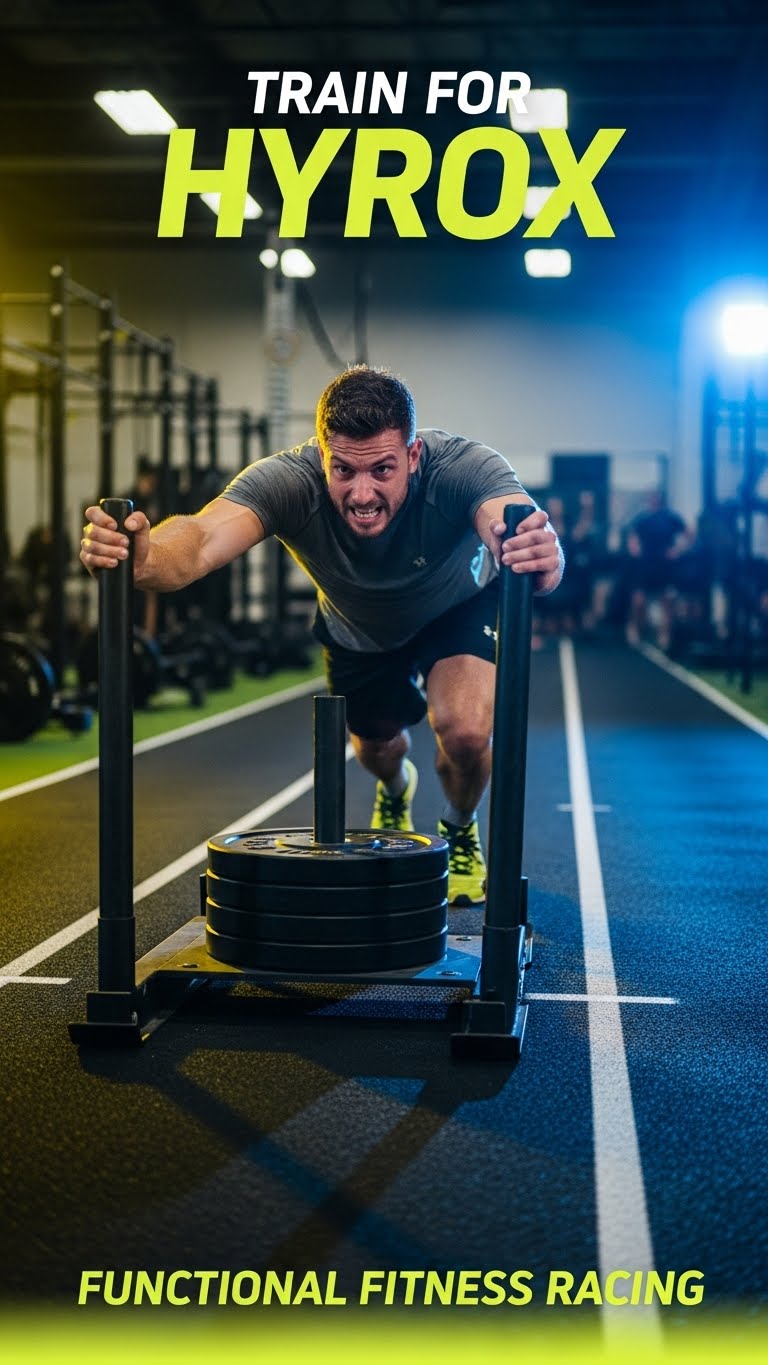
Test rowing, battle-wave, or sled pushes which work your heart and lungs and remain in service.
The training involving HYROX style combusted since it combines running and functional movement to achieve well-rounded fitness that is efficient across a wide range of objectives.
Develop Step-By-Step and Smartly.
Overloading or overworking at a sudden impetus is fatal and disappointing. Gradually increase the overload by increments.
Perhaps, another rep, five pounds or ten seconds on a carry. Small things add up to massive things without crushing you.
Listen to how your body feels. Normal soreness is common, pain is an indicator.
Recover Like a Pro
Training destroys your body-recovery builds it better. The most adaptations are achieved by prioritizing sleep, nutrition, and active recovery.
Roll a foam, do some sort of mobility, and get enough protein to fix muscles. Measures recovery using wearables to adjust your plan.
Recovery is not sitting around, it is strategical. The lack of rest and hard training result in overtraining, performance decline, and increased risk of injury.
Enjoy and Make It Sustainable.
The program that you will be able to remain with long enough to achieve results is the best. Choose the picks that you like and create a routine that works with your life, not the ideal of a person.
Functional training is a never-ending process and you should experiment until you reach the sweet spot. Others adore love kettlebells; others groove with body-weight movements or with suspension exercises.
Intensity can never beat consistency. An average course of action that you adhere to over a period of time is better than a vigorous course of action that you abandon in 3 weeks.
Monitor the Progress Out of Scale.
The achievement of functional fitness is not the scale, but the movement and the feeling. Feel how day-to-day tasks become less difficult, energy surges, and motions become less harsh.
Are you now able to carry the groceries on a single trip? Do stairs feel breezy? These actual victories are over random fitness tests.
Record videos of your form every now and then to see improvements. The profits are sometimes not seen in the mirror but sparkle in purer movement.
Conclusion
Functional fitness replaces the previous gym workout with exercises that elevate your daily life. Learn the fundamental patterns, spend money on the multi-purpose equipment, and work on the quality moves as opposed to single-muscle training, and you will gain some strength that will count.
You do not require fancy equipment or hours spent in the gym. Begin with body-weight fundamentals, then incorporate easy things such as kettlebells and bands, and stick with it.
It is important to remember that functional fitness is not a quick fix and is a life long process. You will be glad you made movement, strength, and mobility first when you are 60, 70 and beyond.
Frequently Asked Questions
So what is functional fitness training?
Functional fitness revolves around the exercises that make your body ready to perform real-life duties. It not only isolates muscles, but also compound motions that strike a number of groups simultaneously strengthening the muscles, balance, coordination and mobility in everyday activities.
What is the frequency of functional fitness training?
A majority of the population attends 3-4 sessions in a week, taking rest days to rest. Novices may commence 2-3 times, and more experienced people may go to 4-5 sessions, depending on the intensity.
Is it possible to have beginners perform a functional fitness training?
You’re in for a treat. It begins with basic body-weight exercises that every person can master, and progresses to more difficult ones, as you get stronger.
What should I have in order to practice functional fitness?
Zero gear is alright–just body-weight exercises have you off. At the next level, kettlebells, bands, pull-up bar, and a suspension trainer are pleasant. Balls and plyo boxes to medicine are optional and not required initially.
Does functional fitness help to lose weight?
Absolutely. The functional training burns a lot of calories, as it involves more muscle than isolation. Add it to proper nutrition and you will develop lean muscle that will increase your metabolism and body shape.
What is the difference between functional training and strength training?
Conventional strength emphasizes on isolation and maximum lifts. Functional training focuses on movement patterns, multi-joint, and stability that can be transferred right into everyday life, and yet develops actual strength.
Is functional fitness useful in back pain?
Their back feels good with functional training many people say it makes their core stronger, improves their posture and learns the right way to hinge the hip. Get a health professional to be hit up first in case you have any existing problems.
What is the duration of time before functional fitness results?
The majority of people feel more energized and mobile in 2-3 weeks. Strength gains that can be seen tend to occur consistently around 4-6 weeks. The long-term benefits continue to accumulate in months and years.