
02 Jan Build the Best Budget-Friendly Home Gym Setup Without Breaking the Bank
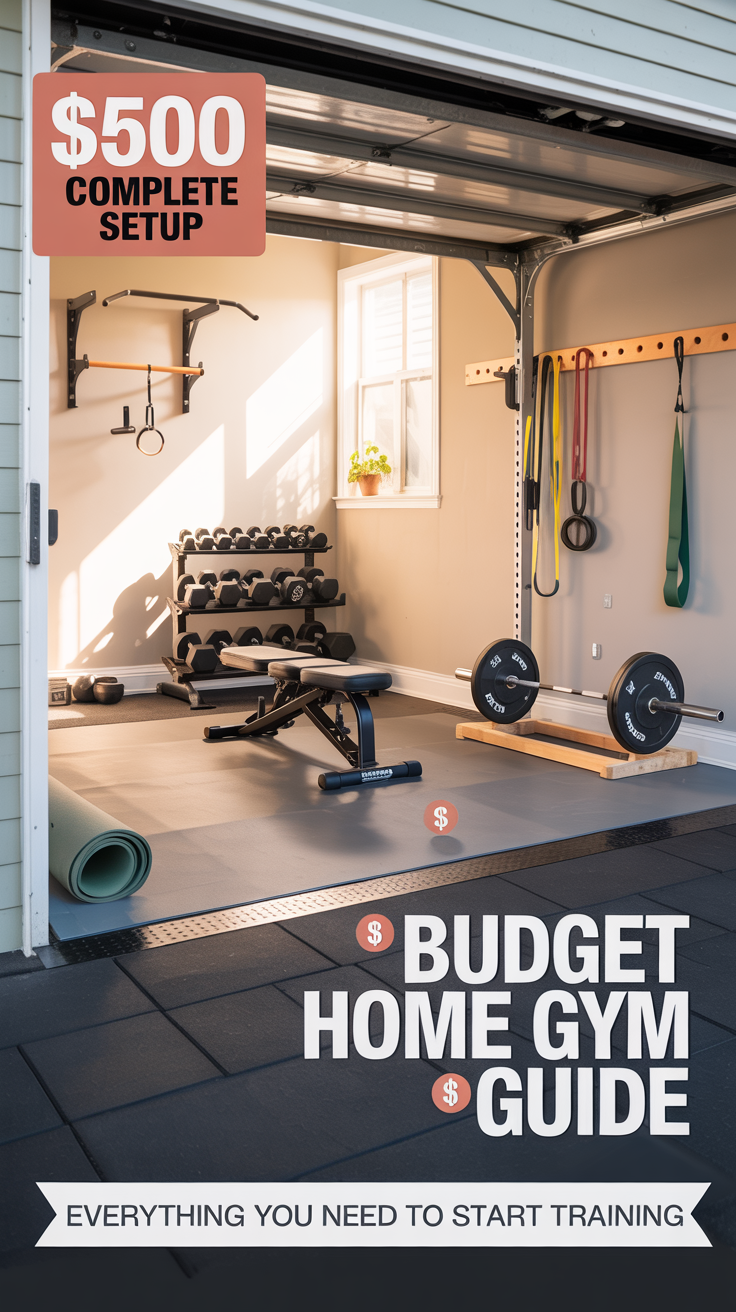
Best Budget-Friendly Home Gym Setup: Complete Guide Under $500 in 2026
Best budget-friendly home gym setup options prove you don’t need thousands of dollars to build an effective training space at home. Smart equipment choices and strategic planning create a functional gym for a fraction of commercial membership costs.
The fitness industry wants you to believe quality workouts require expensive machines and premium equipment. That’s simply not true—countless people have built incredible strength and physique with minimal gear.
Why Budget Home Gyms Work Just as Well
Expensive equipment doesn’t automatically produce better results. Your consistency and effort matter far more than your equipment price tag.
Professional bodybuilders and athletes trained for decades using basic barbells, dumbbells, and benches. Modern marketing creates artificial needs for complicated machines that often collect dust after the initial excitement fades.
Budget equipment forces you to master fundamental movement patterns. These basics build more functional strength than fancy machines ever will.
The money you save on equipment can fund better nutrition, which impacts results far more than having 15 different cable attachments. Think about what actually moves the needle toward your goals.
Setting Your Budget Home Gym Budget
Realistic budget tiers help you plan purchases strategically. Knowing what’s possible at each price point prevents overspending or buying inadequate equipment.
Minimal Investment ($150-$300)
This bare-bones approach gets you training immediately with versatile essentials. You’ll focus on bodyweight movements supplemented with minimal equipment.
What you can build:
- Adjustable dumbbell set (5-50 lbs)
- Quality exercise mat
- Resistance band set
- Pull-up bar (doorway or wall-mounted)
- Jump rope for cardio
This setup enables full-body workouts hitting every major muscle group. Beginners can make tremendous progress here for 6-12 months before needing upgrades.
Solid Foundation ($300-$500)
The sweet spot for most people balances capability with affordability. This budget builds a legitimate gym covering strength and cardio effectively.
Equipment possibilities:
- Adjustable dumbbells or fixed dumbbell set
- Flat/adjustable bench
- Barbell with weight plates (100-200 lbs)
- Pull-up bar or power tower
- Exercise mat and resistance bands
- Basic cardio option (jump rope or used bike)
You’re getting professional-caliber training capacity. Many people achieve all their fitness goals without spending beyond this level.
Enhanced Setup ($500-$800)
Extra budget adds convenience features and specialized equipment. You’re not getting better workouts necessarily—just more options and comfort.
Additional considerations:
- Power rack or squat stand
- More weight plates (300+ lb total)
- Better quality bench with decline/incline
- Landmine attachment or specialty bars
- Additional dumbbells or kettlebells
- Better flooring protection
This tier makes sense if you’re serious about long-term strength training or accommodating multiple family members with different needs.
Essential Equipment for Budget-Friendly Home Gym Setup
Certain pieces deliver maximum training variety per dollar spent. Focus your budget on these versatile foundations before considering specialized equipment.
Adjustable Dumbbells: Your Best First Purchase
Dumbbells enable hundreds of exercises targeting every muscle group. Adjustable sets save massive space and money compared to buying individual pairs.
Why adjustable dumbbells dominate budget gyms:
- Replace 10+ pairs of fixed dumbbells
- Take up minimal floor space
- Enable progressive overload easily
- Work for all fitness levels
- Last for decades with minimal maintenance
Quality adjustable sets range from $150-$400 depending on weight range and mechanism. Bowflex SelectTech and PowerBlock represent the gold standard, but budget alternatives from Amazon work fine for most people.
Look for sets reaching at least 50 pounds per hand. That covers most exercises for intermediate lifters, with room to grow.
Training possibilities with just dumbbells:
- Chest: presses, flyes, pullovers
- Back: rows, pullovers, shrugs
- Shoulders: presses, raises, rear delt work
- Arms: curls, extensions, hammer curls
- Legs: squats, lunges, Romanian deadlifts
- Core: weighted crunches, Russian twists, side bends
You can literally build an impressive physique with nothing but adjustable dumbbells and consistency. That’s not theory—countless people prove it daily.
Workout Bench: Unlocking Exercise Variety
A quality bench transforms your dumbbell exercises by adding new angles and stability. Flat benches cost $80-$150, while adjustable versions run $150-$300.
Adjustable benches earn their higher price through versatility:
- Incline pressing targets upper chest
- Decline work emphasizes lower chest
- Various angles hit muscles differently
- Seated position for shoulder exercises
- Back support for rowing movements
Flat benches work fine if budget is extremely tight. You’ll miss some exercise variations, but the fundamentals still deliver results.
Bench quality indicators:
- Weight capacity exceeding your bodyweight plus dumbbells by 200+ lbs
- Stable base that doesn’t wobble
- Firm padding that doesn’t compress excessively
- Easy adjustment mechanism (for adjustable benches)
- Powder-coated steel resisting rust
Brands like REP Fitness, Rogue, and Titan offer excellent budget-to-mid-range benches. Even cheaper Amazon options work if you’re lighter and careful with form.
Barbell and Weight Plates: Serious Strength Building
Barbells enable heavy compound lifts that build maximum strength and muscle. You can find Olympic barbell starter sets for $200-$400 including bar and 100-200 pounds of plates.
The barbell advantage:
- Enables progressively heavier squats, deadlifts, presses
- Builds real-world functional strength
- Accommodates very advanced strength levels
- Lasts essentially forever
- Provides excellent value per dollar
Start with a basic 7-foot Olympic barbell rated for 300-700 pound capacity. Higher-rated bars cost more but matter for intermediate-to-advanced lifters eventually.
Weight plate options include:
- Standard iron plates: Cheapest option, basic but functional
- Rubber-coated plates: Quieter, protect floors, cost 20-30% more
- Bumper plates: Required for Olympic lifts, significantly more expensive
- Used plates: Same as new functionally, potentially 50% savings
Buy plates in this order to maximize exercise options:
- Two 45 lb plates (enables heavy deadlifts, squats)
- Four 25 lb plates (progressive loading)
- Four 10 lb plates (fine-tuning weight)
- Two 5 lb plates and two 2.5 lb plates (micro-loading)
Don’t buy specialty plates or fancy designs. Plain iron plates work identically to expensive branded versions for a fraction of the cost.
Pull-Up Bar: Best Bodyweight Investment
Pull-ups build incredible back, arm, and core strength using just your bodyweight. Basic doorway bars cost $20-$40, while wall-mounted options run $30-$80.
Pull-up bar benefits:
- Zero ongoing costs after purchase
- Minimal space requirements
- Scales automatically as you gain strength
- Enables multiple grip variations
- Works for hanging ab exercises
Doorway bars install in seconds without permanent mounting. They work great for apartments or if you can’t drill walls.
Wall-mounted bars handle more weight and provide better grip variety. They require installation but offer superior stability for dynamic movements.
Exercises beyond standard pull-ups:
- Chin-ups (bicep emphasis)
- Wide-grip pull-ups (lat focus)
- Neutral grip pull-ups (balanced development)
- Hanging leg raises (core strength)
- Toes-to-bar (advanced core)
- L-sit holds (core endurance)
If you can’t do pull-ups yet, resistance bands assist by reducing effective bodyweight. Work toward unassisted reps—they’re worth the effort.
Resistance Bands: Incredible Value and Versatility
Quality resistance band sets cost $20-$50 and provide surprising training variety. They’re perfect for warm-ups, assistance work, and travel workouts.
Band training advantages:
- Extremely portable and storable
- Provide variable resistance (harder at peak contraction)
- Enable rehabilitation and corrective exercises
- Work for all fitness levels
- Add resistance to bodyweight movements
Buy sets with multiple resistance levels and various handle/anchor attachments. Loop bands and tube bands with handles serve different purposes—ideally own both.
Smart band applications:
- Assist pull-ups and dips until you build strength
- Add resistance to push-ups and squats
- Enable face pulls and external rotations (shoulder health)
- Provide traveling workout options
- Warm up muscles before heavy lifting
Bands don’t replace heavy weights for maximum strength, but they complement free weights perfectly. Many professional athletes incorporate band work into their training.
Exercise Mat: Protect Yourself and Your Floors
Quality mats cost $20-$60 depending on thickness and material. This seems minor but makes floor exercises far more comfortable.
Mat uses in your budget gym:
- Cushioning for core work and stretching
- Yoga and mobility training
- Protecting floors from sweat and equipment
- Defining your workout space psychologically
- Providing grip for certain bodyweight exercises
Look for at least 1/4-inch thickness for comfort. Thicker mats (1/2 inch) work better if you’re doing a lot of floor-based training.
Closed-cell foam resists moisture absorption better than open-cell options. That means less odor development and easier cleaning over time.
Budget-Friendly Cardio Solutions
Cardio equipment gets expensive quickly, but creative solutions keep you moving. The best cardio for your budget is often the simplest.
Jump Rope: Ultimate Budget Cardio
Quality jump ropes cost $10-$30 and deliver incredible cardiovascular training. Professional boxers and MMA fighters prove rope jumping builds elite conditioning.
Jump rope advantages:
- Burns 10-15 calories per minute
- Improves coordination and footwork
- Takes up almost zero space
- Works anywhere with 8+ foot ceilings
- Provides high-intensity interval training
Start with a basic speed rope and progress to weighted ropes as conditioning improves. Adjustable length ropes accommodate different heights in your household.
Ten minutes of rope jumping rivals 30 minutes of steady-state jogging for calorie burn. The intensity makes workouts time-efficient for busy schedules.
Outdoor Activities: Free Cardio Options
Your neighborhood provides free cardio training year-round. Walking, running, and cycling cost nothing beyond basic footwear or a bike you likely already own.
Outdoor cardio benefits:
- Completely free ongoing costs
- Natural vitamin D from sunlight
- Mental health benefits from nature exposure
- Infinite variety through route changes
- Social opportunities with training partners
Bodyweight cardio circuits work great in parks or yards. Combine sprints, burpees, mountain climbers, and jumping jacks for brutal conditioning sessions.
Weather concerns have solutions—layers for cold, early morning or evening for heat. Consistency matters more than perfect conditions.
Used Cardio Equipment: Smart Shopping
Cardio machines depreciate faster than any other fitness equipment. People sell barely-used treadmills, bikes, and ellipticals for 50-80% off retail constantly.
Where to find used cardio deals:
- Facebook Marketplace and Craigslist
- Garage sales (especially January)
- Gym equipment liquidation sales
- Local fitness equipment stores (trade-ins)
Inspection tips when buying used cardio machines:
- Test all functions and resistance levels
- Listen for unusual noises
- Check display functionality
- Verify belt/chain condition
- Ensure stability and no wobbling
Quality brands like Schwinn, NordicTrack, and ProForm often available used. A $1,500 treadmill purchased for $300-$500 represents incredible value.
Transport logistics matter—many machines weigh 150-300 pounds. Bring help and appropriate vehicles or budget for delivery.
Smart Shopping Strategies for Budget Home Gym Setup
Where and when you shop dramatically impacts your budget efficiency. These strategies maximize equipment quality while minimizing costs.
Buying Used Equipment Wisely
Used equipment offers 40-70% savings with minimal functional difference. Weight plates work identically new or used—why pay retail?
Best items to buy used:
- Weight plates (they’re just iron)
- Barbells (check for damage, but usually fine)
- Benches (inspect for stability and upholstery)
- Power racks (examine welds and powder coating)
- Cardio machines (test thoroughly before buying)
Items worth buying new:
- Resistance bands (rubber degrades)
- Exercise mats (hygiene concerns)
- Adjustable dumbbells with mechanisms (complexity issues)
Negotiation works better than you think. Sellers expect offers 10-20% below asking price. Cash in hand closes deals faster.
Seasonal Sales and Timing
Retailers follow predictable sale cycles. Strategic timing saves 20-40% versus impulse purchases.
Best buying times:
- January: New Year resolution equipment floods market
- Black Friday/Cyber Monday: Deepest new equipment discounts
- End of summer: People clearing space before holidays
- Tax refund season: More used equipment available
Worst buying times:
- December (everyone wants equipment for New Year)
- Early January (peak demand from resolutions)
- Right after fitness influencer promotions
Sign up for email lists from major fitness retailers. Dick’s Sporting Goods, Amazon, and Rogue frequently offer 15-30% off sales.
DIY Equipment Projects
Building certain equipment saves significant money while providing exact specifications. Basic woodworking creates functional pieces for a fraction of retail costs.
Realistic DIY projects:
- Plyo boxes: $30-$50 in materials versus $100-$150 retail
- Deadlift platform: $100-$150 versus $300-$400
- Parallettes: $20-$30 versus $80-$100
- Weight plate holders: $30-$40 versus $100+
- Sandbags: $15-$25 versus $60-$100
YouTube provides detailed tutorials for every project. Basic tools and hardware store materials are all you need.
Items NOT worth DIYing:
- Barbells (safety concerns, precision manufacturing required)
- Weight plates (casting iron dangerous and expensive)
- Benches (structural integrity critical)
Save DIY projects for accessories rather than primary equipment. Your safety isn’t worth the marginal savings on critical pieces.
Space Optimization for Budget Gyms
Small spaces require creative thinking. Smart organization makes 100 square feet feel like a full gym.
Vertical Storage Solutions
Wall space is underutilized real estate in most home gyms. Going vertical keeps your floor clear for actual training.
Effective vertical storage:
- Wall-mounted plate storage (DIY for $30 or retail $50-$150)
- Pegboards for bands, jump ropes, accessories ($20-$40)
- Barbell wall mounts ($30-$60 pair)
- Fold-up benches (premium option $300-$500)
- Ceiling hooks for resistance bands
Installation considerations:
- Find studs for secure mounting
- Use appropriate hardware for weight loads
- Space items allowing easy access
- Consider height for safe loading/unloading
Some equipment folds or collapses after use. This works perfectly for multi-purpose rooms serving as gyms part-time.
Multi-Purpose Equipment Strategies
Choose equipment serving multiple functions when possible. Versatility per dollar spent should guide purchasing decisions.
Multi-purpose examples:
- Adjustable bench enables 20+ exercises versus flat bench’s 10
- Power tower provides pull-ups, dips, and knee raises in one frame
- Landmine attachment creates dozens of exercises from a barbell
- Adjustable dumbbells replace entire dumbbell racks
Avoid single-purpose gimmick equipment that seems useful but collects dust. Ab wheels, shake weights, and thigh masters rarely deliver on marketing promises.
Space-conscious buyers should pass on large machines. Smith machines, leg presses, and cable systems devour square footage while limiting training options.
Defining Your Workout Zone
Even tiny spaces benefit from clear boundaries. Psychologically, defined workout areas increase motivation and consistency.
Creating your zone:
- Use gym flooring or mats marking the area
- Position equipment consistently
- Keep the space clutter-free when not training
- Add motivational elements (mirror, posters, quotes)
- Ensure adequate lighting
Your brain associates spaces with activities. A defined gym zone triggers workout mindset automatically, making consistency easier.
Temperature control and ventilation matter. Good airflow prevents that musty gym smell while making training more comfortable.
Budget-Friendly Flooring Options
Floor protection extends equipment life and reduces noise. You don’t need expensive gym flooring to protect your space adequately.
Rubber Stall Mats: Best Value
Tractor supply stores sell 4×6 foot rubber mats for $40-$60 each. These 3/4-inch thick mats handle anything you can throw at them.
Stall mat advantages:
- Incredibly durable (designed for 1,200 lb horses)
- Deadlift-proof even with heavy weights
- Easy to clean and maintain
- Interlocking edges possible with careful cutting
- Often cheaper than “gym” branded options
Initial odor dissipates after a few days outdoors or with vinegar cleaning. This minor inconvenience is worth the massive savings.
Two mats create a 4×12 foot training area perfect for most home gyms. Add more as budget allows or space requires.
Foam Puzzle Mats: Budget Entry Point
Interlocking foam tiles cost $20-$40 for 24-48 square feet of coverage. These work fine for light equipment and bodyweight training.
Foam mat limitations:
- Compress under heavy weights (not ideal for 200+ lb barbell sets)
- Tear more easily than rubber
- Show wear patterns faster
- Less stable surface for balance exercises
Foam makes sense for apartment dwellers needing easy removal. They’re also lighter weight for transport if you move frequently.
Vinyl Flooring: Permanent Solution
Luxury vinyl plank flooring costs $1-$3 per square foot. This creates a clean, professional appearance while protecting subfloors.
Vinyl flooring benefits:
- Water-resistant protecting against sweat
- Easy to clean and maintain
- Professional aesthetic
- Available in various designs
- Relatively easy installation
Not ideal under very heavy deadlifts without additional rubber protection. Consider vinyl with rubber lifting platforms for serious barbell work.
Creating Your Budget Home Gym Training Plan
Equipment means nothing without consistent, intelligent training. These programming strategies maximize results from minimal gear.
Full-Body Training for Small Gyms
Training your entire body each session works perfectly with limited equipment. Frequency and consistency trump fancy split routines for most people.
Sample full-body workout structure:
Day 1, 3, 5 (Monday, Wednesday, Friday):
- Dumbbell goblet squats: 3 sets of 10-12 reps
- Dumbbell bench press: 3 sets of 8-10 reps
- Dumbbell rows: 3 sets of 10-12 reps
- Dumbbell shoulder press: 3 sets of 8-10 reps
- Dumbbell Romanian deadlifts: 3 sets of 10-12 reps
- Pull-ups or band-assisted pull-ups: 3 sets to failure
- Planks: 3 sets of 30-60 seconds
This simple routine builds impressive strength and muscle. Progressive overload—adding weight or reps weekly—drives all results.
Progressive Overload with Limited Weight
Advancing without massive weight collections requires creativity. These strategies ensure continued progress even with fixed equipment.
Progression methods beyond adding weight:
- Increase reps: Go from 8 to 12 reps before adding weight
- Add sets: Go from 3 to 4 or 5 sets for more volume
- Slow tempo: 3-second lowering phase increases difficulty
- Pause reps: Pause at bottom for 2 seconds
- Reduce rest: Cut rest periods from 90 to 60 seconds
Combining methods creates nearly infinite progression potential. When you can do 4 sets of 12 reps with 2-second pauses, you’ve earned adding weight.
Single-leg variations make exercises harder without additional weight. Bulgarian split squats humble even advanced lifters using moderate dumbbells.
Bodyweight Exercise Integration
Calisthenics complement limited equipment perfectly. Push-ups, dips, and pistol squats build serious strength requiring zero equipment.
Progressive bodyweight movements:
- Push-ups: Standard → Diamond → Decline → One-arm progressions
- Squats: Bodyweight → Bulgarian split → Pistol progressions
- Pull-ups: Band-assisted → Full → Weighted progressions
- Dips: Box dips → Parallel bar → Ring → Weighted progressions
Master these movements and you’ll never need fancy machines. Street workout athletes prove bodyweight training builds incredible physiques.
Avoiding Common Budget Gym Mistakes
First-time buyers make predictable errors. Learning from others’ mistakes saves you money and frustration.
Buying Too Much Too Soon
Beginners often purchase equipment they don’t need yet. Start minimal and add pieces as you actually need them through experience.
The “just in case” trap:
- Specialty bars you’ll use quarterly
- Ten different resistance bands when three cover everything
- Accessories for exercises you haven’t learned yet
- Machines duplicating capabilities you already have
Buy for your current training, not imagined future needs. You’ll understand your actual requirements after 3-6 months of consistent training.
Unused equipment doesn’t make you fitter. Simple setups used consistently outperform complicated gyms gathering dust.
Sacrificing Quality for Price
Extremely cheap equipment sometimes costs more long-term. Know where to save and where to invest.
Worth paying more for quality:
- Adjustable dumbbells (mechanisms fail on cheap versions)
- Barbell (the bar you’ll use for decades)
- Bench (stability and safety matter)
- Pull-up bar (falling equals injury)
Safe to go budget:
- Weight plates (iron is iron)
- Exercise mats (they wear out regardless)
- Resistance bands (replace periodically anyway)
- Storage solutions (function over form)
Research reviews before buying unfamiliar brands. Amazon’s “best seller” often means cheap, not good.
Neglecting Safety Equipment
Basic safety items prevent injuries and property damage. These aren’t optional even on tight budgets.
Essential safety investments:
- Rubber flooring or mats: Protects floors, dampens noise ($80-$150)
- Collars for barbells: Prevents plates sliding ($15-$30)
- Proper footwear: Stability and support matter ($50-$100)
- Mirror for form checking: Prevents injury-causing mistakes ($30-$100)
Injuries cost far more than safety equipment in medical bills and lost training time. Don’t skip these basics.
Maintaining Your Budget Equipment
Proper care extends equipment life indefinitely. Simple maintenance prevents expensive replacements.
Regular Cleaning Protocols
Sweat corrodes metal and damages upholstery. Wipe down equipment after every session—it takes 60 seconds.
Weekly cleaning routine:
- Wipe all surfaces with mild disinfectant
- Check for rust spots on bars and plates
- Clean mat surfaces removing dust and debris
- Inspect adjustment mechanisms for smooth operation
Monthly deep cleaning:
- Disassemble and clean adjustable dumbbells
- Oil bench adjustment mechanisms
- Inspect resistance bands for wear
- Reorganize storage areas
Equipment lasting 10+ years versus 3-5 years pays for cleaning supplies many times over. A $5 bottle of cleaner protects hundreds of dollars of gear.
Storage Best Practices
Proper storage prevents damage from environmental factors. Temperature extremes and moisture are equipment enemies.
Storage recommendations:
- Keep equipment off concrete floors (moisture wicking)
- Store in climate-controlled spaces when possible
- Cover equipment if in dusty areas
- Avoid direct sunlight on rubber and foam
- Use dehumidifiers in damp environments
Garage gyms face extra challenges from temperature swings. Rust prevention spray on metal equipment helps significantly in humid climates.
Organize equipment logically. Easy access means you’ll actually use it versus leaving things in bins because accessing them is annoying.
Conclusion
Best budget-friendly home gym setup options prove serious fitness doesn’t require serious spending. Strategic equipment choices, smart shopping, and consistent training create results rivaling expensive commercial gyms.
Start with the fundamentals—adjustable dumbbells, a bench, and perhaps a barbell set with plates. These core pieces enable complete workouts targeting every muscle group effectively.
Focus your spending on quality versatile equipment rather than specialized machines. Adjustable dumbbells, a solid bench, and basic barbell setup provide more training value than expensive cable machines or specialty equipment.
Buy used when possible, especially for weight plates and basic equipment. The money you save builds your gym faster while achieving identical results.
Progressive overload, consistency, and intelligent programming matter infinitely more than equipment costs. Countless people built incredible physiques in basic home gyms through dedication and smart training.
Your budget gym journey starts with one piece of equipment. Buy something today, start training tomorrow, and add pieces as budget allows. The best home gym is the one you actually use consistently—and budget-friendly setups remove financial excuses forever.
Remember that best budget-friendly home gym setup success comes from consistent effort over time, not from buying the most expensive equipment available.
Frequently Asked Questions
Q: What’s the absolute minimum I need to start a budget-friendly home gym setup?
You can start effectively with just $150-$200 buying adjustable dumbbells (5-50 lbs) and an exercise mat. This enables full-body workouts hitting every major muscle group through compound and isolation movements. Add a doorway pull-up bar for another $25-$40 to include back and arm development. Many people make excellent progress for 6-12 months with just this minimal setup before needing additional equipment.
Q: Is used gym equipment safe to buy for a budget home gym?
Used equipment works perfectly fine for most items, especially simple pieces like weight plates, barbells, and benches. Inspect equipment carefully for structural damage, excessive rust, or functional problems before purchasing. Test all moving parts, check weight capacity ratings, and verify stability. Weight plates function identically new or used—they’re just iron. Avoid used items with complex mechanisms like adjustable dumbbells unless you can thoroughly test them first.
Q: How much space do I realistically need for a budget-friendly home gym setup?
A functional budget home gym fits comfortably in 8×8 feet (64 square feet) or even less with smart equipment choices. This accommodates adjustable dumbbells, a bench, and workout space for most exercises. If adding a barbell, plan for 10×8 feet minimum to allow proper lifting space. Vertical storage solutions like wall-mounted racks maximize floor space. Many people successfully train in spare bedrooms, garage corners, or even large closets.
Q: Can I build muscle effectively with just budget home gym equipment?
Absolutely—muscle growth comes from progressive overload, proper nutrition, and consistency, not expensive equipment. Adjustable dumbbells, a bench, and bodyweight exercises provide everything needed to build impressive muscle mass. Many professional bodybuilders started with basic home equipment. The key is progressively challenging your muscles over time by increasing weight, reps, sets, or exercise difficulty. Budget equipment actually teaches better form and control than fancy machines.
Q: What’s better for a budget home gym: adjustable dumbbells or a barbell set?
Adjustable dumbbells offer more versatility and require less space, making them ideal for extremely tight budgets or small spaces. A barbell set enables heavier compound lifts like squats and deadlifts that build maximum strength and muscle. If choosing one, adjustable dumbbells serve beginners better initially. As you progress and budget allows, add a barbell set. Ideally, own both—they complement each other perfectly in a complete training program.
Q: How do I protect my floors in a budget home gym without expensive flooring?
Rubber stall mats from tractor supply stores cost $40-$60 for 4×6 foot mats that protect floors from any home gym activity. These 3/4-inch thick mats handle heavy deadlifts and dropped weights better than expensive “gym” branded flooring. For lighter training, interlocking foam puzzle mats cost $20-$40 for 24-48 square feet. Place extra mats or plywood under heavy lift areas like deadlift zones for maximum protection.
Q: What’s the best way to find deals on budget home gym equipment?
Facebook Marketplace and Craigslist consistently offer the best used equipment deals, often 50-70% below retail prices. Shop January when people sell unused resolution purchases, or after summer when people clear space. Sign up for email lists from Dick’s Sporting Goods, Amazon, and fitness retailers for sale notifications. Black Friday and Cyber Monday typically offer 20-40% discounts on new equipment. Always negotiate prices—most sellers expect offers 10-20% below asking price.
Q: Do I need a power rack for a budget-friendly home gym setup?
Power racks aren’t essential for effective training, especially on tight budgets. You can achieve excellent results with adjustable dumbbells, a bench, and bodyweight exercises. Power racks become important if you plan heavy barbell squats and bench presses without a spotter. Budget alternatives include squat stands ($100-$200) providing safety without the full rack footprint and cost. Add a power rack later when budget allows and your strength progression justifies the investment.