
24 Jan 11 Best Sheds for Home Gyms
Best Sheds for Home Gyms: Transform Your Backyard Into a Fitness Haven
Finding the best sheds for home gyms can completely change how you approach your fitness routine. A dedicated workout space in your backyard gives you the freedom to train whenever you want, without monthly gym fees or crowded equipment.
The right shed gym setup offers privacy, convenience, and the perfect environment to crush your fitness goals. You’ll never have to wait for a squat rack again or deal with that one guy who doesn’t wipe down the bench.
Why Choose a Shed for Your Home Gym?
Backyard gym sheds have exploded in popularity over the past few years. More people are realizing that converting a shed into a home gym makes financial and practical sense.
Here’s what makes shed gyms such a smart investment:
- Complete privacy for your workouts without distractions
- No commute time – just walk to your backyard
- 24/7 access to your equipment on your schedule
- Cost savings compared to years of gym memberships
- Customizable space designed exactly how you want it
- Increased home value with a functional outdoor structure
The beauty of a shed gym is the separation from your living space. You’re not dragging weights through the house or turning your garage into a cluttered mess with gym equipment.
Top Features to Look for in Home Gym Sheds
Not every shed works well as a workout space. You need specific features that support heavy equipment, provide proper ventilation, and create a motivating environment.
Structural strength tops the list of priorities. Your shed needs to handle the weight of power racks, dumbbells, barbells, and plate storage without sagging or shifting.
Floor load capacity matters more than most people realize. A standard shed floor won’t cut it when you’re dropping weights or storing 500+ pounds of equipment.
Essential Shed Gym Features:
- Reinforced flooring capable of supporting 50+ lbs per square foot
- Proper ceiling height (minimum 8 feet, ideally 10+ feet)
- Electrical wiring for lighting, fans, and equipment
- Insulation for year-round comfort in any climate
- Adequate ventilation to prevent moisture and odor buildup
- Wide door access for moving large equipment in and out
- Windows or skylights for natural light
- Weather-resistant exterior that stands up to the elements
Climate control separates mediocre shed gyms from exceptional ones. Nobody wants to work out in a freezing box during winter or a sauna during summer.
[Image 1: Modern shed converted into a home gym with equipment visible through large windows]
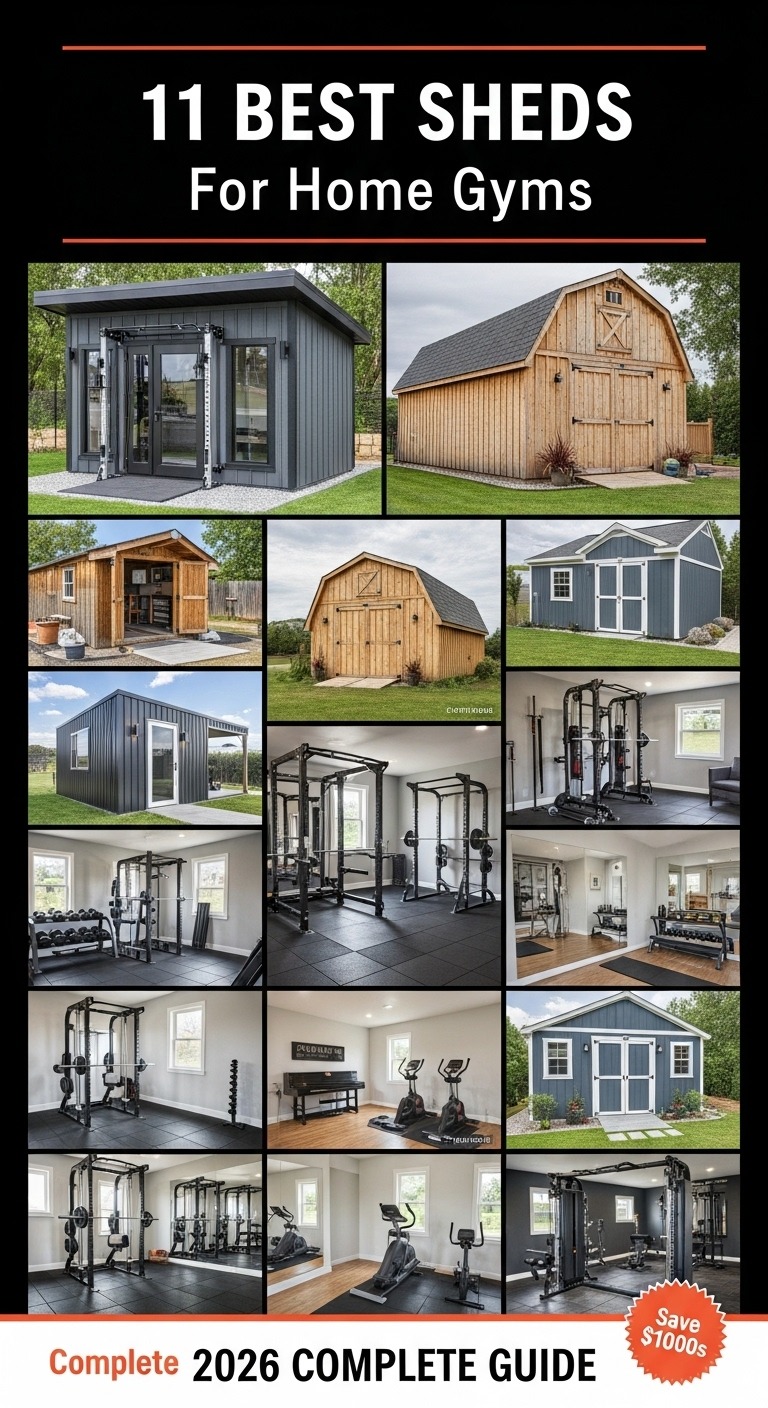
The 11 Best Sheds for Home Gyms in 2026
After researching dozens of options, these sheds stand out for creating the ultimate backyard workout space. Each one brings different strengths depending on your needs, budget, and available space.
1. Tuff Shed TR-700 (Best Overall)
The TR-700 delivers professional-grade construction that handles serious weightlifting setups. This shed comes with engineered wood flooring that supports heavy loads without any issues.
The 10-foot ceiling height gives you plenty of clearance for pull-ups, rope climbs, and overhead movements. You’re not banging your head or worrying about equipment clearance.
Key specs: 10×12 to 12×20 sizes, customizable layouts, optional insulation packages, reinforced floor joists, double doors for equipment access.
2. Lifetime 15×8 Outdoor Storage Shed (Best Budget Option)
Getting started with a home gym doesn’t require breaking the bank. The Lifetime shed offers solid value for those working with tighter budgets.
The steel-reinforced polyethylene construction resists weather damage better than wood. It’s low maintenance and won’t rot, rust, or need regular painting.
Best for: Light to moderate equipment, Gym Barbell, yoga studios, budget-conscious builders.
3. Arrow Galvanized Steel Shed (Most Durable)
Steel construction means this shed laughs at harsh weather conditions. The galvanized metal panels resist corrosion and last for decades with minimal upkeep.
The swing doors open wide enough to roll in larger equipment. You won’t be struggling to angle your power rack through a narrow entrance.
Dimensions available: 10×8, 10×12, 10×14, 12×10, 12×17 feet.
4. Suncast Tremont Storage Shed (Best for Small Spaces)
Working with limited backyard space? The Tremont shed maximizes every square foot with smart storage solutions and a compact footprint.
The reinforced floor supports gym mats, a weight bench, and moderate free weight collections. It’s perfect for functional fitness setups or dedicated cardio spaces.
Ideal setup: Adjustable dumbbells, wall-mounted storage, fold-down bench, resistance bands, kettlebells.
5. Keter Manor Resin Shed (Best Low-Maintenance)
Resin construction eliminates the headaches of wood rot, painting, and weather damage. This shed stays looking fresh year after year with zero maintenance required.
The reinforced resin walls create a surprisingly sturdy structure. The material naturally insulates better than basic metal sheds too.
Floor space: 6×8 feet, perfect for compact home gyms focused on bodyweight training and minimal equipment.
[Image 2: Interior of a well-organized shed gym with weight racks, mirrors, and rubber flooring]
6. Best Barns Greenbriar Wood Shed (Best Customization)
This pre-cut wood shed arrives ready for assembly with infinite customization potential. You control every aspect of the interior layout and exterior finish.
The 12×16 size gives you serious space to work with. That’s enough room for a full power rack, cardio equipment, and dedicated stretching area.
Customization options: Window placement, door configuration, siding colors, roofing materials, interior wall finishing.
7. Handy Home Phoenix Solar Shed (Best Eco-Friendly)
Solar panels built into the roof generate power for your gym without increasing your electric bill. The energy-efficient design appeals to environmentally conscious lifters.
Natural skylights flood the interior with daylight, reducing the need for artificial lighting during daytime workouts. It creates an amazing atmosphere that beats fluorescent-lit commercial gyms.
Sustainability features: Solar panel compatibility, LED lighting ready, recycled material construction, natural ventilation system.
8. Heartland Stratford Saltbox Shed (Best Aesthetics)
Some neighborhoods have strict rules about backyard structures. The Stratford’s colonial-style design looks like a charming outbuilding rather than a basic storage shed.
The saltbox roof design sheds rain and snow effectively while providing extra headroom. The engineered wood construction handles gym equipment loads without issues.
Style points: Decorative trim, color options, window shutters, architectural appeal that won’t annoy HOA committees.
9. Rubbermaid Roughneck Storage Shed (Best Weather Resistance)
Extreme climates demand extreme durability. The Roughneck shed stands up to hurricane-force winds, heavy snow loads, and intense sun without breaking down.
The double-wall resin panels create natural insulation. Your gym stays more comfortable in temperature extremes compared to single-wall metal or basic wood sheds.
Weather ratings: Wind resistant up to 100 mph, UV protected, leak-proof roof design, rot and rust proof materials.
10. ShelterLogic Shed-in-a-Box (Best Temporary Solution)
Testing out the shed gym concept before committing to permanent construction? This portable fabric shed gives you a low-risk way to experiment.
The heavy-duty polyethylene cover protects equipment from the elements. The powder-coated steel frame handles moderate equipment weight.
Perfect for: Renters, temporary setups, seasonal gyms, testing layouts before building permanent structures.
11. Arrow Woodridge Steel Shed (Best Value for Size)
The Woodridge maximizes interior space while maintaining an affordable price point. The 10×12 layout provides enough room for comprehensive training setups.
Electro-galvanized steel resists rust in humid climates. The coffee and cream color scheme looks better than standard silver metal sheds.
Value proposition: Large interior volume, 73-inch wall height, swing doors, competitive pricing, solid warranty coverage.
[Image 3: Exterior view of an attractive shed gym with open doors showing workout equipment inside]
How to Set Up Your Shed Gym for Success
Buying the right shed is just step one. The real magic happens when you transform that empty box into a functional fitness space that makes you excited to work out.
Start with the foundation before anything else. A level, stable base prevents equipment from rocking and protects your shed structure.
Foundation Options:
- Concrete slab – Most stable, handles any weight, permanent solution
- Gravel bed with pavers – Good drainage, easier installation, semi-permanent
- Pressure-treated wood deck – Elevated option, works on uneven ground
- Concrete blocks – Budget-friendly, adjustable, suitable for lighter setups
Flooring makes or breaks your gym experience. Standard shed floors won’t survive heavy training without reinforcement.
Rubber gym flooring gives you the protection and comfort you need. Stall mats from farm supply stores offer incredible value – the same quality as expensive gym flooring at half the price.
Layer your flooring system: reinforced plywood subfloor, then rubber mats on top. This combination absorbs impact, protects equipment, and creates a professional feel underfoot.
Insulation and Climate Control Strategies
Working out in extreme temperatures sucks. Proper insulation and climate control turn your shed gym into a comfortable year-round training facility.
Insulation options vary based on your climate and budget:
- Spray foam – Best R-value, air sealing, moisture resistant (most expensive)
- Fiberglass batts – Good value, DIY-friendly, widely available
- Rigid foam boards – Excellent for walls and ceiling, moisture resistant
- Reflective barriers – Budget option for hot climates, reflects radiant heat
Don’t forget the ceiling. Heat rises, and an uninsulated roof makes summer workouts brutal. Ceiling insulation delivers the biggest comfort improvement per dollar spent.
Heating solutions for cold climates include electric space heaters, mini-split systems, or infrared panels. Infrared heaters work particularly well because they heat objects and people directly rather than just warming air.
Cooling strategies matter just as much. A quality ventilation fan combined with a portable AC unit or mini-split keeps things bearable during hot months.
Windows and vents create natural airflow. Strategic placement encourages cross-breezes that reduce cooling costs and prevent moisture buildup.
Essential Equipment for Your Shed Gym
You’ve got the structure sorted. Now it’s time to fill it with the right equipment that matches your training style and goals.
Start with the basics rather than buying everything at once. A solid foundation of versatile equipment beats a cluttered space full of single-purpose machines.
Must-Have Equipment:
- Power rack or squat stand – The foundation of strength training
- Olympic barbell and plates – Essential for compound movements
- Adjustable bench – Enables dozens of exercises
- Rubber flooring – Protects your investment
- Pull-up bar – Often built into power racks
- Mirrors – Check form and make the space feel larger
Add equipment gradually based on what you actually use. Many people buy equipment that ends up collecting dust because it doesn’t fit their real training habits.
Space-saving solutions maximize smaller sheds. Wall-mounted storage racks, folding benches, and vertical plate storage keep the floor clear for movement.
Cardio equipment choices depend on your space. Assault bikes, rowing machines, and treadmills each have different footprints. Measure twice before ordering to avoid equipment that doesn’t fit.
Electrical and Lighting Considerations
A dark, powerless shed makes for a miserable gym experience. Professional electrical installation transforms your space into a legitimate training facility.
Hire a licensed electrician to run power from your main house. This ensures code compliance and prevents fire hazards from improper DIY wiring.
Electrical needs for most shed gyms:
- Dedicated 20-amp circuit minimum
- Multiple outlets along walls (GFCI protected)
- Overhead lighting (LED for energy efficiency)
- Fan or HVAC power requirements
- Potential 240V circuit for mini-split AC
Lighting dramatically impacts your workout environment. Natural light from windows and skylights creates the best atmosphere, but you need good artificial lighting for early morning and evening sessions.
LED shop lights offer the best value for overhead lighting. They’re bright, energy-efficient, and create even illumination without shadows.
Task lighting near mirrors helps with form checks. Ambient lighting options like LED strips add atmosphere without adding significant cost to your electric bill.
Ventilation and Air Quality
Proper airflow prevents your gym from becoming a musty, smelly box. Good ventilation protects your health and your equipment from moisture damage.
Even insulated and climate-controlled sheds need fresh air exchange. Stale air makes workouts harder and encourages mold growth in humid climates.
Ventilation solutions from simplest to most sophisticated:
- Operable windows – Free when included in shed design
- Passive vents – Ridge vents and soffit vents enable natural airflow
- Exhaust fans – Actively pull stale air out and draw fresh air in
- Mini-split systems – Include ventilation with heating and cooling
Mount fans high on walls or in gable ends to exhaust warm, humid air effectively. Position intake vents low to pull in cooler, fresh air.
Air quality matters when you’re breathing hard during intense training. Consider an air purifier if you suffer from allergies or train in areas with poor outdoor air quality.
Security and Weather Protection
Gym equipment represents a significant investment. Protecting your gear from theft and weather damage should be a priority from day one.
Quality locks prevent opportunistic thieves. Upgrade from the basic shed latch to a heavy-duty hasp with a shrouded padlock or a keyed entry system.
Security upgrades worth considering:
- Motion-activated outdoor lighting
- Security camera covering the entrance
- Window security film or bars
- Alarm system connected to your home security
- Solid core door with deadbolt
Weather protection starts with a quality shed, but you can add layers of defense. Ensure all seams are properly sealed and the roof doesn’t leak.
Moisture control prevents rust on barbells and plates. Silica gel packs in storage areas, proper ventilation, and wiping down equipment after workouts all help.
Budgeting for Your Shed Gym Project
Building a home gym in a shed requires upfront investment. Smart budgeting prevents overspending while ensuring you get a quality setup.
Total costs break down into several categories:
Budget Breakdown:
- Shed structure: $1,500-$8,000 depending on size and quality
- Foundation: $300-$2,500 based on type and DIY vs professional
- Electrical: $500-$2,000 for professional installation
- Insulation and climate control: $500-$3,000 based on climate needs
- Flooring: $200-$1,000 for rubber mats and subflooring
- Equipment: $1,000-$10,000+ depending on your training style
- Accessories: $200-$800 for mirrors, storage, decorations
Total estimated investment: $4,200-$27,300 for a complete setup.
The range is huge because your needs vary dramatically based on climate, space, and training goals. A basic bodyweight and cardio gym in a mild climate costs a fraction of a fully-equipped powerlifting setup in Minnesota.
DIY installation saves significant money if you’re handy. Many sheds come as kits that capable DIYers can assemble over a weekend.
Professional installation adds $500-$2,000 but ensures everything is level, square, and properly assembled. It’s worth considering if you lack tools, time, or construction experience.
Common Mistakes to Avoid
Learning from others’ mistakes saves you money and frustration. These common shed gym errors trip up first-time builders repeatedly.
Buying too small ranks as the number one regret. Everyone underestimates how much space equipment actually needs. Add at least 2 feet to your initial size estimate.
Skimping on the foundation causes major problems down the line. A shifting, uneven shed creates safety hazards and equipment damage.
Poor ventilation turns your gym into a sweat box. Don’t rely solely on opening the door – install proper ventilation from the start.
Ignoring local building codes and permits can cost you thousands in fines or force you to tear down your shed. Check requirements before building.
Inadequate electrical planning leaves you running extension cords from your house. Plan for enough outlets and circuits to support all your equipment and climate control needs.
Choosing the wrong flooring causes damage to both the shed and your equipment. Invest in proper rubber flooring that can handle impacts.
Not considering noise bothers neighbors and family members. Rubber flooring helps, but dropping weights at 5 AM will still create issues. Think about placement and training times.
Maintenance Tips for Long-Term Success
A little regular maintenance keeps your shed gym functional for decades. Preventive care beats expensive repairs every single time.
Monthly checks catch small problems before they become major issues:
- Inspect for leaks after heavy rain
- Check door and window seals
- Clear gutters and drainage
- Look for pest entry points
- Verify electrical outlets and lighting work properly
- Wipe down equipment to prevent rust
- Vacuum or sweep flooring
Seasonal maintenance tasks vary by climate:
Spring: Check for winter damage, test AC before hot weather, touch up paint if needed.
Summer: Monitor for excess heat buildup, ensure fans work efficiently, watch for insect infiltration.
Fall: Prepare heating systems, seal any new gaps, clear leaves from roof and gutters.
Winter: Check insulation effectiveness, prevent ice dams, monitor for moisture problems.
Equipment maintenance extends the life of your investment. Wipe down bars after use, keep weight plates off the floor, and maintain cardio machines according to manufacturer recommendations.
Transform Your Fitness Journey Today
The best sheds for home gyms give you the foundation to build the training space you’ve always wanted. No more excuses about gym hours, commute times, or waiting for equipment.
Your backyard holds untapped potential for a personal fitness sanctuary that serves you for years to come. The initial investment pays dividends in convenience, consistency, and results.
Choose a shed that matches your space, budget, and climate needs. Focus on the fundamentals – solid structure, proper insulation, good ventilation, and quality flooring.
Start with essential equipment and build your collection over time. A power rack, barbell, plates, and bench give you everything needed for comprehensive strength training.
The hardest part is taking action. Thousands of people have transformed sheds into incredible home gyms. Your backyard can be next.
Conclusion
Creating a home gym in a shed delivers incredible value for anyone serious about fitness. You get privacy, convenience, and a customized training environment without the ongoing cost of commercial gym memberships.
The best sheds for home gyms balance durability, size, climate control, and budget considerations. Whether you choose a high-end custom structure or a budget-friendly option, the key is matching the shed to your specific needs.
Remember that the shed itself is just the container. The real magic comes from thoughtful setup, proper climate control, quality equipment, and consistent training.
Your perfect home gym is waiting in your backyard. Take the first step today.
Frequently Asked Questions
What size shed do I need for a home gym?
Most people need at least 10×12 feet for a functional gym setup. This provides enough room for a power rack, bench, and some cardio equipment. If you want multiple training stations or extensive equipment, consider 12×16 feet or larger. Measure your planned equipment with clearance space before buying.
How much does it cost to convert a shed into a gym?
Total costs typically range from $4,200 to $27,300 including the shed, foundation, electrical, insulation, flooring, and equipment. Budget options using existing sheds or basic equipment can start around $2,000. High-end setups with premium climate control and extensive equipment can exceed $30,000.
Do I need a permit to build a shed gym?
Permit requirements vary by location. Most areas require permits for structures over 120 square feet or those with electrical connections. Check with your local building department before starting construction. Operating without required permits can result in fines or forced removal.
How do I keep my shed gym warm in winter?
Proper insulation is essential first. Then add electric space heaters, infrared panels, or a mini-split heat pump system. Insulate walls, ceiling, and floor to maximize heating efficiency. Seal all gaps around doors and windows to prevent heat loss. Many people find that mini-split systems offer the best year-round climate control.
What’s the best flooring for a shed gym?
Rubber gym flooring or horse stall mats provide the best combination of durability, impact absorption, and value. Install a reinforced plywood subfloor first, then add 3/4-inch rubber mats on top. This system protects your shed floor, reduces noise, and creates a professional gym surface that handles dropped weights.
Can I use a metal shed for a home gym?
Yes, metal sheds work well for home gyms with proper preparation. Add insulation to control temperature extremes. Ensure the floor is reinforced to handle equipment weight. Metal sheds are durable and low-maintenance but require more climate control effort than insulated wood structures.
How do I prevent moisture and rust in my shed gym?
Install proper ventilation with exhaust fans and intake vents. Use a dehumidifier in humid climates. Wipe down barbells and equipment after sweating on them. Store weights off the floor on racks. Seal all roof and wall penetrations to prevent leaks. Regular airflow prevents most moisture problems.